




TECHNICAL SUPPORT


Published 2026-01-19
Imagine: you design a sophisticated robotic arm, with every joint controlled by precise servos. It works like clockwork. But one day, you need it to learn new actions, handle new tasks—and suddenly the whole system becomes clunky and difficult to adjust. You have to stop everything and rewrite the core program, as if dismantling the entire machine to change a gear.
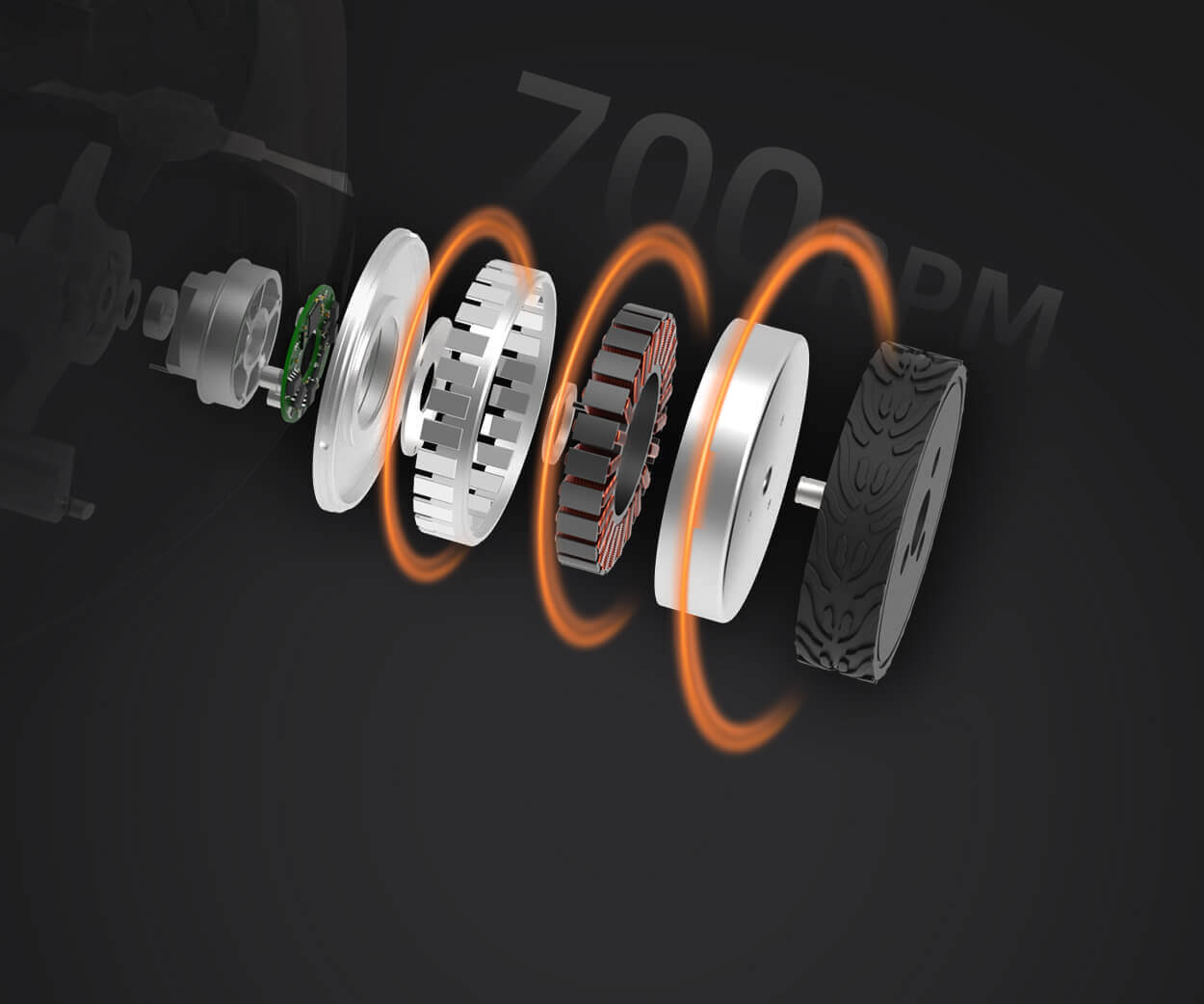
This isn't just an annoyance in mechanical systems. Many people face similar dilemmas when building digital products. A large, integrated software system (we often call it a "monolithic architecture"), just like the one-piece robotic arm, runs stably in the initial stage. However, when business needs change rapidly and new functions need to be expanded, changes are extremely troublesome and risky. Every update may "impact one hair and affect the whole body".
Is there a way to make our digital system like a set of intelligent steering gear modules that work together? Each part is independent and focused, but can be easily combined and flexibly adapted to new instructions?
some. This approach is called microservice architecture. And running it on a vast cloud platform like Microsoft Azure is like giving these independent "intelligent modules" a powerful and infinitely scalable practice ground.
The core idea of microservice architecture is simple: break everything into parts. It breaks a large application into a series of small, independent services. Each service is built around specific business capabilities (e.g., user management services, order processing services, payment services) and can be developed, deployed, and scaled independently.
What difference does this make?
It's incredibly flexible. Just like you can upgrade the wrist servo of a robotic arm independently without affecting the elbow, you can update the order service while the UI service runs as usual. This means releasing new features faster and responding to the market more quickly.
It's resilience. In a traditional monolithic system, the failure of one tiny component can bring down the entire application. In microservices, problems are often isolated. If the payment service encounters temporary pressure, the shopping cart and product browsing services will still work normally, and the user experience will not be completely interrupted.
Furthermore, it is technical freedom. Different services can be built using the technology stack best suited for their tasks. This is like choosing the most appropriate motor type for different mechanical components, rather than forcing the entire system to use the same one.
What role does cloud platform Azure play here? It provides an ideal environment for this "precision module system" to survive. Azure natively supports the deployment, discovery, communication, and monitoring of microservices. Its powerful computing, storage and network capabilities enable each service to obtain resources on demand and scale independently. You no longer need to estimate and purchase expensive fixed servers just to cope with possible traffic peaks; Azure allows you to allocate computing power according to usage at any time, just like regulating electricity.
At this point, you might be thinking: This sounds great, but is it complicated? Will it require a large team of experts to implement?
This is exactlykpowerfocus of attention. We understand that the value of advanced ideas lies in whether they can be implemented smoothly and reliably. We not only provide technical solutions, but are also committed to transforming complex cloud-native and microservice architectures into real competitiveness for our customers' businesses.
How do we think? It doesn’t start with technical terms, but with your business challenges. We will sort it out together: Which parts of your system change most frequently? Which business segments are under the greatest pressure? Which functions require the highest availability? The answer often points to the natural boundaries of microservice splitting.
It's a smart choice when it comes to Azure services. Azure provides a rich set of tools, such as Azure Kubernetes Service (AKS) for service orchestration, Azure Functions for serverless computing, Azure Service Bus for reliable messaging, and Azure Monitor for monitoring. The art of choice lies not in using the most comprehensive tools, but in configuring the most concise and efficient combination for your unique scenario.kpowerThe experience is to help us avoid over-engineering and build a system that is both robust and easy to maintain.
Moreover, safety and cost are the themes throughout. In a microservices world, security boundaries move from the outside to between services. We injected security considerations into the early stages of architecture design and used Azure's identity management and network isolation strategies to build defense-in-depth. Cost is also critical. Through reasonable service granularity design, automatic scaling strategy and resource scheduling, we ensure that every bit of computing power in the system generates value.
Ultimately, adopting a microservices architecture and the Azure cloud platform does more than just address current technical debt. It is a future-oriented investment designed to give your digital products the ability to "grow and evolve."
Just like a mechanical system composed of high-performance, independently programmable servos, it can learn new postures and adapt to new environments at any time. Your business logic and product features also gain the same agility and resilience. When the market needs to change, your technical system no longer becomes a bottleneck, but a platform to promote innovation.
This journey requires a clear blueprint, sophisticated tools, and reliable partners. It's about turning complexity into advantage and technology potential into business results. This is exactly what we think about and practice every day - making precise ideas run smoothly in the cloud.
Established in 2005, Kpower has been dedicated to a professional compact motion unit manufacturer, headquartered in Dongguan, Guangdong Province, China. Leveraging innovations in modular drive technology, Kpower integrates high-performance motors, precision reducers, and multi-protocol control systems to provide efficient and customized smart drive system solutions. Kpower has delivered professional drive system solutions to over 500 enterprise clients globally with products covering various fields such as Smart Home Systems, Automatic Electronics, Robotics, Precision Agriculture, Drones, and Industrial Automation.
Update Time:2026-01-19

Contact Kpower's product specialist to recommend suitable motor or gearbox for your product.