




TECHNICAL SUPPORT


Published 2026-01-19
Seriously, have you ever had this experience? Faced with an ambitious Spring Boot microservice project, I have a lot of ideas in my mind, and I want to build a flexible and efficient back-end architecture immediately. But when I really opened the IDE, from service discovery, configuration center to API gateway, a series of components and configurations came to my face, and the excitement quickly turned into a headache. The code repository is lying there, and progress is moving at a snail's pace.
I understand this feeling so well. It's like putting together a complex piece without drawings. The parts are scattered all over the place and I don't know where to start. You may think: "Isn't it just a few independently deployed services?" But in practice, communication, fault tolerance, data consistency... every detail may keep you stuck for half a day. Not to mention putting it elegantly on GitHub so that others can understand it at a glance and run it smoothly.
So, let’s talk about a different idea today. Not a boring tutorial, but a perspective on how to actually get things done.
Why do many microservice projects look good on GitHub, but are so difficult to run in practice? The problem often isn't Spring Boot itself - it's an excellent framework. The gap lies in how to provide these dispersed services with stable and precise "action" capabilities.
Imagine you design a smart warehouse management system. The order service handles the request and the inventory service updates the data, but what's the next step? A robotic arm may be needed to perform sorting, or a conveyor belt motor to adjust speed. At this time, how can the back-end instructions be seamlessly and reliably converted into precise movements in the physical world? This is that critical connection point. No matter how perfect the logic in the code is, if the end-execution mechanism cannot be reliably controlled, the entire system will seem to have lost its limbs.
This is the soul that many projects need to inject: to bring physical life to digital instructions. Rather than simply sending a "switch" signal, it achieves complex motion control - precise coordination of position, speed and torque. For example, you need a servo to smoothly rotate to a specific angle, or a servo motor to smoothly complete the entire process of acceleration, constant speed, and deceleration, and provide real-time feedback on the status.
This requires that the underlying driver is not only stable, but also "smart" and easy to integrate. It should act like a dedicated companion that silently handles all the intricate details of motor control, while you only need to send high-level commands through a clear API. Your Spring Boot service can continue to maintain its elegance and independence, just tell this partner through a lightweight method (such as a RESTful interface or message queue): "Hey, please move the third axis to the 30-degree position, and the speed is gentler." The rest is left to it.
What does this solve? You no longer need to clutter your business services with obscure hardware driver code. Microservices are still light and have clear responsibilities. The control tasks are handled by specialized "experts". The reliability and maintainability of the system will naturally improve.
How to select this key partner? It's certainly necessary to stare at the parameter table, but what's behind it is more worth thinking about.
It is stability and precision, which will always be the cornerstone. You don’t want to see the device acting erratically due to tiny jitters in the control signal. It needs to be trustworthy in various environments and run for a long time without losing its chain. is whether it’s truly “conversation-friendly.” Is integration cumbersome? Are there interfaces and documentation that you are familiar with and easy to understand? A good design will make you feel that it is already part of the system, and the access is smooth without having to fiddle with it repeatedly. Then again, it’s the support behind it. When you encounter difficult situations, can you get effective help? This is about the security of project progress.
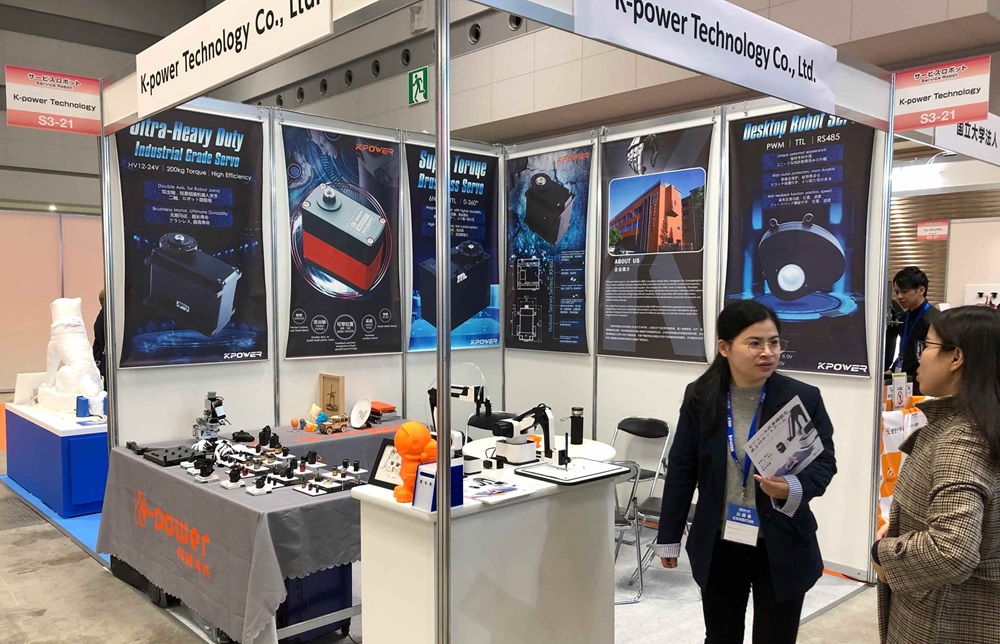
in this regard,kpowerprovides an idea. They focus on making motion control simple and integrable, and their products are designed to better integrate into modern software architectures. You can understand it as a highly encapsulated, focused and reliable execution unit, responsible for converting your software instructions into stable and precise physical actions.
Now that we’ve finished talking about theory, what should we do specifically? Assume that you already have order service and inventory service in your GitHub project, and now you are ready to add the logistics scheduling module.
Isn’t the meaning of development just to turn the blueprint in your mind into reality step by step? Spring Boot microservices give us the brains to build a powerful backend, while reliable motion control gives it dexterous hands. When the two are combined, ideas can truly come to fruition and a system that is both intelligent and actionable can be created.
Next time you plan a project, you might as well look at it from a more complete perspective: from data to decisions, and then from decisions to actions. Find a partner who can help you fill in the gaps so that your code can really move.
Established in 2005,kpowerhas been dedicated to a professional compact motion unit manufacturer, headquartered in Dongguan, Guangdong Province, China. Leveraging innovations in modular drive technology, Kpower integrates high-performance motors, precision reducers, and multi-protocol control systems to provide efficient and customized smart drive system solutions. Kpower has delivered professional drive system solutions to over 500 enterprise clients globally with products covering various fields such as Smart Home Systems, Automatic Electronics, Robotics, Precision Agriculture, Drones, and Industrial Automation.
Update Time:2026-01-19

Contact Kpower's product specialist to recommend suitable motor or gearbox for your product.