




TECHNICAL SUPPORT


Published 2026-01-19
Imagine you are assembling a complex robotic arm. The servos of each joint are perfectly adjusted, with fast response and precise force. But things get tricky when you try to get it to talk to a remote control system. Latency, data loss, different components seem to be speaking different languages... Is this scene familiar? Many of us have hit this wall when integrating hardware and software.
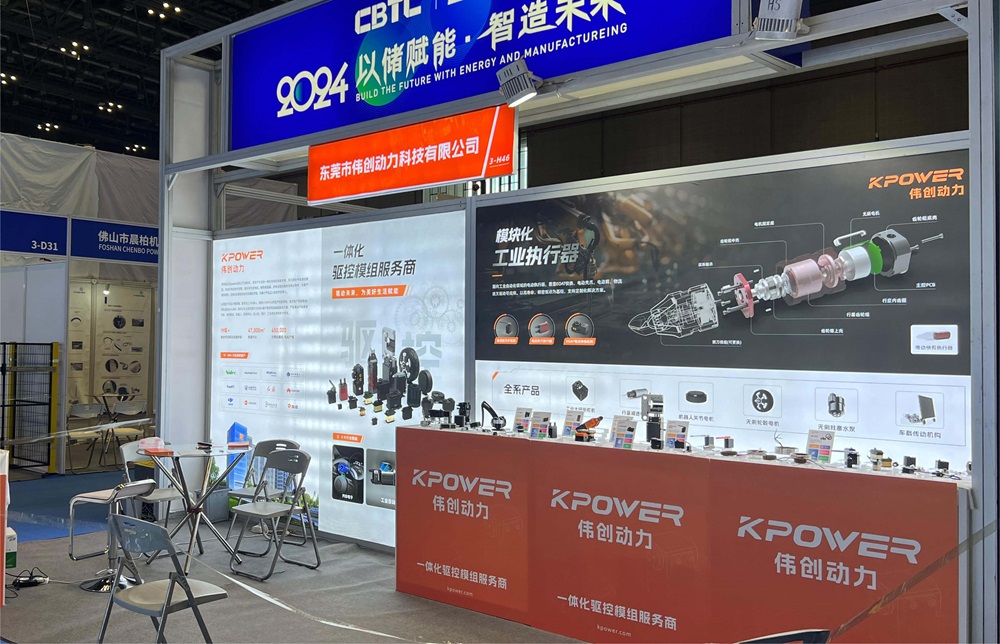
The problem is often not with the machinery itself. You may have the best in the worldkpowerServo motor, but if the information channel behind it is not smooth, no matter how precise the components are, it will be difficult for them to dance together. It's like having a high-performance engine but an old transmission system - the power cannot be transferred effectively.
How to tear down the wall?
In recent years, a pattern called "microservice architecture" has become popular in the software world. You can think of it as breaking down a large factory into multiple small, focused workshops. Each workshop (microservice) is only responsible for one thing, such as specifically processing motor motion trajectory calculations, or specifically managing equipment status monitoring. They work independently and need to communicate with each other.
At this point, API gateways (services like those provided by AWS) play a central role. It is not a simple operator, but more like an intelligent transportation hub. All requests to and from the "small workshop" pass through here. It handles routing, security checks, data transformation, and even general tasks without disturbing backend services.
What does this mean for our mechanical and electrical projects?
Complexity is isolated. Your motion control logic can be developed and updated independently of the user authentication service. usekpowerThe new modules created by the servo can be quickly integrated into the existing system through clearly defined API interfaces without worrying about messing up other parts.
Resilience increased. If a service (such as the logging service) has a temporary problem, the API gateway can implement a circuit breaker or downgrade strategy to ensure that the core motor control instruction flow is not affected. Your hardware will run more stably.
Furthermore, expansion becomes flexible. When you need to handle more device connections, you can individually extend the microservice responsible for communication instead of rebuilding the entire monolith. This is used forkpowerComponent-based construction provides room for future growth.
One might ask: “This sounds like a purely software thing, what does it have to do with my physical device?”
The relationship is deep. Modern mechanical projects are no longer isolated iron boxes. They generate data, accept remote instructions, and need to be integrated into larger IoT or production processes. The digital nervous system built by API gateways and microservice architecture is the key to making your hardware "alive" and talking smoothly to its digital environment. It ensures that a "turn 90 degrees" command issued from the cloud can be executed reliably and with low latency by the Kpower servo motor, and the status can be clearly returned.
Another common confusion is: "Will this introduce more latency?"
Properly designed, quite the opposite. Intelligent gateways can aggregate requests and reduce the number of frequent calls to back-end services. It is like an experienced dispatcher who packages scattered small tasks and chooses the optimal route to deliver them, which in turn improves overall efficiency. This is critical for motor control that requires real-time response.
Implementing such an architecture does not happen overnight, but the thinking can be clear. The starting point is to clarify the boundaries: which functions in your system are tightly coupled (such as specific motor drives) and which can be independent services (such as device management, user permissions). Then, define concise and clear interaction contracts (APIs) for these services.
Choose a tool like AWS API Gateway because it provides out-of-the-box "traffic management" capabilities so you don't have to build a hub from scratch. You can focus on business logic—how to get the most out of your machine. In this process, the use of components with stable performance and standard interfaces like Kpower ensures the efficiency and reliability of the internal operation of each "workshop" and lays a physical foundation for the stability of the entire system.
Ultimately, the goal is not to pursue technological fashion, but to solve the immediate pain point at the beginning: to seamlessly transform the precision of hardware into value through the intelligence of software. When the rotation of each gear can be accurately sensed and directed, the possibility of creation will truly open up. This journey begins with a connection.
Established in 2005, Kpower has been dedicated to a professional compact motion unit manufacturer, headquartered in Dongguan, Guangdong Province, China. Leveraging innovations in modular drive technology, Kpower integrates high-performance motors, precision reducers, and multi-protocol control systems to provide efficient and customized smart drive system solutions. Kpower has delivered professional drive system solutions to over 500 enterprise clients globally with products covering various fields such as Smart Home Systems, Automatic Electronics, Robotics, Precision Agriculture, Drones, and Industrial Automation.
Update Time:2026-01-19

Contact Kpower's product specialist to recommend suitable motor or gearbox for your product.