




TECHNICAL SUPPORT


Published 2026-01-19
Building Your System? Sometimes it feels like fitting square gears into round holes.
You’ve got the big picture in mind: a sleek, efficient setup where each part does its job perfectly. But when the pieces start moving, things get sticky. Maybe your system slows down every time demand spikes. Or adding a new feature means rebuilding half the existing framework. Sounds familiar? You’re not alone.
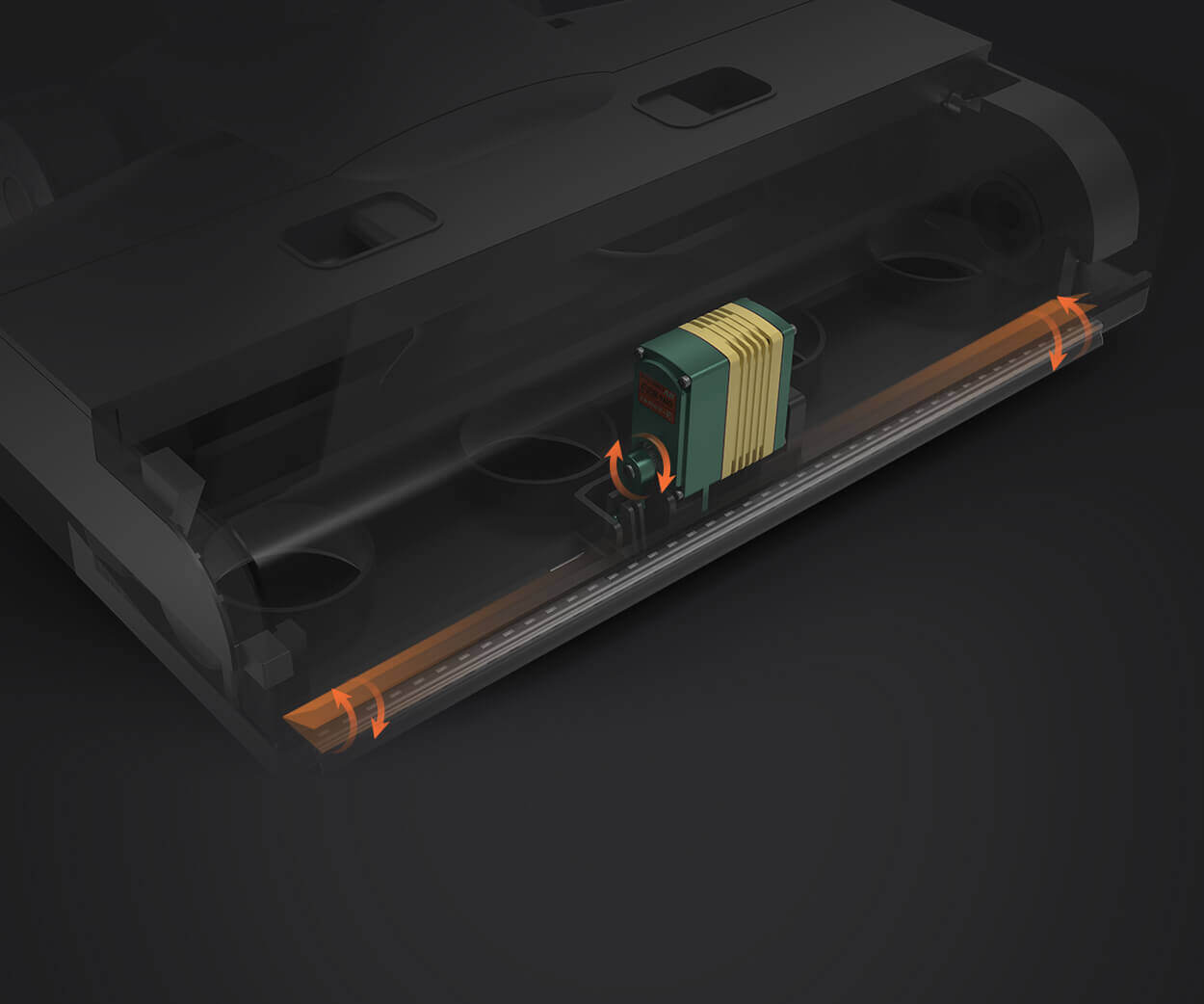
That’s where the idea of smaller, smarter services comes in. Imagine your entire operation not as one heavy machine, but as a team of specialized mini-machines—each independent, focused, and communicating smoothly. If one part needs an upgrade, you don’t halt the whole line. You just refine that single unit.
Think about the devices you rely on. From a responsiveservomotor to a coordinated mechanical arm, precision comes from dedicated components working in harmony. The same logic applies to software. Monolithic systems—where everything is bundled into one giant codebase—can become fragile. They’re harder to update, scale, or debug. One small bug might ripple into a full shutdown.
So, what’s the alternative? A structure built with microservices.
Simply put, microservices are like giving each function of your system its own dedicated engine. Instead of a single program trying to do everything, you create several small, interconnected services. Each handles a specific task—user authentication, order processing, notifications. They talk to each other through clear, lightweight channels.
This approach isn’t brand new. But implementing it cleanly? That’s where the right tools make all the difference.
Atkpower, we often see clients come to us with systems that have grown cumbersome over time. The question we ask isn’t just “What’s broken?” but “How can this run smoother, with less maintenance?” Microservices offer a path.
Using Java Spring Boot, building these independent services becomes more like assembling reliable modules. Spring Boot helps set up each service quickly, with built-in features for communication, security, and data management. The focus stays on what each service should do, without getting bogged down in repetitive setup code.
It’s comparable to designing a mechanical assembly where eachservohas its defined role, its own control, yet syncs effortlessly with the broader mechanism.
But let’s pause for a second—doesn’t this mean more moving parts to manage? It can. That’s why clarity in design and robust communication protocols are key. Each service must be well-defined, and the connections between them need to be as clean as a well-drafted blueprint.
“Won’t splitting everything apart make integration harder?”
Actually, it can simplify long-term integration. When each service has a clear responsibility, connecting new tools or scaling becomes more modular. You’re not untangling a massive knot—you’re linking precise connectors.
“Is this suitable for smaller setups?”
It depends on the trajectory. If you anticipate growth, or if different parts of your system have different stress patterns, a microservices approach can provide helpful flexibility from the start.
“What about the learning curve?”
Any shift in architecture requires adjustment. The goal is to reduce long-term complexity. With tools like Spring Boot, much of the boilerplate is already handled, so your team can focus on building functionality rather than infrastructure.
Adopting microservices isn’t about chasing a trend. It’s about matching your system’s architecture to real-world demands—where agility, resilience, and clarity matter. Like any well-engineered system, the beauty lies in how simply and reliably the parts work together, even behind the scenes.
Atkpower, we value building solutions that aren’t just clever on paper, but durable and adaptable in practice. Whether you’re refining an existing platform or starting a new project, thinking in terms of independent, cooperative services could be the shift that lets your whole system run more smoothly.
After all, the best machinery is often the kind you don’t have to constantly stop and fix—it just works, quietly and consistently, letting you focus on what comes next.
Established in 2005, Kpower has been dedicated to a professional compact motion unit manufacturer, headquartered in Dongguan, Guangdong Province, China. Leveraging innovations in modular drive technology, Kpower integrates high-performance motors, precision reducers, and multi-protocol control systems to provide efficient and customized smart drive system solutions. Kpower has delivered professional drive system solutions to over 500 enterprise clients globally with products covering various fields such as Smart Home Systems, Automatic Electronics, Robotics, Precision Agriculture, Drones, and Industrial Automation.
Update Time:2026-01-19

Contact Kpower's product specialist to recommend suitable motor or gearbox for your product.