




TECHNICAL SUPPORT


Published 2026-01-19
Spring Microservices Interview Questions: When the Code Gets Real
So you’ve been building things. Maybe it’s a robotic arm that needs smooth, precise movements, or a small automated gadget where every ounce and every degree counts. You understand gears,servos, and how physical parts talk to each other. But then the conversation shifts—from hardware to software, from circuits to cloud. Suddenly, people are asking about Spring Boot, containers, and how to break a big application into tiny, talking pieces called microservices. It feels like learning a new language right before a crucial trip.
That’s where the puzzle begins. You know your stuff, but how do you show it? How do you explain the “why” behind the “what” in a way that clicks? Traditional interview prep often feels like memorizing a dictionary without learning to speak. Lists of questions and answers can be stiff, disconnected from the real problems you’re used to solving with your hands and mind.
Think of it like tuning aservomotor. You wouldn’t just memorize a voltage chart. You’d feel how the motor responds, understand its load, and adjust for real-world friction. Software design, especially with microservices, needs that same practical sense. It’s not just about definitions—it’s about knowing what happens when a service fails, how data stays consistent when pieces are scattered, or how to discover components without a central blueprint. It’s engineering, just in a different medium.
Let’s walk through a few corners of this landscape together.
Q: Why does everyone keep talking about “decoupling” in microservices? It sounds abstract. A: Imagine you’re designing a modular gearbox. If one gear module wears out, you can replace it without dismantling the entire drive system. Decoupling in software is similar. It’s about building independent functional units—like a payment module or a user authentication module—that can be developed, fixed, or scaled alone. If the payment service has an issue, it shouldn’t take down the entire order process. Spring Boot helps wrap each of these units into a self-contained, runnable piece. The benefit? Resilience and speed. Teams can move without waiting on each other, much like adjusting one part of a mechanism without stopping the whole machine.
Q: How do these independent services find and talk to each other reliably? A: Good question. You wouldn’t hardwire every sensor in a complex assembly to a single central point—it creates a bottleneck. Early monolithic apps did that. In a microservices setup, services need a way to discover each other dynamically. This is where patterns like service discovery (Eureka) and API gateways come in. Think of it as a dynamic routing system. A new service announces itself, and others can find it without manual configuration. Spring Cloud integrates these concepts, so you’re not building the communication layer from scratch. The flow becomes more adaptive, less brittle.
Q: What’s the biggest hidden challenge you’ve seen? A: Data. In a monolithic system, you often have one big database. Simple. But when you split into services, each should manage its own data. That means data is scattered. How do you keep it consistent without tight coupling? You move from immediate database transactions to eventual consistency—using events and messages to let data “settle” over time. It’s like having multiple small controllers managing different parts of a machine; they coordinate through signals, not by sharing a single brain. Spring supports this with messaging modules and Streams, helping you handle the shift in mindset.
Now, having the right mental model is one thing. Conveying it clearly in a conversation is another. That’s where a focused resource makes a difference. Not just a list, but a guide that connects principles to practice—explaining how circuit-breakers prevent cascade failures like a mechanical fuse, or how configuration management avoids environment-specific hiccups. It’s about framing your knowledge in stories of problem and solution, not just definitions.
This is the space wherekpower’s materials aim to add clarity. By drawing on tangible engineering logic and applying it to software patterns, they help bridge that gap between doing and explaining. The goal isn’t to give canned answers, but to help structure your thinking so you can discuss design choices with confidence. Whether it’s handling failover, managing configurations across environments, or structuring a deployment pipeline, the parallels to physical system design are real and useful.
End of the day, preparing for these interviews is like calibrating a system. You’re aligning your understanding with the practical demands of building resilient, scalable applications. It’s less about memorizing every annotation and more about grasping the architecture—the why behind the tools. When you can articulate that, you’re not just answering questions. You’re showing how you think. And that’s what turns a technical interview into a real conversation.
Ready to tighten those concepts? The right preparation feels less like study and more like fitting the last piece into a mechanism—smooth, satisfying, and solid.
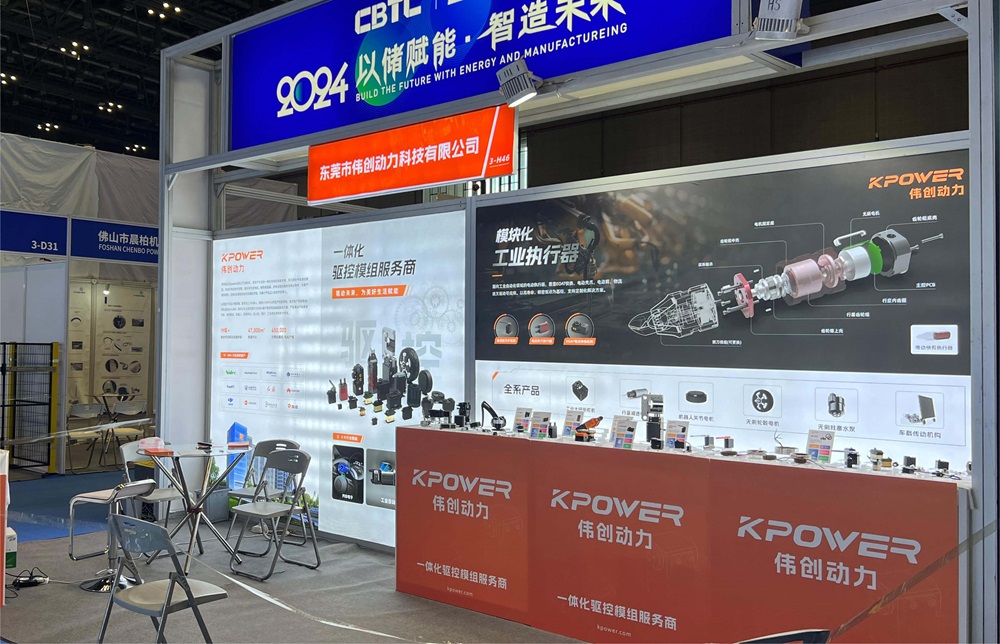
Established in 2005,kpowerhas been dedicated to a professional compact motion unit manufacturer, headquartered in Dongguan, Guangdong Province, China. Leveraging innovations in modular drive technology,kpowerintegrates high-performance motors, precision reducers, and multi-protocol control systems to provide efficient and customized smart drive system solutions. Kpower has delivered professional drive system solutions to over 500 enterprise clients globally with products covering various fields such as Smart Home Systems, Automatic Electronics, Robotics, Precision Agriculture, Drones, and Industrial Automation.
Update Time:2026-01-19

Contact Kpower's product specialist to recommend suitable motor or gearbox for your product.