




TECHNICAL SUPPORT


Published 2026-01-19
You spent days and nights studying the questions and memorized a bunch of design patterns, but every time the interviewer asked questions about C# microservices, it was like hitting a wall. Those theories all sound right, but when it comes to actually talking about how to split services, how to deal with data consistency, or how to make services "talk well", the air suddenly becomes quiet. Does this feel familiar? Don't worry, it's not that you haven't prepared enough, it's that most resources only give you puzzle pieces, but don't give you the complete drawing.
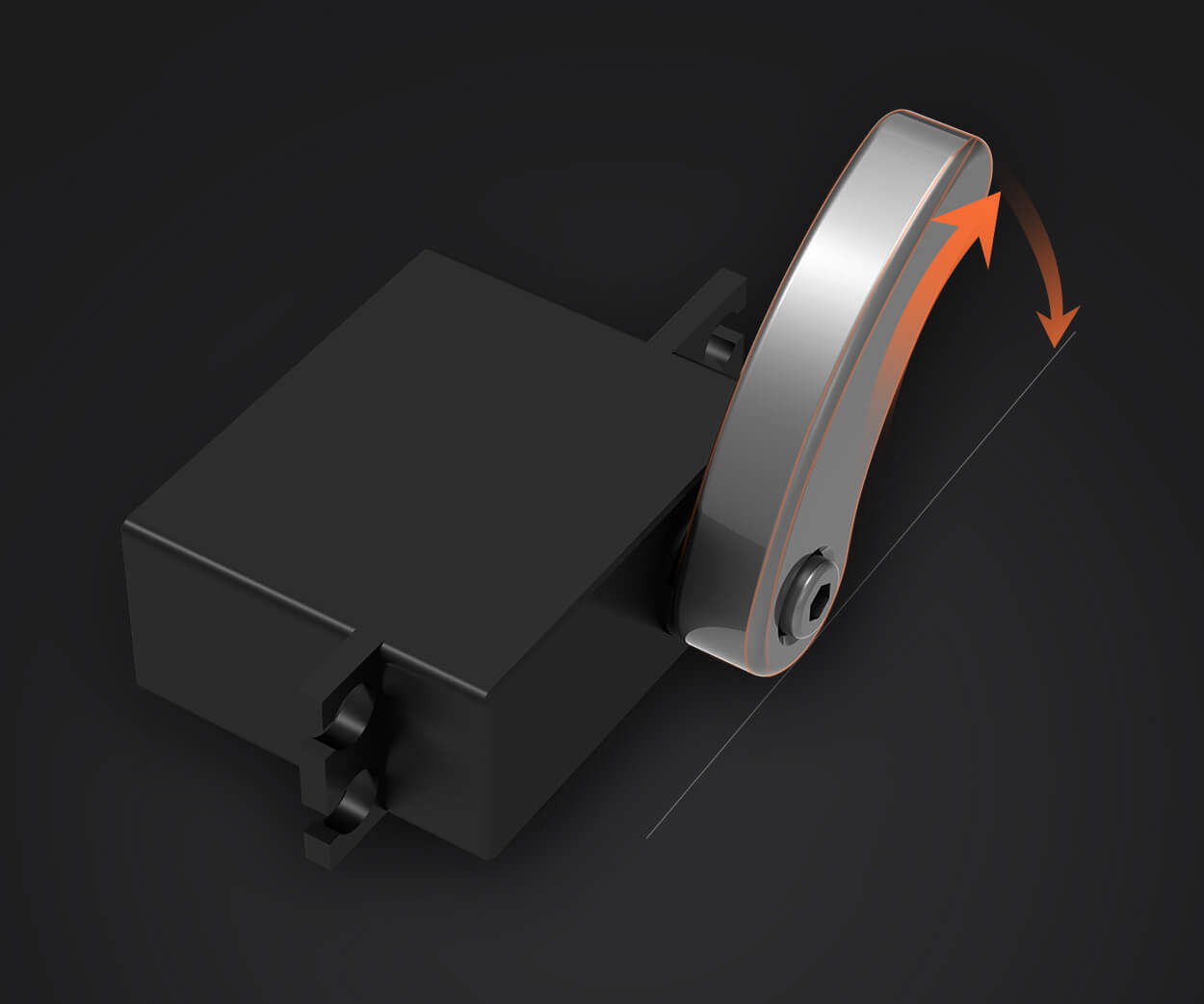
Microservice interview is like assembling a sophisticated mechanical structure - such as the steering gear system we are familiar with. You know the function of each gear, but if you don't understand how they transmit power and respond to signals, the entire system will not operate in a coordinated manner. This is especially true for microservices in the C# environment. It is not just code, but also about architectural thinking and practical decision-making.
Many people think that microservices interviews are about memorizing questions, but the real key is often the logic behind the questions. For example, when the interviewer asks "How do you handle inter-service communication?", what he really wants to hear is not your list of terms such as HTTP and gRPC, but how you make choices based on business scenarios - just like choosing a servo motor for a robotic arm, the torque, speed, and accuracy must all match actual needs.
The C# ecosystem has given us many tools, from ASP.NET Core to Docker containerization, but the tools themselves will not solve the problem. Someone once shared an experience: when they designed an order processing process, they split each step into independent services. As a result, the service call chain was too long and the delay was ridiculously high. Later, they rethought and merged several frequently interacting modules into an aggregation service, using event-driven instead of synchronous calls, and the entire system became smoother. You see, this is not just technology selection, but also a system thinking.
Instead of memorizing by rote, try connecting knowledge points with actual scenarios. Imagine you are designing a logistics tracking platform: How can order services, inventory services, and distribution services be deployed independently and work together? If the delivery service is down, how should the order process be downgraded? If implemented in C#, would you use Polly as a retry strategy, or use health checks to automatically switch to backup services?
This kind of scenario-based thinking can help you weave scattered knowledge points into a web. During the interview, you don't need to recite the textbook definition, but you can talk about "how to set the timeout for step-by-step service calls like debugging the servo response." This will make your answers more layered and make it easier to demonstrate practical problem-solving skills.
Many interview guides on the market stop at theory and rarely touch on the trade-offs in real development. For example, they will tell you to use Docker containerization, but they will not remind you that improper network configuration may lead to service discovery failure; they list several ways to achieve load balancing in C#, but rarely discuss how to quickly adjust strategies to avoid system avalanche when traffic suddenly increases.
It's like giving you the parameter list of the servo motor, but not teaching you how to integrate it into the mechanical system - no matter how beautiful the parameters are, it's in vain if they can't be installed. Real interview experts can often link technical choices with business constraints and come up with flesh-and-blood design plans.
Interview preparation is not about hoarding knowledge, but about developing an architectural intuition. Next time you review, try:
What I want to say is that there is no standard secret recipe for microservice interviews, just like even the most sophisticated mechanical system needs repeated debugging to run smoothly. But when you start to see technology as a tool to solve problems, rather than items to memorize, those problems that once gave you a headache will gradually become clear and controllable.
After all, good architectural design is not about pursuing fashion, but about making the system like a set of mechanical parts that work well together - each performing its own duties and responding quickly. Even if a certain link needs to be adjusted, the whole can remain stable. On this road, every step of practice will help you accumulate better judgment.
Established in 2005,kpowerhas been dedicated to a professional compact motion unit manufacturer, headquartered in Dongguan, Guangdong Province, China. Leveraging innovations in modular drive technology,kpowerintegrates high-performance motors, precision reducers, and multi-protocol control systems to provide efficient and customized smart drive system solutions.kpowerhas delivered professional drive system solutions to over 500 enterprise clients globally with products covering various fields such as Smart Home Systems, Automatic Electronics, Robotics, Precision Agriculture, Drones, and Industrial Automation.
Update Time:2026-01-19

Contact Kpower's product specialist to recommend suitable motor or gearbox for your product.