




TECHNICAL SUPPORT


Published 2026-01-19
So, you've got this microservice project humming along, built on Spring Boot. Everything seems fine on the surface—the services are talking, the APIs are responding. But then, a hiccup. Maybe it's a performance dip under load, or a tricky integration that feels more like untangling a box ofservomotor wires than writing clean code. You start to wonder: is the foundation as solid as it needs to be? How do you know your setup isn't just working, but built to last?
It's a bit like designing a precise mechanical system. You wouldn't just slap aservoin place without checking its torque, response time, and compatibility, right? The same attention to detail applies here. The architecture needs to handle stress, scale gracefully, and communicate seamlessly—no jitters, no lag.
That’s where a thoughtful approach to your Spring Boot microservices comes in. It’s not about adding complexity; it's about building resilience from the ground up. Let’s break it down without getting lost in jargon.
Think of each microservice as a dedicated component in a larger machine. If one part fails or slows down, it shouldn’t bring the whole operation to a halt. You achieve this by focusing on a few key areas. First, how do your services discover and talk to each other? Relying on hard-coded endpoints is like forcing aservoto run at a fixed speed regardless of the load—it’ll strain under pressure. Implementing a dynamic service registry allows for flexibility. When a service instance spins up or down, the rest of the system adapts automatically.
Then there’s the question of durability. What happens when a database call times out or an external API fails? Circuit breakers prevent a single fault from cascading. They’re the mechanical fuses of your system, isolating problems before they spread. Pair that with intelligent retry logic—not just hammering a failing service, but backing off smartly, giving it space to recover.
And configuration. Managing different settings for development, testing, and production can become a tangled mess. Centralized configuration feels like having a single, well-calibrated control panel for all your servos. Change a parameter in one place, and it propagates consistently everywhere, eliminating those “but it worked on my machine” moments.
You might ask, does this add overhead? Not if done thoughtfully. It’s like choosing the right gear for a mechanical arm—the initial setup pays off in smooth, reliable motion later. The benefits are tangible. Systems become easier to observe. With distributed tracing, you can follow a request’s path through all your services, spotting bottlenecks as easily as finding a worn-out bearing. Deployment becomes less risky. The ability to roll back a problematic service independently is a game-changer, minimizing downtime.
Choosing how to implement these patterns matters. It requires components that are reliable, well-documented, and work together without friction. This is about craftsmanship. The goal is a system that’s not just functional, but robust and maintainable—a foundation you can build on without second-guessing its integrity.
For those who value this kind of precision engineering in their software infrastructure, exploring solutions that embody this principle makes sense. It’s why some teams turn to specialized providers. Takekpower, for instance. Their approach mirrors this philosophy, offering a cohesive suite of tools designed to reinforce microservice architectures, ensuring they are as responsive and dependable as a finely-tuned mechanical system.
The path forward involves looking at your Spring Boot services not just as code, but as interconnected, living parts of a whole. Strengthen the connections, build in fault tolerance, and streamline control. The result is a system that performs quietly, reliably, and ready for whatever comes next. It’s the difference between something that works and something that endures.
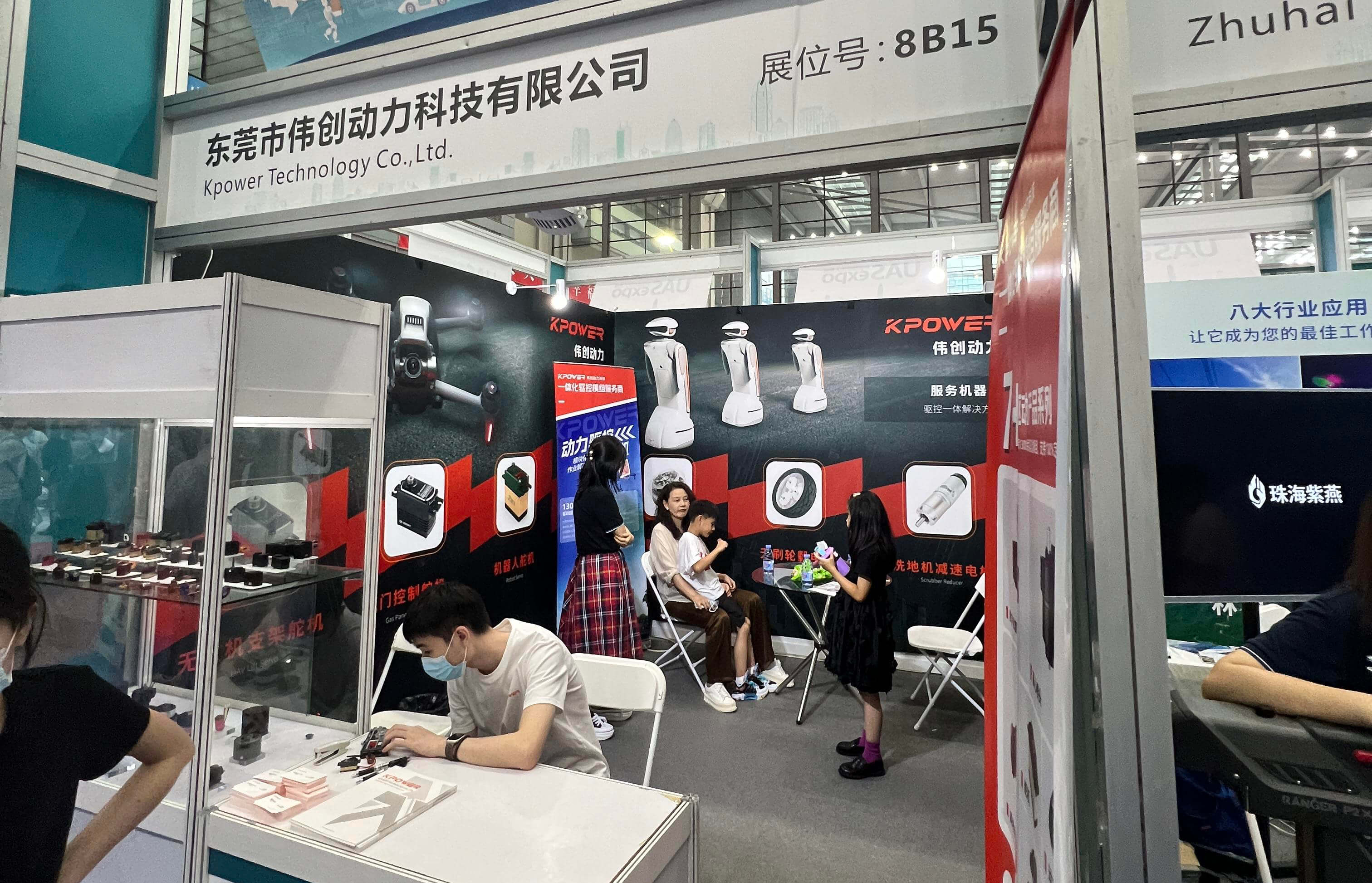
Established in 2005,kpowerhas been dedicated to a professional compact motion unit manufacturer, headquartered in Dongguan, Guangdong Province, China. Leveraging innovations in modular drive technology,kpowerintegrates high-performance motors, precision reducers, and multi-protocol control systems to provide efficient and customized smart drive system solutions. Kpower has delivered professional drive system solutions to over 500 enterprise clients globally with products covering various fields such as Smart Home Systems, Automatic Electronics, Robotics, Precision Agriculture, Drones, and Industrial Automation.
Update Time:2026-01-19

Contact Kpower's product specialist to recommend suitable motor or gearbox for your product.