




TECHNICAL SUPPORT


Published 2026-01-19
"It would be great if each module could be adjusted independently without affecting other parts." He muttered.
This is probably the most common pain point that many people encounter in machinery and automation projects. The system is too "holistic". If one place is changed, other places will suffer. Later we talked about microservices - this concept is popular in the software field, and it is surprisingly suitable for hardware and electromechanical integration projects.
Simply put, imagine that your production line is no longer one giant, but instead consists of many independent small units. Each unit manages its own tasks: for example, a servo motor controls the movement of an axis, a vision module is responsible for inspecting quality, and a logic module directs the process sequence. They work independently and communicate and collaborate in a lightweight way.
Benefit 1: Changes no longer hurt your muscles. In the past, to adjust the parameters or motion curve of a motor, you might need to stop the entire line or even recompile the entire control program. What now? Just adjust the service corresponding to that motor drive module. Other parts run as usual, and testing can be done independently. It's like a new musician in the band, and the other musicians continue to practice and work together when playing together.
Benefit 2: Upgrading becomes easy. When new technology comes out, you want to replace a certain DC servo with a more responsive model. Under the microservice architecture, you only need to replace the service module that drives the servo, the interface remains the same, and the other parts are almost invisible. The system will not require full re-authentication due to partial upgrades.
Benefit three: Improved fault tolerance. A problem with a certain module - such as a temporary interruption of communication - will not cause the entire system to collapse. Other independent services can continue to operate or enter a safe state. The problem module can be restarted or repaired, and then "joined" to the system again. The resilience of the entire system increases.
Indeed, moving from a traditional monolithic architecture to microservices requires some changes in design thinking. But it's not as complicated as imagined. Modularize your system, both physically and functionally: Which parts can operate independently? What control logic can be encapsulated into independent services?
For example, a simple three-axis robotic arm project. You can split the servo motor control of each axis into three independent services, visual positioning is one service, and motion path planning is another service. They talk to each other through explicit interface protocols (such as network-based communications). Each service can be developed, tested, and deployed independently.
What about hardware resources? Many controllers and industrial computers today are powerful enough to run multiple lightweight services simultaneously. The key is to plan communication and data flows to avoid excessive coupling between services.
They later tried to reconstruct a small assembly line using microservice ideas. The different functions - feeding, positioning, tightening, inspection - are separated into independent modules. Once, a customer temporarily requested to change the tightening torque and sequence. In the past, this would have required at least half a day of downtime to rewrite the program. This time, the engineer only modified the logic of the "tightening service" and updated it online within half an hour. Other work stations were not affected at all.
Lao Zhang said with a smile: "It feels like giving the machine the power of 'Lego'. Wherever there is a need to change, just replace that piece of brick instead of rebuilding the entire castle."
This kind of flexibility is particularly valuable under the trend of multi-variety and small batch production. You don’t have to redesign the entire production line to meet the special requirements of a certain product. Simply combine or adapt the corresponding service modules.
Of course, not all hardware and software are naturally suited to this model. When selecting core components, such as servo motors, drives, and controllers, you need to consider whether they support flexible interfaces and protocols, and whether they are easy to control and integrate independently.
Communication standardization is important. Choosing components that support common industrial communication protocols (such as EtherCAT, Modbus TCP, OPC UA) can make data exchange between services smoother. For example, if everyone speaks the same language, there will be no barriers to collaboration.
Module autonomy. A good servo drive should be able to complete closed-loop control of position, speed, and torque locally. It only needs to receive upper-level instructions instead of relying on a central controller to complete all operations. This is in line with the concept of "independent deployment and independent operation" in microservices.
Configuration and management tools. Does the system provide convenient tools to manage these distributed services? Can I monitor the status of each service and update the configuration individually? This is related to the convenience of daily maintenance.
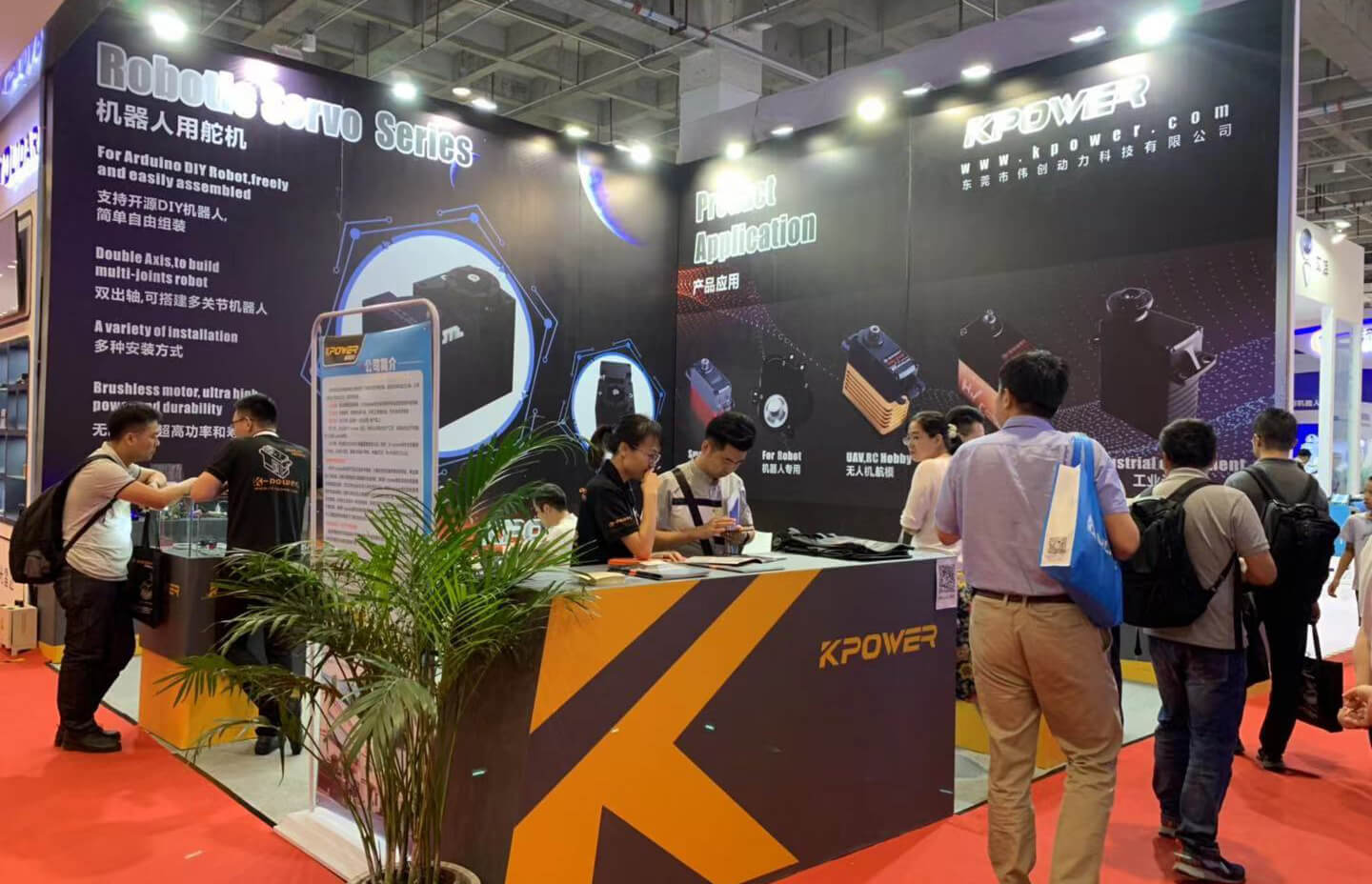
existkpowerProvided, we often explore how to combine hardware with this architectural thinking. Let the electromechanical system not only be strong and reliable, but also possess this "agility".
The technical concept sometimes sounds cold, but back in the workshop, it solves real problems. Microservices are not a silver bullet, they require early design and thinking. But when you see the system becoming flexible and no longer vulnerable to change, the feeling is very real.
It's like injecting some "vitality" into a complex machine - each part is both independent and collaborative, problems can be isolated, and upgrades can be carried out locally. It gives mechanical systems the toughness similar to living organisms.
Maybe next time you design a new project or revamp an old system, you can ask one more question: Can this be split into an independent service? Make change easier.
After all, in this era where requirements are getting faster and more personalized, perhaps it is this kind of wisdom that allows machines to keep up with changes easily. And all of this is ultimately to make creation and work smoother and more relaxed.
Established in 2005,kpowerhas been dedicated to a professional compact motion unit manufacturer, headquartered in Dongguan, Guangdong Province, China. Leveraging innovations in modular drive technology,kpowerintegrates high-performance motors, precision reducers, and multi-protocol control systems to provide efficient and customized smart drive system solutions. Kpower has delivered professional drive system solutions to over 500 enterprise clients globally with products covering various fields such as Smart Home Systems, Automatic Electronics, Robotics, Precision Agriculture, Drones, and Industrial Automation.
Update Time:2026-01-19

Contact Kpower's product specialist to recommend suitable motor or gearbox for your product.