



























TECHNICAL SUPPORT


Published 2026-03-17
When you start to build a micro-robot or make a scaled-down model aircraft, you will inevitably encounter a vexing question: What kind of steering gear should be selected so that it can be compact and powerful at the same time? At first glance, the sub-microservos on the market seem to be the same. However, when it comes to making a choice, I have no idea what parameters to pay attention to, let alone how to install and debug them.
Don’t worry, today we will talk about these compact guys in depth to help you start from the selection ofservos until you are able to operate them proficiently, and you can easily do it in one step.
When choosing a subminiatureservo, the first thing to know is how much effort your project requires. The force provided by the steering gear is called torque in professional terms, and its unit is usually kilogram·cm. This unit intuitively reflects the multiple objects it can pull. It's like making a small robotic arm. Each joint on the robotic arm has different torque requirements. At this time, you can estimate the load first, and then leave an additional 20% margin. In this way, the servo will not overheat due to strain during operation.
In practice, accurate load estimation is crucial. This requires comprehensive consideration of various factors such as the weight of each part of the robotic arm, the friction generated during movement, and the external resistance that may be encountered. Only by fully considering these can the load size be estimated more accurately. The 20% margin is reserved to deal with various additional situations that may arise. For example, the robot arm suddenly encounters some minor obstacles during operation, or as the use time increases, some parts of the robot arm undergo slight changes, resulting in a slight increase in load. By reserving a margin, we ensure that the steering gear can always operate stably and avoid overheating damage due to excessive exertion, thereby ensuring the smooth progress of the entire project.
In addition to torque, speed and size are also crucial. The speed depends on how many seconds it takes for the servo to turn 60 degrees. The smaller the number, the faster it is. As for the size, you have to measure the space you have reserved. Don’t buy it and it won’t fit in. Remember to also look at the operating voltage. Some servos can only run at 5V, while others support a wider range, which will affect your choice of battery or power module.
The installation position determines the service life of the servo. Many people directly stick the servo to the fuselage with double-sided tape, but it will easily fall off if it vibrates a lot. It is best to design a special fixing base and tighten it with screws. This will not only reduce vibration, but also make the steering gear output more stable. If it is a plastic body, be sure not to tighten the screws too tightly as they may slip.
Wiring is also a problem prone area. The wires of the sub-miniature servo are thin and soft, and are easily broken when welded directly to the receiving board. It is best to cover the connector with heat shrink tubing, or use a special plug to connect it. When routing cables, avoid moving parts and secure them with cable ties to prevent them from being caught by gears. If the signal lines and power lines are too close together, interference may be introduced. It is safer to separate them slightly.
When you get a new servo, don’t rush to install it into the project. Do a simple test first. Use a servo tester or directly use the remote control receiver to slowly turn the joystick to see if the servo is smooth and whether there is any jitter or lag. If there is, it may be an individual quality problem, so exchange it quickly to avoid the trouble of disassembly and assembly later.
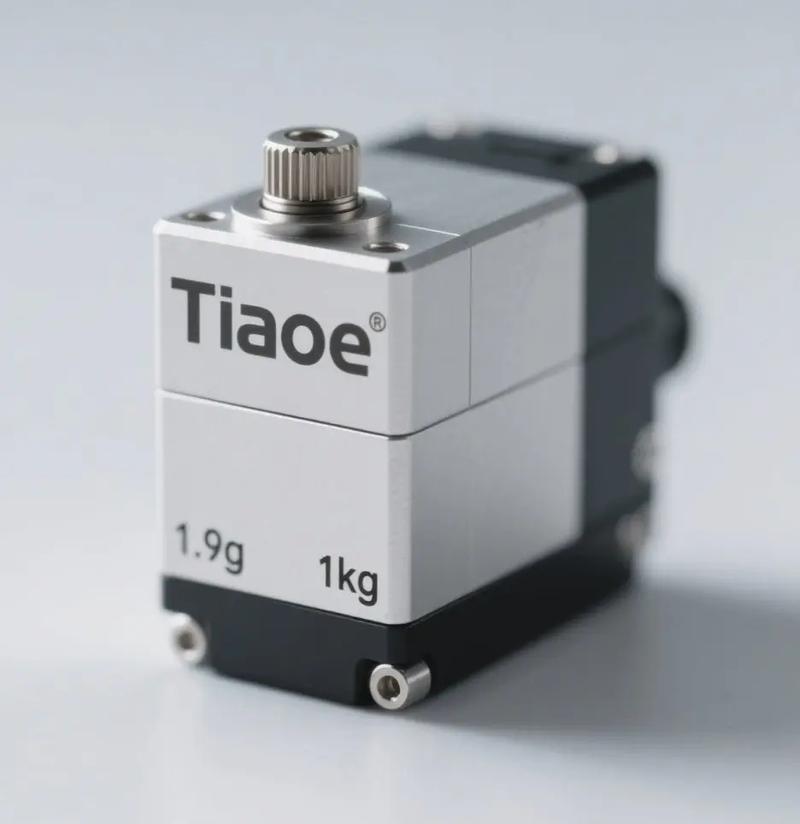
After installation, debugging the trip is a critical step. The rotation range of some sub-micro servos is 180 degrees, but your mechanism may only require 90 degrees. In this case, you have to limit the stroke through the rudder angle function on the remote control or programming to prevent the servos from always pushing against the limit, which consumes power and is easy to burn out. Remember to gently block the rudder arm with your hand during debugging to feel whether the force is even.
The most common homes for these small servos are micro drones and fixed-wing model aircraft. On drones, they control the flight attitude and need to react quickly, so you have to choose a fast model. On model aircraft, they pull the ailerons or elevators, which require precision and stability. In this case, a larger torque is more suitable.
In addition to flying in the sky, it can also be used for running on the ground and swimming in water. For example, a 1:24 scale small climbing car uses a sub-micro servo to control steering, making it very flexible. There are also underwater robots that need to use a servo to control the tilt of the camera. At this time, you must choose a waterproof type, otherwise it will be scrapped if water enters. In short, wherever the space is small, they have their place.
Many people think that servos are small and not durable. In fact, as long as they are used properly, they can last you a long time. The biggest culprit that affects the lifespan is overloading. Just like a person who gets tired when carrying heavy objects, if the steering gear works under the limit torque for a long time, the internal gears will soon wear out. Therefore, when designing, be sure to choose a model with larger torque so that it can work easily.
In addition, dust and vibration are also invisible killers. If used on a land robot, it is best to add a dust cover to the steering gear, or clean the debris on the gear regularly. Servos with metal gears will be much more durable than those with plastic gears, but they are also more expensive. It is recommended to touch the servo shell every once in a while. If it is hot, check whether the load is too large or the heat dissipation is not good.
Beginners can look at Huisheng and Yinyan. These two brands are cost-effective and have a full range of models, ranging from a few grams to more than ten grams. There is also a lot of online information, and it is easy to find tutorials. If you pursue precision and stability, and Hitec is a recognized big name, with excellent response speed and virtual position control, the price will double.
️ In fact, you don’t have to worry too much about choosing a brand. The key depends on your project budget and performance requirements. You can first determine the torque and size, then go to the brand's official website to check the specifications of the corresponding model and compare the weight, speed and price. When searching the company's official website, remember to look at their application cases, which can often give you a lot of design inspiration.
Have you ever encountered any strange failures or installation problems when using sub-micro servos? Welcome to leave a message in the comment area, let's discuss and solve it together, by the way, give this article a like and share it with more friends who need it!
Update Time:2026-03-17

Contact Kpower's product specialist to recommend suitable motor or gearbox for your product.


