



























TECHNICAL SUPPORT


Published 2026-03-19
When we engage in innovation and product development, we often just want to make it move and come alive. You must have encountered this situation: you have a great idea in your mind. You want to make a robotic arm to grab things, or add a steering function to a car. You bought aservowith great interest, only to find that it either cannot be installed, shakes like a sieve, or does not turn at all. His enthusiasm suddenly cooled down. Don’t worry, today from the perspective of an old player who has usedservos for more than ten years, we will break down theservos and explain them clearly, so that you can not only choose and use the right ones, but also make the project run smoothly.
To put it simply, the servo is a small "angle master". It is different from our common DC motors. Ordinary motors will just spin in circles and stop when you ask them to. But the servo is different. If you tell it to turn to a certain angle, such as 90 degrees, it will turn by itself and stop there steadily. Even if you try to break it open with your hands, it will try to resist and return to its original position.
Why is it so obedient? Because in addition to the motor, it also integrates a reduction gear, a position sensor (that is, a potentiometer) and a control circuit board. This system forms a "closed-loop control". You can think of it as a very obedient soldier who hits wherever you point. The command you give is the target angle. It will check in real time whether it has reached it, maintain it when it reaches it, and continue to adjust if it does not.
The application range of steering gear is particularly wide, and it may be behind many rotating things in our lives. The most common one is in the field of robotics. For example, the arms and legs of humanoid robots and the joints of robot dogs are all driven by servos. Every time it turns, the robot can make an action.
Another example is the remote control model. Whether it is an airplane controlling ailerons and tail rudder, a car model controlling steering, or even a ship model controlling rudder, it all depends on it. It can now be seen in many smart homes and toys, such as smart valves that automatically open and close, surveillance camera pan-tilts that can rotate up and down, left and right, and robot toys that can dance and blink. Even in the industrial field, some small automation equipment will use small steering gears to grab and place materials.
Faced with the dazzling array of servos on the Internet, how can you choose one without being blinded? Just remember these few key points. The first istorque, which is the most important indicator. The unit is usually kg·cm. This means how many kilograms of weight the servo arm can lift 1 cm away from the axis. You can imagine how heavy the thing you want to move is and how long the moment arm is, and estimate how much torque is needed. For example, to drive a lightweight robot finger, 2-3kg·cm is enough; but if you want to lift a metal robotic arm, you may need more than 15kg·cm.
Second isspeed and size. Speed is expressed in "seconds/60 degrees". The smaller the number, the faster it turns. If your project requires fast response times, such as a racing robot, speed is important. The size and weight depend on your installation space. If used on drones or small robots, you must choose a micro servo. There are alsocontrol methods. Analog servos are cheaper, but have slightly slower accuracy and response; digital servos have fast response and accurate positioning, but are also more expensive. For beginners, it’s no problem to start with a standard-sized, medium-torque analog servo.
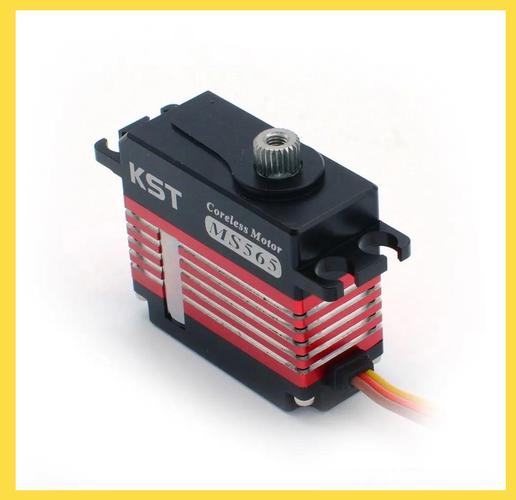
Now that you have the servo, how do you make it turn? Let’s look at its three wires first. Generally, the brown or black wire is the negative terminal (GND), the red wire is the positive power supply (VCC), and the other yellow, orange or white wire is the signal wire (). Be sure to check the wiring carefully, otherwise it may burn instantly. Connect these three wires correctly to your controller, such as a servo tester or remote control receiver.
The easiest way to debug is to use aservo tester. This thing costs tens of dollars. Connect it to the servo, turn the knob on it, and the servo will rotate to the corresponding angle. This is the best way to verify whether the steering gear and mechanical structure are normal. Before installing the steering wheel and connecting rod, remember to return the steering wheel to the midpoint (usually 90 degrees) and then install the steering wheel straight. This will ensure that your mechanical device moves smoothly throughout the entire stroke range and will not get stuck due to an excessive angle.
The most annoying thing during the project is the servo failure. The most common cause isinsufficient power supply. When the servo is started and loaded, the current will suddenly increase. If your power supply cannot keep up, the voltage will drop instantly, causing the servo control chip to restart or the signal to be abnormal. The symptoms are jitter, weakness, and random rotation. The solution is to change a power supply with a large enough current, such as changing from a mobile phone charger to a professional switching power supply, or simply using a battery pack to power the steering gear alone.
If it's not a power supply problem, checkthe signal cable. Are the connections in good contact and are there any weak solders? Is the signal output from the control board stable? In complex electromagnetic environments, a magnetic ring can be added to the signal line. It is also possible thatthe machine is stuckand the rotating shaft is blocked by something. At this time, the servo will make a "sizzling" overload sound and will burn out after a long time. Use your hands to gently help it rotate to see if there is any interference. If these are ruled out, it may be that the internal gear of the steering gear is broken, which is commonly known as "sweeping gear", and then it can only be replaced with a new one.
There are indeed many brands of servos on the market, ranging from a few yuan to hundreds or even thousands. For high-end applications that pursue ultimate performance and reliability, such as professional competition drones or large industrial robotic arms, established Japanese brands such as Hitec and Hitec are the first choice, and they are the most secure to use. If you have a limited budget and are doing product prototypes or DIY projects, domestic manufacturers such as Huisheng, JX, Shuangtian, etc. are also doing quite well, are very cost-effective, and can meet most needs.
My suggestion is, don’t just look at the brand, but also look atword of mouth and the specific model. Within the range of torque, speed and size you have determined, search relevant forums or communities to see which model everyone is using and what their feedback is. After finding the target, the most important action is tosearch the company's official website, check the detailed product manuals and specifications, understand the installation dimensions, electrical parameters, and even contact technical support directly to ask for their advice. A responsible supplier can save you a lot of time and trouble.
Having said so much, I wonder if the most troublesome problem you encounter when working on a steering gear project is unstable power supply or inadequate mechanical installation? Or are you planning to use servos to implement some interesting new ideas? Welcome to leave a message and share in the comment area, let us communicate and discuss together. If you think this article is helpful to you, don’t forget to like it and share it with your friends who also love to play games!
Update Time:2026-03-19

Contact Kpower's product specialist to recommend suitable motor or gearbox for your product.


