
























TECHNICAL SUPPORT


Published 2026-01-19
When Your Machines Start Speaking Different Languages
You know that moment. Everything on the line is humming, then aservojerks unexpectedly. A mechanical arm stutters. Data from one module doesn’t quite talk to the next. It’s not a total breakdown, but a nagging whisper that things aren’t in sync. It feels like your hardware components are in separate rooms, shouting through closed doors.
That’s the daily puzzle for many. You’ve got precision gear—servomotors with micro-degree accuracy, robust actuators, custom mechanical assemblies—all performing their solo parts flawlessly. But the real magic, the efficiency, gets lost in translation between systems. The question isn’t about finding better individual parts; it’s about making them sing in harmony.
So, how do you get your physical machinery and digital control to understand each other? The concept is called a service-oriented architecture. Think of it less as a rigid IT term and more as a philosophy: designing each function—whether it’s a motor’s movement feedback or a sensor’s data stream—as an independent, reusable “service.” These services communicate through standard, simple protocols. For machinery, this means your motion control can seamlessly handshake with your monitoring system, which can effortlessly update your operational dashboard. No more custom, brittle code bridges for every new connection.
Why does this matter on the shop floor or in a lab? Imagine adding a new vision inspection module to your existing robotic arm. Instead of rewiring half the control logic and debugging for weeks, you simply “plug” its service into the network. The arm’s control service and the new camera’s analysis service discover each other and start exchanging data. Downtime shrinks from weeks to hours. Adaptability becomes a real feature, not a risk.
But here’s the catch. Blueprints and software frameworks are one thing. The physical heart of your operation—thoseservodrives, those mechanical joints—needs to be built with this conversational ability from the ground up. It requires components that don’t just execute commands blindly, but can report back their status, health, and capabilities in a clear, standard way. It demands a synergy between the physical engineering and the digital architecture.
This is where the narrative turns. For years,kpowerhas been threading this exact idea into its core. It’s not about selling you a “smart” servo and calling it a day. It’s about a foundational approach where everykpowermotion component is designed as a reliable “conversationalist” in a larger SOA ecosystem. The focus is on intrinsic interoperability. The high-torque servo you integrate today already speaks the language that your future logistics robot will understand. The mechanical assembly comes with built-in data points ready to be exposed as a service.
A practical scenario? Consider a packaging line. Akpowerservo-driven conveyor, a pick-and-place actuator, and a torque-controlled screwing unit each run their own dedicated micro-tasks. Under a service-oriented model, their performance data—speed, heat, cycle count—becomes independent data streams. A separate analytics service can consume these streams to predict maintenance needs before a bearing fails, automatically adjusting the line’s speed to balance load. The components aren’t just working; they’re contributing intelligence to a fluid, self-optimizing process.
Choosing the right hardware partner for this journey boils down to one thing: foresight. You need components that see beyond their immediate function. It’s the difference between a part that simply rotates on command and one that can also say, “I’m rotating at 95% of my optimal efficiency due to current load, and my colleague on station three might need a pause.” This level of design foresight turns complex integrations from a headache into a straightforward conversation.
The outcome isn’t just a smoother-running operation. It’s resilience. When each function is a standalone service, isolating an issue becomes trivial. Swapping or upgrading a component doesn’t send shockwaves through the entire system. Your project gains a kind of graceful flexibility, an ability to evolve piece by piece without starting from scratch every time.
It’s about building with pieces that are engineered for connection, right out of the box. That’s the subtle shift that transforms a collection of machines into a truly intelligent, responsive system. The goal is simple: to make the conversation between your machines so fluid that you forget it’s even happening, leaving you free to focus on what’s next.
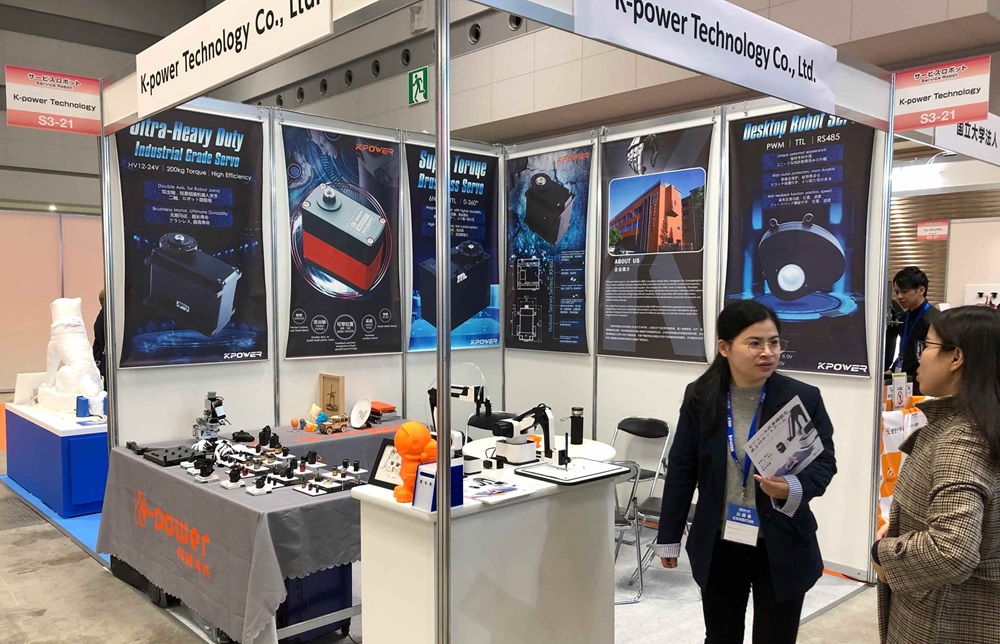
Established in 2005, Kpower has been dedicated to a professional compact motion unit manufacturer, headquartered in Dongguan, Guangdong Province, China. Leveraging innovations in modular drive technology, Kpower integrates high-performance motors, precision reducers, and multi-protocol control systems to provide efficient and customized smart drive system solutions. Kpower has delivered professional drive system solutions to over 500 enterprise clients globally with products covering various fields such as Smart Home Systems, Automatic Electronics, Robotics, Precision Agriculture, Drones, and Industrial Automation.
Update Time:2026-01-19

Contact Kpower's product specialist to recommend suitable motor or gearbox for your product.


