



























TECHNICAL SUPPORT


Published 2026-01-19
Imagine you are building a new device. Parts were laid out on a table, and circuit diagrams were spread out in front of them. At this time you encounter a fundamental question: Should you design a unified and compact control core, or split the functions into several independent small modules to work separately? This is like facing the choice between "microservice architecture" and "monolithic architecture" in servo motor and mechanical projects. Which one you choose often determines whether the project will be smooth or bumpy in the future.
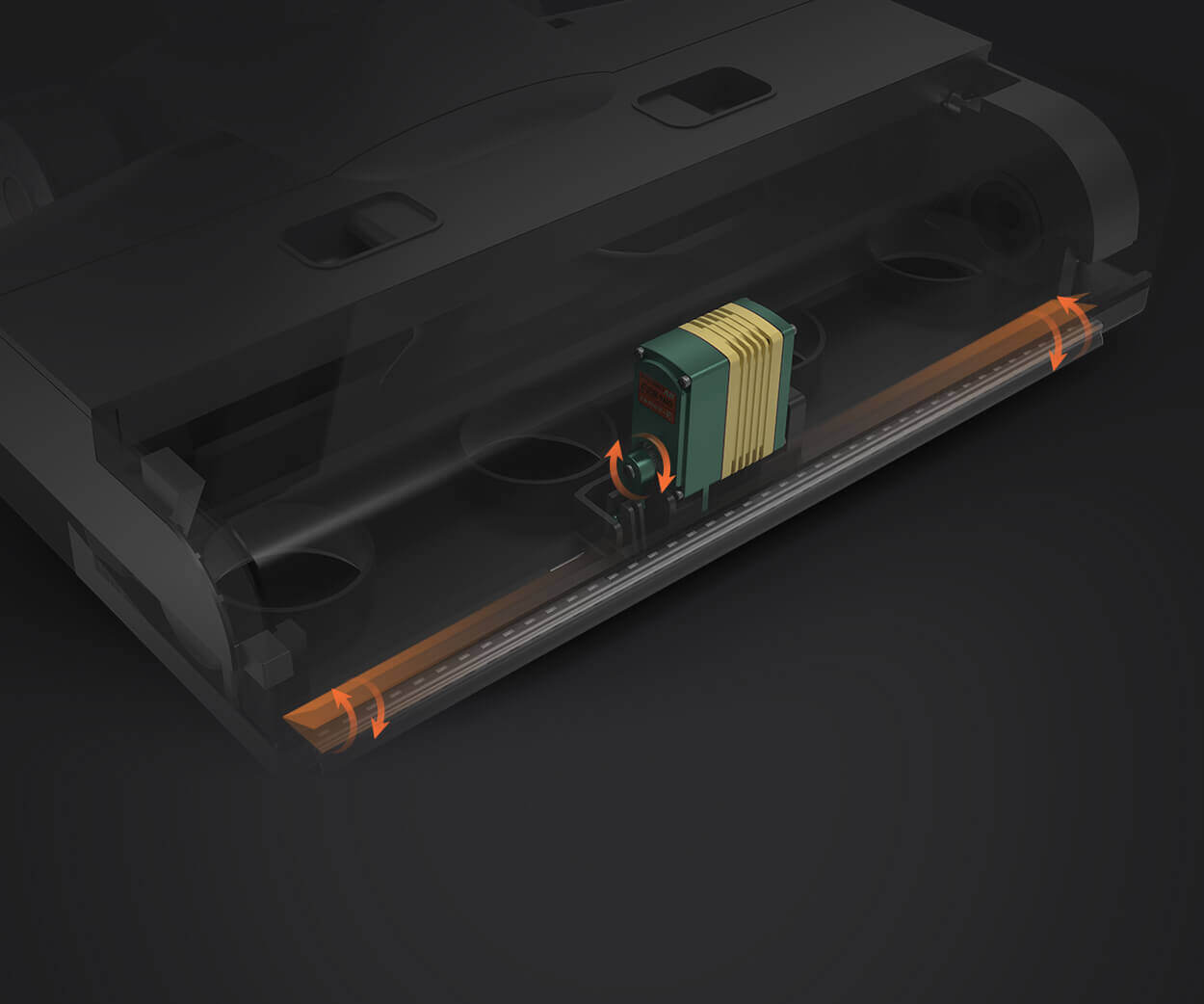
At the beginning of many projects, in order to save trouble, all functions - motion control, status feedback, communication interfaces - are packed into a "big box". It seemed to run smoothly in the early days, but as demand increased, problems arose. If you want to upgrade one of the functions, it may affect the whole system and have to shut down and conduct a comprehensive test. It's like a machine with all the gears locked together. If you change a small part, the whole machine has to stop.
More commonly, when the load on a certain module suddenly increases, the entire system slows down or even crashes. Scalability? That often means duplicating the entire "box," which wastes resources and increases management burden. Over time, this "big box" became bloated, fragile, and difficult to adapt to new technical requirements.
So, someone proposed the idea of splitting. Open the "big box" and make each core function - such as precise position control, torque management, and temperature monitoring - become an independent small unit that can operate autonomously. This is the idea of microservice architecture. Each unit focuses on one thing and communicates with each other through clear protocols.
In doing so, change happens. When you need to enhance motion control accuracy, you only need to upgrade the corresponding module separately without affecting communication or monitoring functions. The system can be expanded more flexibly: whichever part is under high pressure can add resources to that part separately. Reliability has also been improved. An unexpected failure of one unit no longer means the entire system is paralyzed.
not necessarily. It's like asking, should all machines be driven by small, dispersed motors, or is there sometimes a powerful central motor that's more appropriate? If your project has relatively fixed functions, is small in scale, and pursues ultimate response speed and simplicity, then a well-designed "monobody" may be more efficient and economical. It has no internal communication overhead, and deployment and management are straightforward.
But if you are building a platform that requires continuous iteration, has complex functions, and has widely varying loads on each part, especially those projects that require long-term maintenance and elastic expansion, the split microservice approach can often save you many headaches in the future.
There is no standard answer here, but there are a few angles to help you think about it:
Sometimes it's also wise to take a hybrid, incremental approach: start with a solid core and, as the project grows, gradually peel off those modules that change most frequently or are the most independent.
existkpower, we come into contact with projects that face this kind of choice every day. Our experience is that no matter which path you ultimately choose, the key to success often lies in insight into core requirements, as well as the quality and reliability of the components themselves. The structure is the skeleton, and high-quality servo motors and precision mechanical components are the muscles and joints that make the skeleton move. A smart design coupled with stable and durable components can allow ideas to be implemented smoothly and continue to run.
Don't let architectural choice get in the way. Think of it as a design exploration to find the best fit for your unique project. Whether you choose a highly integrated integrated solution or a modular path with flexible combinations, clear goals and reliable execution are the path to smooth operation. When you return your focus to the problem the project is trying to solve, the right choices will often emerge on their own.
Established in 2005,kpowerhas been dedicated to a professional compact motion unit manufacturer, headquartered in Dongguan, Guangdong Province, China. Leveraging innovations in modular drive technology, Kpower integrates high-performance motors, precision reducers, and multi-protocol control systems to provide efficient and customized smart drive system solutions. Kpower has delivered professional drive system solutions to over 500 enterprise clients globally with products covering various fields such as Smart Home Systems, Automatic Electronics, Robotics, Precision Agriculture, Drones, and Industrial Automation.
Update Time:2026-01-19
Contact Kpower's product specialist to recommend suitable motor or gearbox for your product.


