



























TECHNICAL SUPPORT


Published 2026-01-19
Alright, let’s dive into something that’s probably been on your mind if you’ve ever tried building a complex system in Java: how do you make everything work together without everything falling apart?
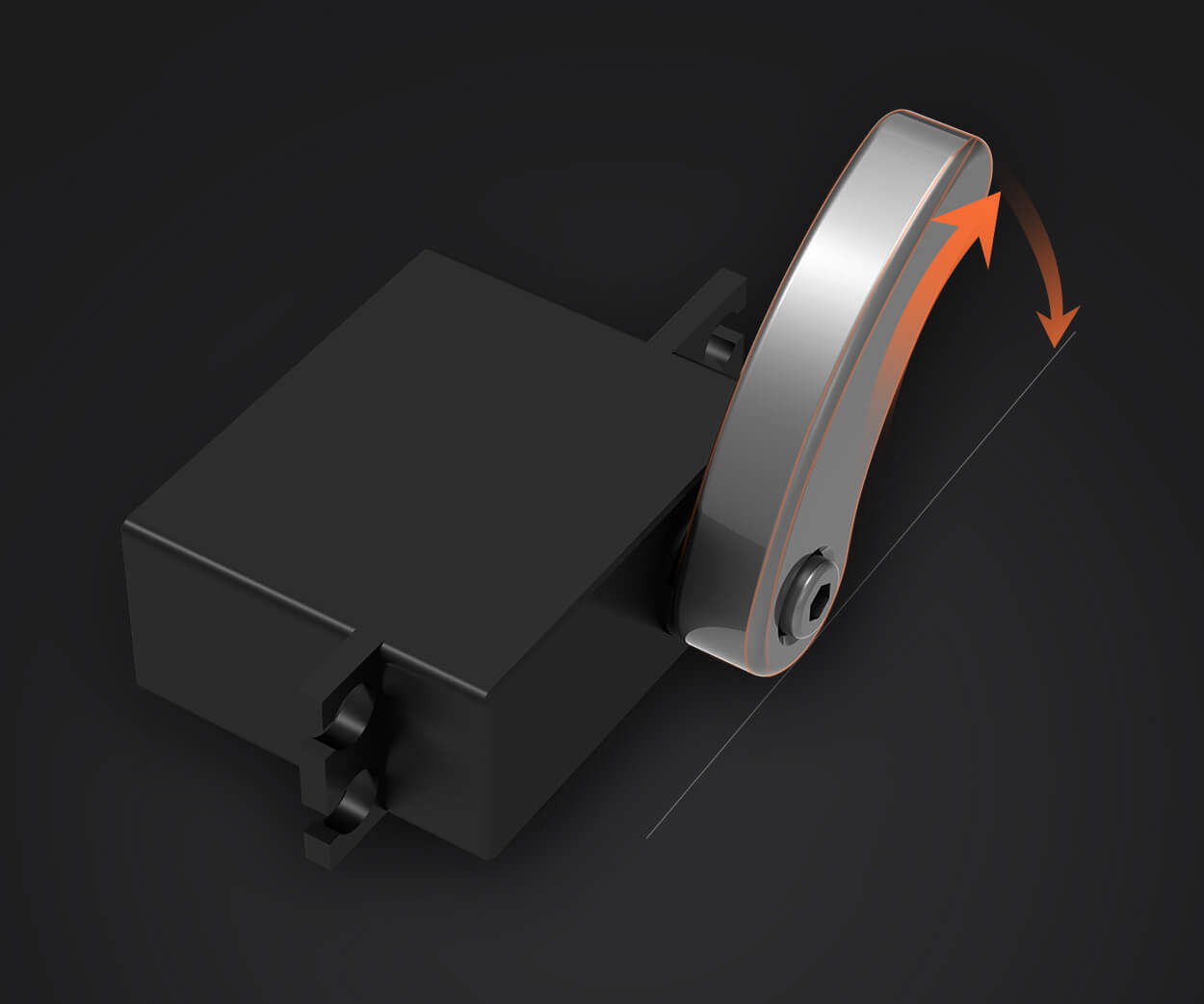
Picture this: you’ve got different parts of your project—servos, motors, mechanical assemblies—all needing to communicate, update, and sync without delay. But instead of smooth operation, you end up with tangled code, slow responses, and a system that’s rigid. It’s like trying to fine-tune a robotic arm but finding that one small change breaks three other functions. Frustrating, right?
So, what’s the way out?
It starts with rethinking how you structure things. Instead of one bulky application handling everything, imagine breaking it down into smaller, independent units—each with its own role, each communicating clearly, each able to evolve without dragging the whole system down.
That’s essentially what a microservices architecture in Java offers. But let’s step away from jargon for a moment.
Think of it as creating a team of specialists rather than relying on one generalist. One service manages motion control, another handles calibration, a third takes care of data logging. They talk to each other when needed, but they don’t depend on each other to function. If one needs an upgrade, you don’t have to rewrite everything else. If something fails, the rest keep going.
But how does that work in practice? Let’s walk through an example.
Say you’re integratingservocontrol within a larger automation setup. With a traditional approach, tweaking the feedback loop logic might mean redeploying the entire application—downtime, risk, and delays. But with microservices, you modify just the motion service. Test it, release it, and the other services barely notice. It’s smoother, safer, and far more adaptable.
Now, why Java? Well, it’s sturdy, it’s mature, and it handles concurrency well—important when multiple services are exchanging data in real time. Plus, tools and frameworks around Java make building microservices less of a chore.
But let’s pause here. You might ask: isn’t this more complex to manage? More moving parts?
True, it can be—if not done thoughtfully. That’s where experience matters. Proper service boundaries, clean APIs, sensible communication protocols—they turn complexity into clarity.
Takekpower’s approach, for instance. They focus on making these architectures feel natural, not over-engineered. It’s less about following a rigid blueprint and more about designing for real-world use: reliability, scalability, and ease of iteration. The goal isn’t just a “working system” but one that stays maintainable as needs change.
Here’s something to consider: how do you ensure these services stay in sync without tight coupling?
Event-driven patterns help. Services publish updates when something changes—a new position value, a completed movement—and others listen if they need to. It’s like a conversation where everyone speaks when they have something to say, no constant interruptions.
And monitoring? With distributed systems, visibility is key. Each service can report its health, latency, errors—giving you a live picture without digging through logs. It turns maintenance from guesswork into precise adjustments.
Sometimes people wonder: is this overkill for smaller setups? Not necessarily. Even modest projects benefit from clear separation. It prevents the “big ball of mud” down the road.
We’ve talked about the “how,” but what does it feel like to work with such a system?
It feels flexible. You can experiment without fear. You can scale parts independently. You can reuse services in new projects. Over time, that saves effort—and reduces surprises.
If you’re prototyping, you can start simple and expand. If you’re refining an existing system, you can gradually decouple modules. The path adapts to where you are.
So, where does this lead? To systems that aren’t just functional, but resilient and ready to grow. And when that’s done right, it becomes something people trust—smooth in operation, straightforward to improve, and consistent in results.
That sense of reliability, that clarity in design—it’s what makes certain solutions stand out. And when teams experience that day after day, their confidence grows. Not because of flashy features, but because things simply work as they should.
Established in 2005,kpowerhas been dedicated to a professional compact motion unit manufacturer, headquartered in Dongguan, Guangdong Province, China. Leveraging innovations in modular drive technology,kpowerintegrates high-performance motors, precision reducers, and multi-protocol control systems to provide efficient and customized smart drive system solutions. Kpower has delivered professional drive system solutions to over 500 enterprise clients globally with products covering various fields such as Smart Home Systems, Automatic Electronics, Robotics, Precision Agriculture, Drones, and Industrial Automation.
Update Time:2026-01-19
Contact Kpower's product specialist to recommend suitable motor or gearbox for your product.


