
























TECHNICAL SUPPORT


Published 2026-01-19
Ever feel like your project is coming together, all the mechanical bits and pieces clicking into place, but then you hit a wall? The hardware is ready, the design looks sharp, but making it all move smoothly from your application feels like solving a puzzle with missing pieces. You're building something clever withservos or steppers, maybe a custom robotic arm, an automated display, or a precision control stage. The physical part is your playground. The code… that's where things get tangled.
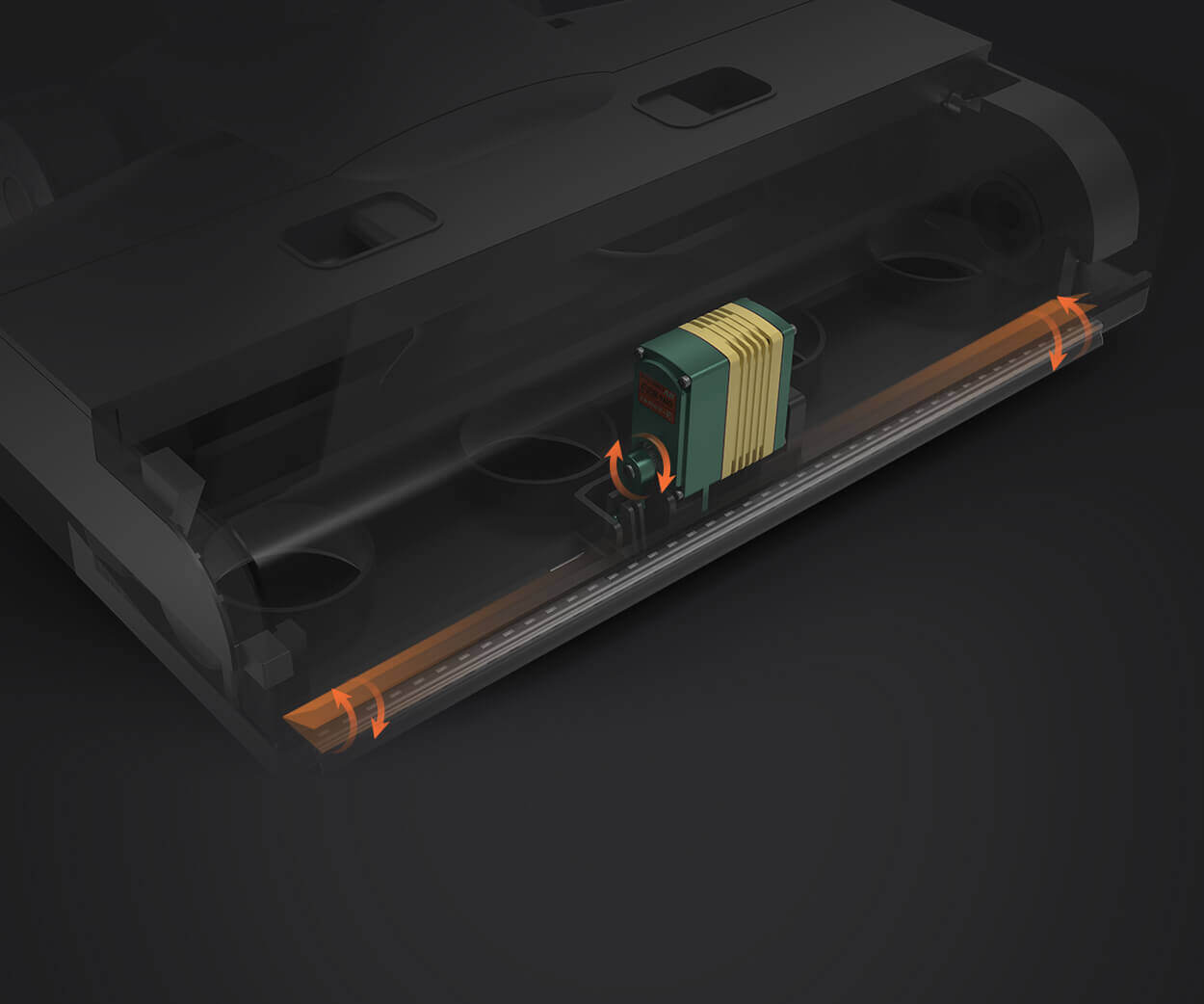
Think about it. You want your Java service—the brain of your operation—to simply say "move there" or "hold position," and have the motor respond instantly, reliably. No odd jerks, no missed steps, no cryptic error logs that leave you guessing. But what you often get are layers of translation: converting commands, wrestling with low-level protocols, writing bridges that feel fragile. It’s not just about making it work; it’s about making it work without the headache. The joy of seeing a mechanical creation come to life gets dimmed by the friction of integration.
So, what’s the missing link? How do you close that gap between the logical world of your microservices and the physical dance of motors?
Imagine a different scenario. Your Java service sends a command as naturally as it calls any other internal API. A precise angle for aservo, a specific rotation for a DC motor. The response is immediate and accurate. The complexity of pulse width modulation, control signals, and hardware handshaking is handled somewhere else, out of sight and out of mind. Your code stays clean, focused on its core logic—processing data, managing workflows, serving users. The motion control just becomes another reliable, stateless service it talks to.
This isn't about adding more complexity to your architecture. It's about abstracting it away. The goal is to have a dedicated "translator" that speaks both languages fluently: the high-level business logic of Java and the precise, time-sensitive language of motors. This translator manages the conversation, ensuring instructions are clear and feedback is accurate.
"What does this look like in practice?" you might wonder.
Consider you’re running a microservice that manages an interactive art installation. One service handles user input, another manages lighting, and a third needs to control several servo motors to adjust physical elements. With a dedicated controller interface, the motor-control service doesn’t need to be a hardware expert. It sends standardized commands like setPosition(servoId, 45.5) or setVelocity(motorId, 0.8). The controller takes it from there, dealing with the specifics of voltage, signal timing, and safety checks. The developer's world remains one of objects, methods, and logs, not oscilloscopes and datasheets.
If this sounds like the path out of the maze, how do you pick the right solution? It's less about technical buzzwords and more about fitting seamlessly into your existing flow.
First, think about simplicity. The best tools feel invisible. Look for something that provides a straightforward Java library or API endpoint. You should be able to add a dependency and start coding, not spend days configuring drivers. The learning curve should be gentle.
Next, consider reliability. Motion control hates surprises. The bridge must be robust, with clear error handling and consistent performance. It should manage timeouts, recover from hiccups, and provide sensible feedback when something's off—like "position limit reached" or "power fault," not just a generic failure.
Finally, it needs to be quiet and focused. It shouldn't demand constant attention or add overhead to your other services. It's a specialist, doing one job exceptionally well, letting your main services be the generalists.
Let's sketch how this integration might unfold in a project. You have a new requirement: automate a small conveyor belt with a stepper motor, governed by your inventory management service.
You start by defining the movement logic in your Java service—maybe a simple "advance belt by one item space." Instead of diving into stepper driver libraries, you look to your motion controller's API. You find a well-documented method for relative moves. A bit of code is added, a couple of lines that call this external controller. You configure the motor parameters once, in the controller's own space.
Then you test it. The service sends a command. There’s a brief, almost imperceptible delay, and the motor hums to life, moving exactly as needed. The logs from your Java service show a clean success message; any detailed diagnostics are handled by the controller itself. The two systems collaborate, each doing what it's best at.
It turns a potential integration nightmare into a simple division of labor. Your team stays in their comfort zone of Java and systems design, while the gritty details of motion are entrusted to a dedicated specialist. The project moves forward faster, and the result is more stable. The mechanical part of your world finally listens as easily as any other service you run.
That’s the shift. It’s not just about control; it’s about creating a fluent dialogue between the digital and the physical. When that dialogue is clear, what you can build becomes limited only by your imagination, not by integration struggles. The maze has a clear path through it, and the journey becomes part of the fun again.
Established in 2005,kpowerhas been dedicated to a professional compact motion unit manufacturer, headquartered in Dongguan, Guangdong Province, China. Leveraging innovations in modular drive technology,kpowerintegrates high-performance motors, precision reducers, and multi-protocol control systems to provide efficient and customized smart drive system solutions.kpowerhas delivered professional drive system solutions to over 500 enterprise clients globally with products covering various fields such as Smart Home Systems, Automatic Electronics, Robotics, Precision Agriculture, Drones, and Industrial Automation.
Update Time:2026-01-19

Contact Kpower's product specialist to recommend suitable motor or gearbox for your product.


