



























TECHNICAL SUPPORT


Published 2026-01-19
Have you ever assembled a complex machine? For example, a robotic arm requires multiple servo motors and steering gears to work together. You carefully tighten each motor, program it, and debug it. It all went well in the beginning, right? A certain motor is responsible for rotation, and a certain servo is responsible for grabbing. But when you want to add a new function - such as making this robotic arm not only grab, but also sense force and adjust adaptively, things start to get a bit... "tangled".
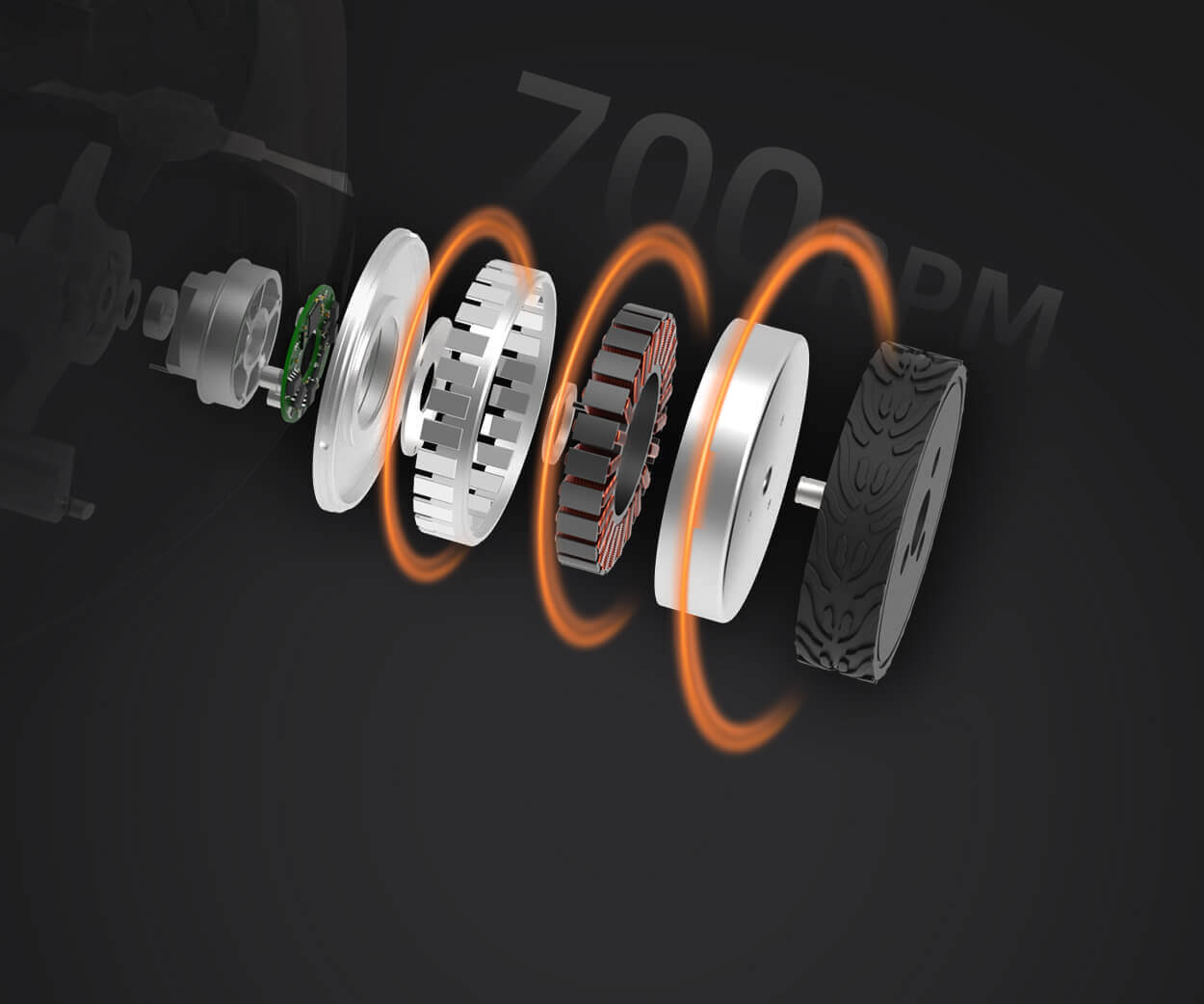
You find that changing the control parameters of one motor may affect the response of another seemingly unrelated servo. The entire system is like a ball of thread that is temporarily tied together, and the whole body is affected by one move. Do you want to iterate quickly? Want to flexibly add or remove functions? That pile of tightly coupled code and hardware logic will make you walk on thin ice every step of the way.
It's like trying to make a flexible spring out of a solid block of metal. It may be strong, but it's so inflexible that a single impact can deform the entire structure.
"Is it possible to turn this 'metal block' into a series of independent 'spring coils'?" someone asked.
The answer is yes. This is what "Building Spring Cloud Microservices" does. Don't be scared by the name, it is actually a very vivid metaphor. Think of a truly high-quality mechanical spring: each coil is independent and complete, but they are connected together in an elegant way to absorb shock and provide smooth power. The same is true for microservice architecture - it splits a large, rigid monolithic application into many small, autonomous services. Each service is like a small and strong spring coil, responsible for a specific thing (such as specifically processing the motion trajectory calculation of a certain type of servo motor). They are connected through a lightweight communication mechanism (such as the force between coils) to form a flexible system.
From "hard connections" to "elastic networks"
The previous approach was like welding all the motor control boards onto the same huge motherboard. If there is a short circuit in one place, the entire board may be scrapped. Now, imagine that each motor has its own small intelligent control module (a microservice), and they talk easily to each other through wireless protocols (like a network in the cloud). Do you need to upgrade a certain servo? Just replace that small module alone, and the rest of the entire robotic arm will continue to operate without downtime.
What does this bring? It's resilience. A temporary failure of one service (such as the one responsible for logging) will not cause the entire system (such as an ongoing delicate assembly process) to crash. Other services still work, and the faulty part can be isolated, repaired, and restarted, just like replacing a damaged spring coil without throwing away the entire spring.
It's agile. Teams can independently develop and deploy around different services (such as "visual recognition service", "path planning service", "motor drive service"). Want to add AI visual feedback to your mechanical projects? You can directly develop or access a new vision service without rewriting the core control logic.
But the quality of the "spring" is crucial
Not just a bunch of coils put together can make a good spring. Materials, heat treatment, and winding accuracy determine whether it can rebound permanently or fail quickly due to fatigue. The same goes for building a microservices architecture. Blindly splitting will only end up with an unmanageable pile of "metal scraps" instead of a "spring cloud" that works together.
Here are a few key points, such as the criteria for selecting high-quality spring steel:
"It sounds good, but doesn't it make the system more complicated? I have so many scattered 'little coils' to manage."
Very good question. Indeed, microservices bring new operational challenges - you need to coordinate, monitor, and ensure the health and communication of these distributed services. This leads to another key concept: cloud and automation. Modern cloud platforms and tool chains (containerization, orchestration systems) are like providing a sophisticated "spring winding and testing bench." They can automatically handle the deployment, scaling, discovery and link monitoring of services, allowing developers to focus more on the business logic of the service itself - that is, the performance design of the "spring", instead of worrying about how they are connected together all day long.
As you can imagine, akpowerThe control brain of the mechanical system composed of high-precision components also adopts the same exquisite and flexible microservice architecture. Both hardware and software are modular, replaceable, and easily expandable. When your product needs to evolve from a single-function robot to a multi-functional, remotely configurable smart workstation, the advantages of this architecture will be clearly demonstrated.
So, this is a change in thinking
From pursuing a large, stable, and indivisible "whole" to embracing a group of small, flexible "individuals" that generate value through collaboration. This is not only the evolution of software architecture, but also reflects the design philosophy of modern precision machinery and automation systems: seeking reliability through modularity and achieving power through distribution.
Just like a series of carefully designed springs are used to cushion impacts, store energy, and provide supple motion, spring cloud microservices are built to inject the same elasticity and vitality into your digital systems. It makes change less scary and growth less cumbersome. When each part can evolve independently and gracefully, the entire system can smoothly expand toward more complexity and intelligence.
Ultimately, what you build is no longer a static piece of metal, but a dynamic network full of possibilities. Every expansion is like adding a new, harmonious note to the network.
Established in 2005,kpowerhas been dedicated to a professional compact motion unit manufacturer, headquartered in Dongguan, Guangdong Province, China. Leveraging innovations in modular drive technology, Kpower integrates high-performance motors, precision reducers, and multi-protocol control systems to provide efficient and customized smart drive system solutions. Kpower has delivered professional drive system solutions to over 500 enterprise clients globally with products covering various fields such as Smart Home Systems, Automatic Electronics, Robotics, Precision Agriculture, Drones, and Industrial Automation.
Update Time:2026-01-19
Contact Kpower's product specialist to recommend suitable motor or gearbox for your product.


