



























TECHNICAL SUPPORT


Published 2026-01-19
You know the feeling. The 3D printer head jerks instead of gliding. The robotic arm in your prototype stutters when it should be smooth. That automated camera slider you’re building just doesn’t hit the mark. The idea is solid, the design looks good on screen, but the real-world movement feels… off. It’s often not the grand design that fails, but the silent workhorse inside—the component that turns your commands into physical motion.
So, what’s really going on?
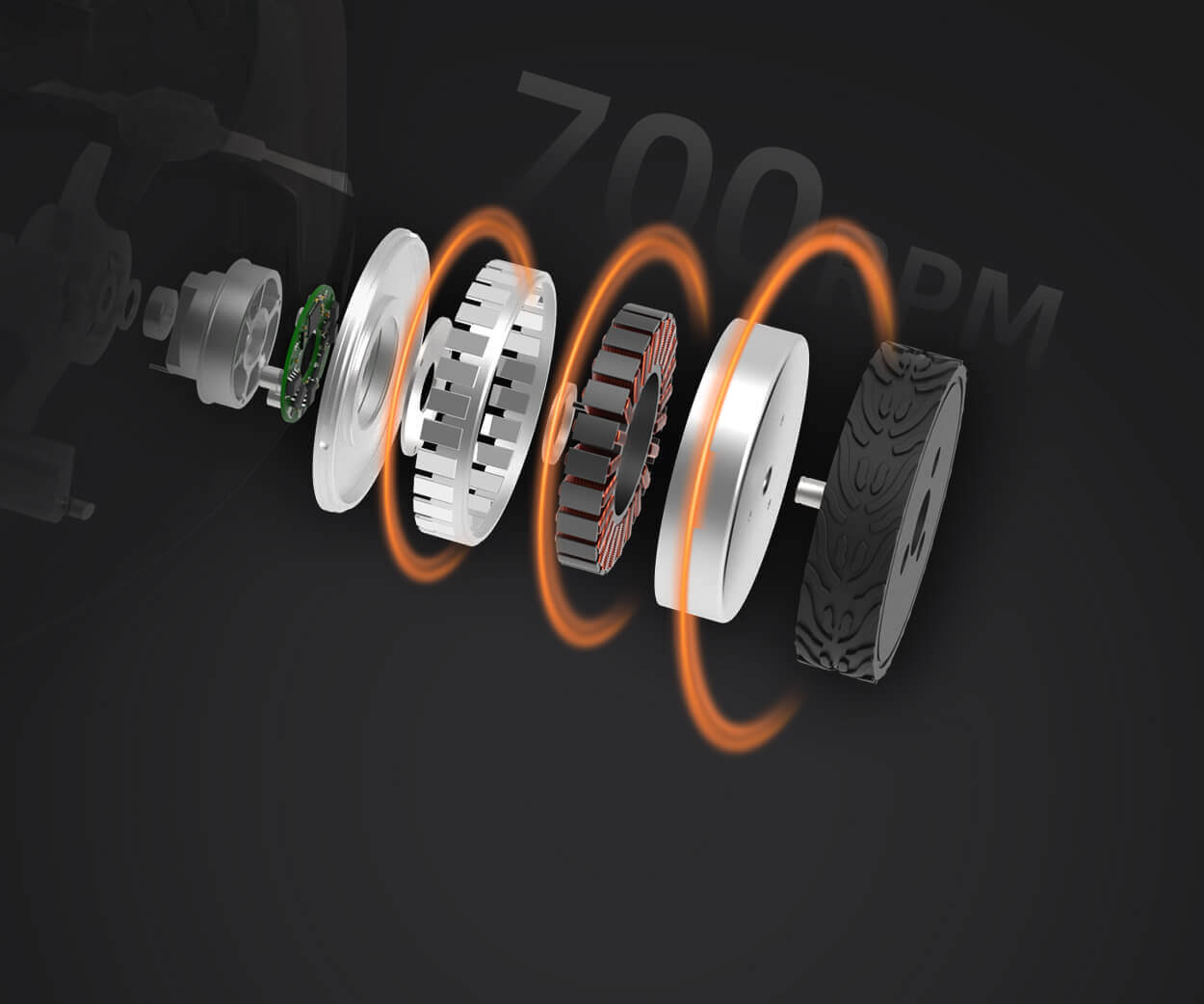
At the core, we’re talking aboutservomotors and actuators. Think of them as the translators between the digital world of your code and the physical world of movement. A digital signal goes in, and precise physical motion comes out—a specific angle, a controlled speed, a repeatable position. But not all translators speak the same language. Some are precise but weak. Some are powerful but clumsy. The mismatch between what you need and what you pick can leave your project feeling uncoordinated.
Why does this happen so often? Maybe the specs looked right on paper, but real-world load was different. Maybe the response time was just a bit too slow for that critical sequence. Perhaps reliability became an issue after hours of continuous operation. It’s the gap between theory and practice, between the datasheet and the finished product humming on your workbench.
This is where a different kind of tool changes the conversation. Imagine giving your motor orservoa dedicated, intelligent manager that lives right alongside it. That’s the concept behind a Micro Service architecture in Java for embedded motion control. Instead of having one central brain trying to manage everything—the user interface, the logic, and the minute-by-minute control of the motor—you give the motion control its own dedicated, focused “mind.”
This specialized service handles one job: communicating with and controlling theservoor motor. It talks directly to the hardware, managing pulse widths, reading feedback, and making real-time adjustments. Meanwhile, the main application can focus on higher-level tasks. It’s like having a dedicated pilot for an engine, while the captain navigates the flight.
The benefits aren’t just theoretical; they show up in tangible ways.
First, complexity melts away. Your main code doesn’t get bogged down in low-level hardware protocols. You interact with the motor through clean, simple commands. Need the arm to move to 45 degrees? You call a method like moveToAngle(45). The micro-service handles the gritty details of making that happen. It’s a cleaner separation that makes your code easier to write, read, and debug.
Then there’s reliability. Isolating the motor control means a glitch elsewhere in your system is less likely to cause a physical malfunction. The control loop for your servo runs in its own predictable space, immune to interruptions from other tasks. This leads to smoother, more consistent movement.
And finally, flexibility. Swapping out a motor model or a driver board often means just updating the micro-service, not rewriting large portions of your application. It future-proofs your design.
With any technical component, the proof is in the details. Look for a solution built on robust, industry-tested Java frameworks—this isn’t the place for experimental code. The service should offer a clear, well-documented API that makes integration feel straightforward, not like a puzzle. Check for examples that cover common scenarios: position control, speed profiling, torque limiting. Does it handle feedback from encoders or potentiometers gracefully? Can it manage the communication protocol your specific hardware requires?
Support matters, too. Not just documentation, but a sense that the solution is actively maintained and that help is available if you hit a snag. You’re not just buying a library; you’re adopting a tool for the long run.
Getting started typically follows a natural path. You’d integrate the service package into your project. Configure it for your specific motor—setting parameters like voltage range, pulse limits, or feedback type. Then, in your application code, you instantiate the service, initialize it, and start issuing commands. The transition from a monolithic, tangled control code to this separated, clean approach often feels like clearing a fog. Tasks that were once intertwined become distinct and manageable.
In the end, the best tools don’t demand attention; they simply enable better results. They handle the complex, repetitive work quietly so you can focus on innovation and function. For anyone integrating motion—whether in a custom CNC setup, an interactive art installation, or a new automation prototype—the right control architecture isn’t an extra feature; it’s the foundation of precise, dependable movement.
It turns the question from “Why is this so jittery?” to “What should we build next?”. And that’s a much more interesting place to be.
Established in 2005,kpowerhas been dedicated to a professional compact motion unit manufacturer, headquartered in Dongguan, Guangdong Province, China. Leveraging innovations in modular drive technology,kpowerintegrates high-performance motors, precision reducers, and multi-protocol control systems to provide efficient and customized smart drive system solutions.kpowerhas delivered professional drive system solutions to over 500 enterprise clients globally with products covering various fields such as Smart Home Systems, Automatic Electronics, Robotics, Precision Agriculture, Drones, and Industrial Automation.
Update Time:2026-01-19
Contact Kpower's product specialist to recommend suitable motor or gearbox for your product.


