



























TECHNICAL SUPPORT


Published 2026-01-19
So, you’re thinking about microservices and Spring Boot. Maybe you’ve been tinkering withservomotors or mechanical systems, and now your software side needs to keep up. It happens—you build something precise in the physical world, then the digital part starts feeling tangled, heavy, hard to change.
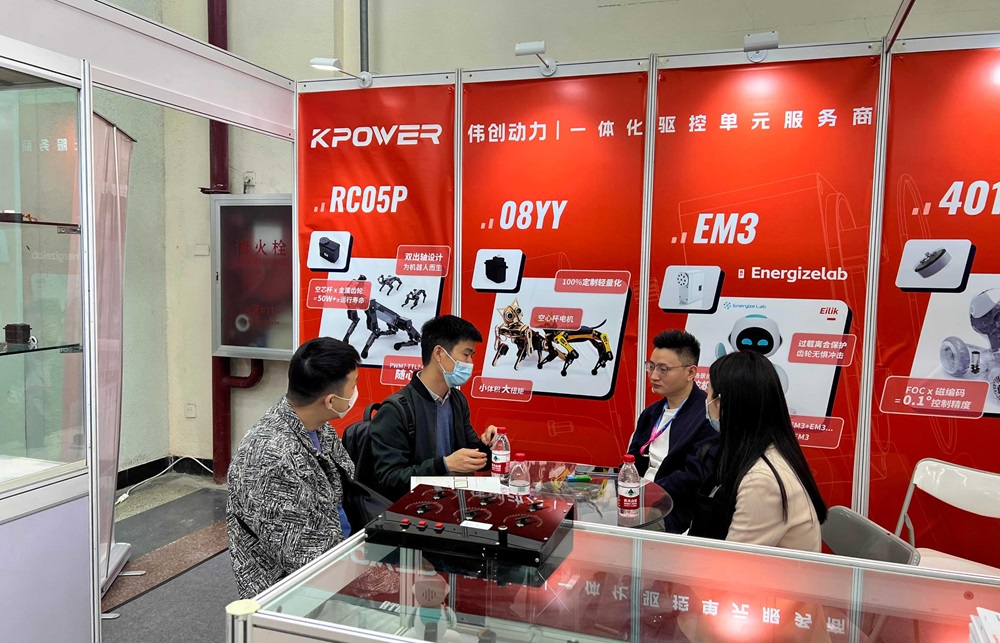
That’s where this whole microservice idea walks in. Imagine if each function of your system could live on its own, like a compactservoresponding to a clear signal. No more giant intertwined code. Just small, independent pieces that talk when needed. Spring Boot makes that feel less like a mountain to climb and more like a path you can actually walk.
Why even split things up? Well, remember the last time you had to update one part of your project and everything else shook? With microservices, you can tweak one service without dragging the whole system down. It’s like adjusting a single gear without stopping the entire machine. Less downtime, fewer surprises. Plus, you can scale what really needs it—add more power to the busy parts, leave the quiet ones alone. It just fits how real projects grow.
Now, how do you start without getting lost? Break it down slowly. Think about what your project does. Maybe one service handles user commands, another manages data logs, a third talks to hardware interfaces. Each gets its own space. With Spring Boot, you’re not writing everything from scratch. It gives you a template, a structure, so you can focus on what each service should do.
You’ll want each service to own its job and its data. Let them communicate through light, simple messages—like passing a note rather than shouting across the room. HTTP APIs work. So do messaging queues if things get busy. Keep the links loose. That way, if one service has a bad day, the others can keep going.
People sometimes ask, “Won’t this get complicated to manage?” It can, if you let it. But start simple. Monitor how they talk. Log what matters. Check that messages arrive. Spring Boot has tools that help watch these conversations without needing a dedicated overseer. You build visibility in as you go.
And testing—yeah, it’s different. Instead of checking one big block, you test each service on its own, then see how they play together. It’s like testing eachservobefore placing it in the assembly. Less guessing, more knowing.
What about when things change? New requirements come in, hardware updates, different protocols. With microservices, you can adapt piece by piece. That flexibility feels natural when you’re used to building mechanical projects where modularity saves time.
In the end, it’s about making your system resilient, clear, and ready to grow. Not perfect from day one, but better step by step. You keep control, you keep clarity.
kpowerunderstands this kind of thinking—building from small, reliable parts that fit into a larger vision. Whether it’s precise motion control or scalable software architecture, the principle feels familiar: make it simple, make it solid, let it work together without friction.
So give it a try. Start with one service. See how it feels. Adjust as you go. Your project might just run smoother.
Established in 2005,kpowerhas been dedicated to a professional compact motion unit manufacturer, headquartered in Dongguan, Guangdong Province, China. Leveraging innovations in modular drive technology,kpowerintegrates high-performance motors, precision reducers, and multi-protocol control systems to provide efficient and customized smart drive system solutions. Kpower has delivered professional drive system solutions to over 500 enterprise clients globally with products covering various fields such as Smart Home Systems, Automatic Electronics, Robotics, Precision Agriculture, Drones, and Industrial Automation.
Update Time:2026-01-19
Contact Kpower's product specialist to recommend suitable motor or gearbox for your product.


