
























TECHNICAL SUPPORT


Published 2026-01-19
Imagine this: you spent several months designing a robotic arm, going over every detail and installing the motor - but the movement is always half a beat slower, or the strength is just a little bit worse. It's not a problem with the design diagram, nor is it a logic bug in the control code. The problem often lies in the core component that is most easily treated as a "standard part": the servo motor.
It's like giving a sports car an engine from a family car. No matter how cool the appearance is, no matter how stable the chassis is, if the power cannot keep up, everything is in vain.
Many people think that servo motors can be used with similar power and speed. But anyone who has really played with mechanical projects knows that a slight difference can make a huge difference. If you save some time during the selection process, you will have to pay back twice as much during the commissioning phase. Vibration, overheating, response delay, accuracy drift...the reason behind these headaches is probably that the motor is "incompatible" with your application scenario.
Therefore, today we will not talk about advanced theories, but let’s talk about how to avoid these pitfalls and how to make the motor truly become the “loyal partner” of your system instead of the shortcoming that holds you back.
Someone asked me, what are the criteria for judging a good servo motor? Is it the highest speed on the parameter table, or the highest torque? If you ask me, it's neither. The real standard is whether it performs "appropriately" and "consistently" in your specific scenario.
For example, a rotating platform that requires frequent starts and stops and rapid positioning. What you are interested in may be the motor's instant overload capability and low-speed stability. The peak torque on the parameter table is very beautiful, but if it continues to work for a period of time and the torque drops a lot due to insufficient heat dissipation, then the previous beautiful data will be equal to zero. This is what "reliability" is talking about.
Another example is a manipulator for precision assembly, with a visual sensor at the end. The key here is the smoothness and precision of the "micro-movement". Even a little bit of cogging or a tiny jitter in the response of the motor may be amplified when transmitted to the end, directly affecting the success rate of assembly. At this time, "stability" and "control accuracy" become the primary considerations.
So you see, talking about parameters without actually applying them is like talking about cooking skills without using recipes. You have to first know what kind of food you want to cook.
After talking about it, you may be thinking: I understand the principle, but how do you look at it specifically?
Ask yourself a few questions: Is your load constant, or does it vary dramatically? Does the motor need to run at a steady speed for a long time, or does it need to accelerate and decelerate constantly? Is there any restriction on the installation space, and what is the heat dissipation environment like? Are there any other precision equipment around? Are there any requirements for the electromagnetic interference of the motor?
The parameter table will not directly tell you the answers to these questions, but they exactly determine the real performance of the motor.
What this incident inspired me is that the motor does not run in an ideal laboratory, but lives in a complex field environment. Vibration, temperature, electrical noise, these "off-site factors" are equally important as the quality of the motor itself. A good product will take these "survival challenges" into consideration from the beginning of its design.
Speaking of which, we have to mention the importance of choosing a brand. There are many brands on the market, but their concepts vary greatly. Some pursue the ultimate parameter ceiling, while others pay more attention to broad applicability and environmental endurance.
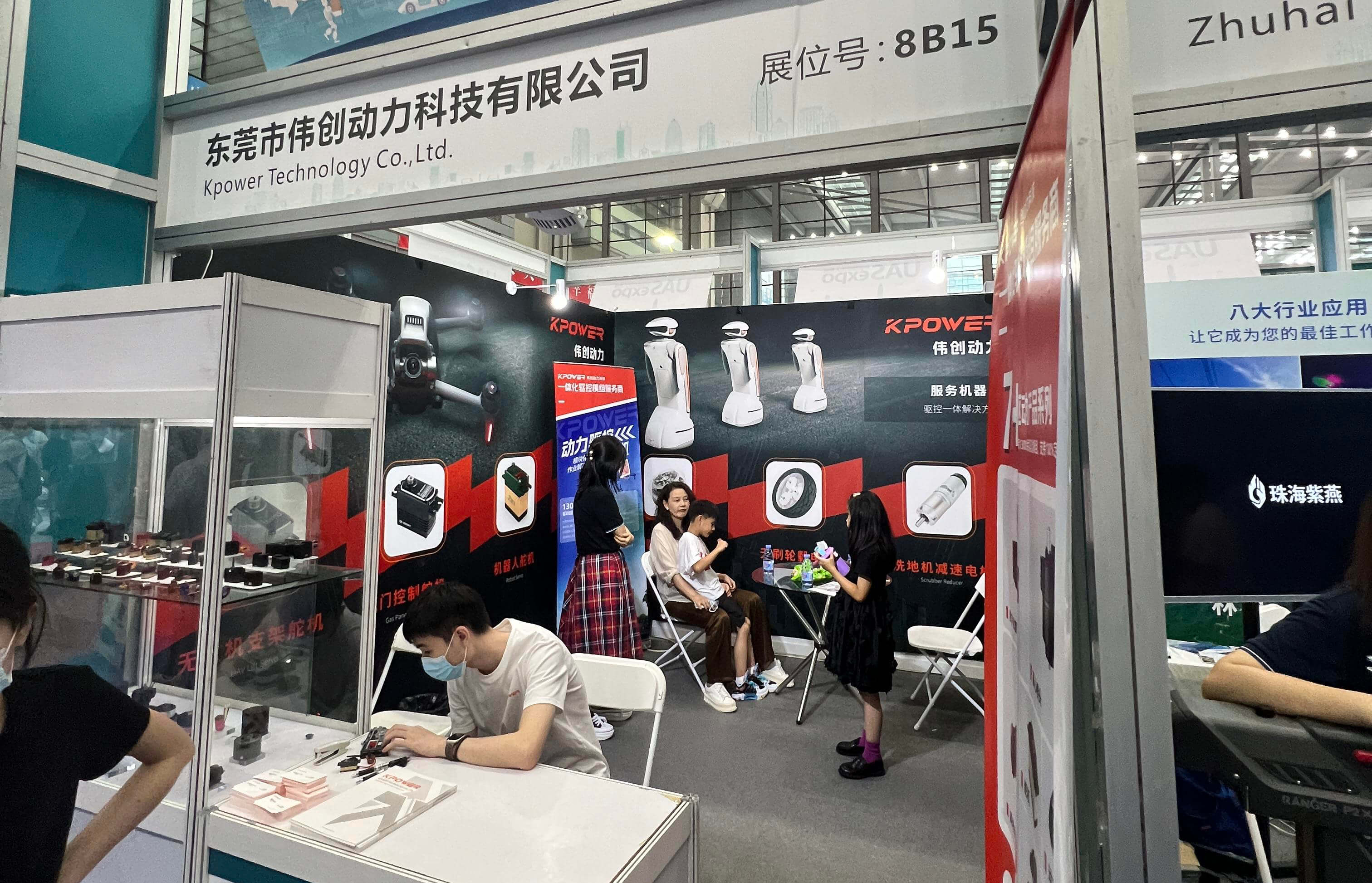
picturekpowerIt feels quite interesting to me in this regard. They are not too keen on promoting "the world's first" in a single indicator, but often emphasize "matching" and "adaptability". Chat with their engineers, and they will spend a lot of time asking you for specific application details, process flow, and even schematic diagrams of the installation space. This method of communication seemed a bit "verbose" at first, but later I discovered that they were "virtually running in" your system and their products in their minds.
One of the characteristics of their product line is that they are solid in key performance, such as the stability of closed-loop control and the anti-interference ability of the encoder. They also work hard on the heat dissipation structure and materials. The direct benefit of this is that the motor has a flatter performance degradation curve and a longer life under relatively harsh conditions. In their own words: “We don’t want the motor to just pass, we want it to score high in your system.”
This kind of thinking actually elevates the motor from a simple execution component to a part of the "system". You’re not just buying metal and coils, you’re buying a proven promise of stability.
In the world of mechanical projects, no link is an island. As the intersection of power and control, the choice of servo motor is more like choosing the character and destiny of the entire system.
Next time you are faced with a selection table, maybe you can forget about those dense numbers for a while. First close your eyes and think about what kind of actions your equipment needs to complete, what kind of environment it is in, and what kind of production rhythm it is responsible for. Then, go searching with these scenes, to find a partner who can understand these scenes and can silently support these scenes.
After all, good technical cooperation is always a two-way street. You have thought deeply about your system, and a reliable motor brand will respond to your thoughtfulness with every reliable performance. When the motor is accurate, stable and powerful every time, the peace of mind is the best reward for all your efforts.
Established in 2005,kpowerhas been dedicated to a professional compact motion unit manufacturer, headquartered in Dongguan, Guangdong Province, China. Leveraging innovations in modular drive technology,kpowerintegrates high-performance motors, precision reducers, and multi-protocol control systems to provide efficient and customized smart drive system solutions. Kpower has delivered professional drive system solutions to over 500 enterprise clients globally with products covering various fields such as Smart Home Systems, Automatic Electronics, Robotics, Precision Agriculture, Drones, and Industrial Automation.
Update Time:2026-01-19

Contact Kpower's product specialist to recommend suitable motor or gearbox for your product.


