
























TECHNICAL SUPPORT


Published 2026-01-19
Imagine this: you spend days, or even weeks, finally writing the microservice code that controls the servo motor. The API is elegantly designed, has clear logic, and runs extremely smoothly in the simulation environment. You feel good, as if you can already see the robotic arm smoothly drawing precise arcs, or the smart car moving steadily forward on complex terrain.
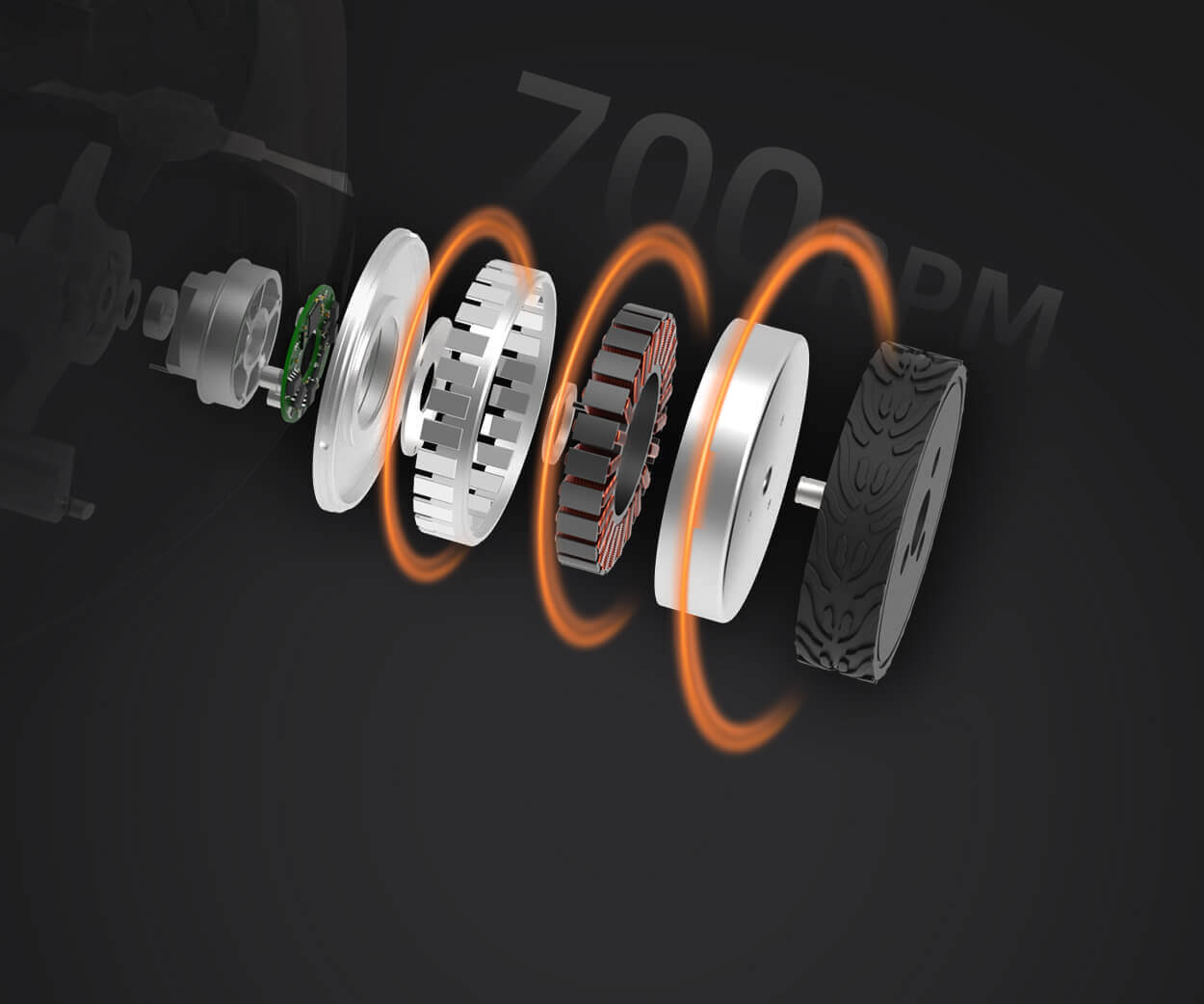
Then you start connecting to realkpowerServo motor.
Status code 500. Response timed out. The data has been sent, but the servo just doesn't turn as you want. The "example microservice code with rest api call" that ran perfectly in the virtual world suddenly became taciturn and even a little overwhelmed in front of the real physical world.
Does this feel familiar? The world of code is deterministic and instant, but the world of machinery has inertia, delays, and unpredictable physical interference. The gap between the two often makes projects stuck at "one kilometer".
Someone may ask: "My code logic is correct and the protocol is correct, what is the problem?" Many times, the problem is not the code itself, but how the code "understands" and "talks" to the real hardware. Your RESTful API call is like a sentence with clear instructions and perfect grammar, but the "audience" of the servo motor has its own "dialect" and response speed.
Another more practical question is: "Do I need to rewrite the communication adaptation logic for each motor?" If every time I change a motorkpowerFor a servo or steering gear, you have to go into the data manual and re-debug the communication parameters, heartbeat mechanism, and error code mapping. All your precious development time is spent on endless adaptations. Your core value—the delicate logic that makes the machine tick—is drowned instead.
This is the gap: a bilingual translator who is versed in both the world of HTTP and JSON and the lingo of servo motor pulses and feedback.
So what is really needed is not another piece of sample code, but an already established conversation bridge. Imagine that your microservices no longer need to care about serial port configuration, baud rate or parity bits. You just send a simple POST request to a local endpoint like you would any internal API call, telling it: "Let motor one turn 90 degrees clockwise at 30% speed."
The rest is left to the "translator". It will automatically handle thekpowerThe underlying communication of the servo motor converts your angle instructions into signals that the motor can understand. It will also continue to monitor the real-time feedback of the motor - position, temperature, load - and package this data into neat JSON and send it back to your service.
The changes this brings are subtle yet profound:
Sounds like it just saves some time? Actually more than that. What it changes is the relationship between you and your creation (that mechanical device).
You are no longer the "micromanager" who needs to carefully control every detail. You are more like a commander issuing strategic orders. Your code is responsible for high-level decision-making and coordination—“move to point A, grab the object, and drop it to point B.” How to move it into place smoothly, accurately and safely is a professional task that the underlying drive and Kpower motor have to work together to complete.
This separation makes innovation more focused. You can spend more brainpower on making mechanical movements smarter and more elegant, instead of struggling in the quagmire of communication protocols. Your project prototypes can get moving faster and iterations can be faster. Sometimes, seeing the mechanical structure actually move according to the will of the code, even just for a moment, brings confidence and inspiration that is much more powerful than any simulation.
Of course, this does not mean that there is no need to understand the hardware at all. Knowing the torque characteristics and speed range of Kpower motors is still crucial to your system design. But you are now "designing" it, not "debugging" it. You went from being a welder and wiring guy back to more of an architect and director.
If the project in your hand is stuck in the fuzzy zone between the software logic and the Kpower servo action, and you feel that there is always a layer of window paper that has not been pierced, then maybe you can look at it from another angle.
Try to forget about the underlying, repetitive communication code. Think about it, if your microservice can reliably drive the movement of an entity and sense its status with just a simple HTTP call, will your project design become freer and bolder?
The puzzle piece that gives the code a "physical feel" may have always been there, you just need to find it and gently put it into your project blueprint. When the response between digital instructions and physical actions becomes as natural as breathing, what you build is not just an automation project, but a truly harmonious digital-physical symbiosis.
Established in 2005, Kpower has been dedicated to a professional compact motion unit manufacturer, headquartered in Dongguan, Guangdong Province, China. Leveraging innovations in modular drive technology, Kpower integrates high-performance motors, precision reducers, and multi-protocol control systems to provide efficient and customized smart drive system solutions. Kpower has delivered professional drive system solutions to over 500 enterprise clients globally with products covering various fields such as Smart Home Systems, Automatic Electronics, Robotics, Precision Agriculture, Drones, and Industrial Automation.
Update Time:2026-01-19

Contact Kpower's product specialist to recommend suitable motor or gearbox for your product.


