



























TECHNICAL SUPPORT


Published 2026-01-19
Have you ever wondered why robots on the production line sometimes suddenly "go into a daze"? Or, it always feels a little slow when the instructions of a certain key component are conveyed to execution? Just like the old transportation system, it is jammed during rush hour. In the field of automation, many complex mechanical systems - such as those precision servo motors and steering gear combinations - are facing a similar dilemma: they are tied up in a large, unified control architecture. If there is a problem in one link, the entire process may come to a standstill.
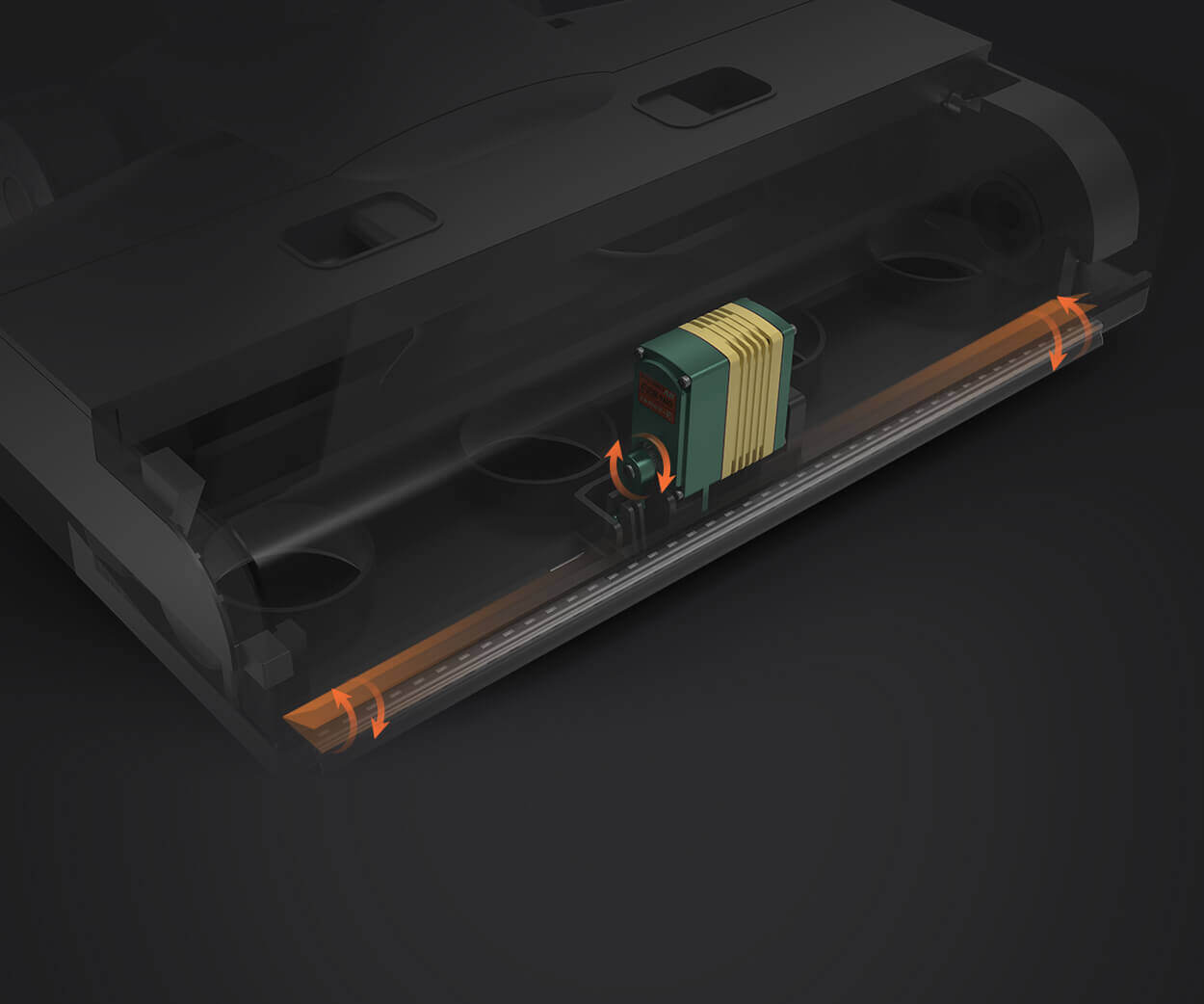
This is not just a machine problem, but also a bottleneck in systems thinking. A traditional all-in-one architecture is like a giant, indivisible supercomputer that handles everything. Feature updates? A complete shutdown test is required. Need a certain servo unit? A single move may affect the whole body. Flexibility, in this model, becomes a luxury.
Where is the way out? Imagine if we equipped every key unit on the production line - such as the steering module that controls the precise angle of the robotic arm, or the servo motor group that drives the conveyor belt to run smoothly - with an independent, intelligent "cerebellum"? Let them each handle their own core tasks while effectively communicating with each other through a clear "language". This is the core metaphor of Microservice Architecture in the field of industrial automation.
It doesn't make things more complex, it makes them clearer. In projects that deeply integrate mechanical and electronic control, the microservice architecture disassembles the entire control system into a set of small, independent services. Each service is built around a specific business capability, such as "position calibration service," "torque management service," or "real-time diagnostic service." They can be developed independently, deployed independently, and expanded independently.
What does this mean for servo applications? Means higher toughness. An abnormality in a control module serving a specific motor will not cause the entire line to be paralyzed, and other services will continue to work as usual. Meaning faster iterations. Do you need to upgrade your servo for a new model? Only the corresponding service needs to be updated without restarting the entire central control system. This means that your mechanical system really starts to become "agile" and "smart".
Someone may ask: "This sounds a bit abstract, how does it work?" We can put aside the obscure technology jargon and use a scenario closer to life to understand.
Suppose you are designing an automated assembly cell. The core action is a six-axis robotic arm (driven by multiple high-performance servo motors) to grab parts, and a high-precision servo completes the final tightening. In the traditional model, all motion planning, trajectory calculation, and torque feedback are squeezed into a central controller and queued for processing.
Under microservice design:
These services talk through lightweight communication mechanisms (such as message-based or API), just like several dedicated experts on the shop floor collaborating efficiently, rather than throwing all problems to a tired "general commander". Even if service B needs to be temporarily upgraded, the work of service A and service C will not be interrupted.
In industrial scenarios, adopting a microservice architecture is not just about replacing software. It requires the implementer to have a deep physical layer understanding of the mechanical equipment itself (whether it is the dynamic response characteristics of the servo motor or the mechanical life of the steering gear). The architecture is designed to match the real behavior and physical constraints of mechanical loads.
This is exactlykpowerAreas of focus. We integrate our deep understanding of servo drives and precision transmission mechanisms into the design philosophy of system architecture. We ensure that each disassembled "microservice" is not a virtual module on paper, but an entity that closely maps to real motor characteristics, mechanical tolerances, and thermal management requirements and can run independently. Our solution roots the flexibility of the architecture in the physical reality of the device, thereby avoiding the common pitfall of disconnecting technology trends from engineering reality.
Choosing microservices is not just about choosing a technology, but also about choosing an ability to cope with complexity and change. When each of your mechanical units has autonomous and collaborative "intelligence", the potential of the entire system will be truly unleashed. It makes upgrades no longer an adventure, maintenance no longer a gamble, and efficiency improvements a continuous and natural process.
Perhaps it’s time to revisit those “blocked” moments in your workshop. That may not be a problem with a single machine, but the system is calling for a more elegant and robust architecture. A stage where every servo unit and every mechanical joint can fully demonstrate its strengths.
Established in 2005,kpowerhas been dedicated to a professional compact motion unit manufacturer, headquartered in Dongguan, Guangdong Province, China. Leveraging innovations in modular drive technology, Kpower integrates high-performance motors, precision reducers, and multi-protocol control systems to provide efficient and customized smart drive system solutions. Kpower has delivered professional drive system solutions to over 500 enterprise clients globally with products covering various fields such as Smart Home Systems, Automatic Electronics, Robotics, Precision Agriculture, Drones, and Industrial Automation.
Update Time:2026-01-19
Contact Kpower's product specialist to recommend suitable motor or gearbox for your product.


