
























TECHNICAL SUPPORT


Published 2026-01-19
Ever tried building something complex, like a custom RC car or a robotic arm, and found yourself lost in a mess of tiny motors, gears, and wiring? You know each part is crucial—theservofor precise angles, the motor for smooth rotation, the right gear to transfer power without faltering. But when they don’t work together seamlessly, everything just… stalls. It’s frustrating, right?
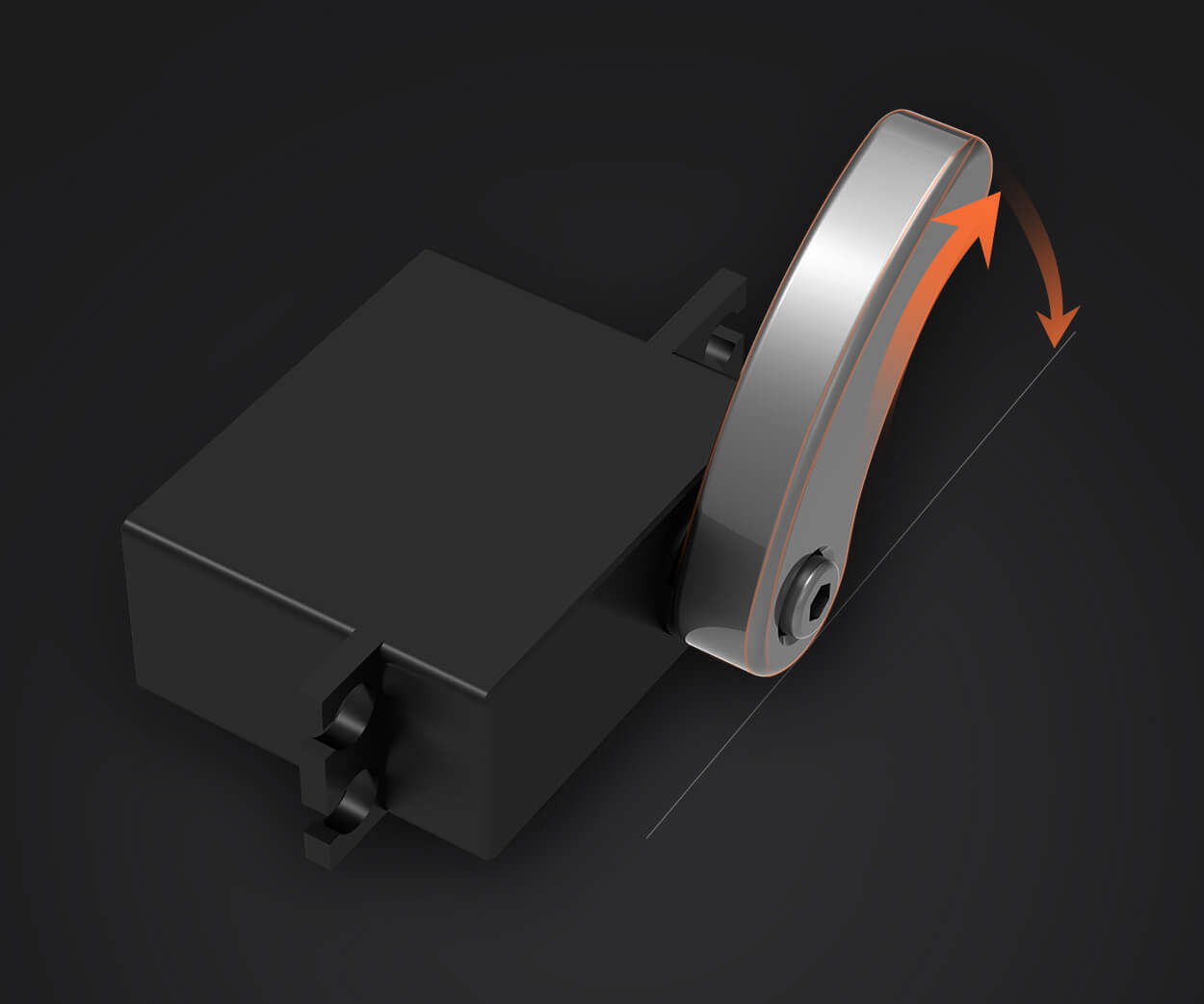
That’s where the idea of a microservices catalog comes into play—not in software, but in the tangible world of mechanical and motion control projects. Think of it as your well-organized toolbox, where everyservo, every actuator, every mechanical component is listed, described, and ready to match your needs perfectly.
So, what’s the real problem here?
Without a clear catalog, you’re left guessing. Will thisservofit my torque requirements? Is that motor compatible with my driver board? How do I ensure durability under load? You end up wasting time on trial and error, mixing parts that might work, instead of those that will work.
kpowergets this. We’ve seen projects fail not because the ideas were bad, but because the parts just didn’t speak the same language.
Why does a solid catalog feel like a game changer?
Imagine walking into a workshop where every tool is labeled, sorted, and paired with real-use examples. You’re not just picking a servo—you’re choosing a solution that’s been tested in scenarios like yours.
A good microservices catalog does more than list products. It:
It’s like having a mentor beside you, pointing at the right part before you even ask.
But how do you build one that actually works?
Let’s break it down—without getting too technical.
Start with clarity over complexity. Each entry in the catalog should answer the basic questions: What is it? What can it do? Where does it fit best? Avoid jargon. Instead of “high-torque digital servo with PWM control,” try “strong, precise motor for steering heavy models.”
Then, group by function, not just type. Servos for robotics, motors for conveyor systems, gears for high-load transfers—when things are findable by what they do, you skip the guesswork.
Add real-world examples. Don’t just say “used in automation.” Show how it helped a small pick-and-place machine run smoother, or how a specific servo solved jitter in a camera gimbal. Stories stick.
Lastly, keep it alive. Update it when new products arrive or when feedback comes in. A catalog that grows with its users stays useful.
Wait, does this really matter for small projects?
Absolutely. Ever ordered a servo that looked perfect online, only to realize it’s too weak for your arm design? Or bought gears that wore out in weeks? A well-structured catalog helps you avoid those “oops” moments—whether you’re building a prototype or scaling up production.
It’s not about selling more parts. It’s about making sure the parts you choose actually work.
What makeskpower’s approach stand out?
We’ve spent years in the motion control space, and we’ve learned that simplicity wins. Our catalog isn’t just a PDF or a webpage—it’s built around real problems we’ve solved alongside our users.
We focus on practical pairing—suggesting servos that match specific motors, or gears that fit certain load profiles. We use plain language, add quick-reference notes, and highlight compatible combinations upfront.
And because trust matters, we share insights on maintenance, mounting tips, and even failure stories (yes, we’ve had those too). Transparency builds confidence.
In the end, it’s about getting things moving—literally.
A microservices catalog, done right, turns the chaotic search for parts into a smooth, confident selection process. You stop worrying about compatibility and start focusing on creation.
That’s what we aim for atkpower: not just to supply components, but to provide clarity in a complicated field. Because when your parts work together, your ideas come to life—stronger, smarter, and more reliable.
So next time you plan a build, think about the catalog behind your choices. It might just be the silent partner that makes your project shine.
Established in 2005, Kpower has been dedicated to a professional compact motion unit manufacturer, headquartered in Dongguan, Guangdong Province, China. Leveraging innovations in modular drive technology, Kpower integrates high-performance motors, precision reducers, and multi-protocol control systems to provide efficient and customized smart drive system solutions. Kpower has delivered professional drive system solutions to over 500 enterprise clients globally with products covering various fields such as Smart Home Systems, Automatic Electronics, Robotics, Precision Agriculture, Drones, and Industrial Automation.
Update Time:2026-01-19

Contact Kpower's product specialist to recommend suitable motor or gearbox for your product.


