
























TECHNICAL SUPPORT


Published 2026-01-19
Small motor, big trouble: When your mechanical project starts to get angry
This tends not to be an issue with a single motor. The problem is "control". The traditional centralized control system is like asking one person to direct dozens of musicians at the same time. It is a mess and mistakes are inevitable. The lines of command become tangled, one link is delayed, and the entire movement becomes clumsy and unreliable. The precision, synchronization and flexibility you want are all wasted little by little in complex cables and bloated main control programs.
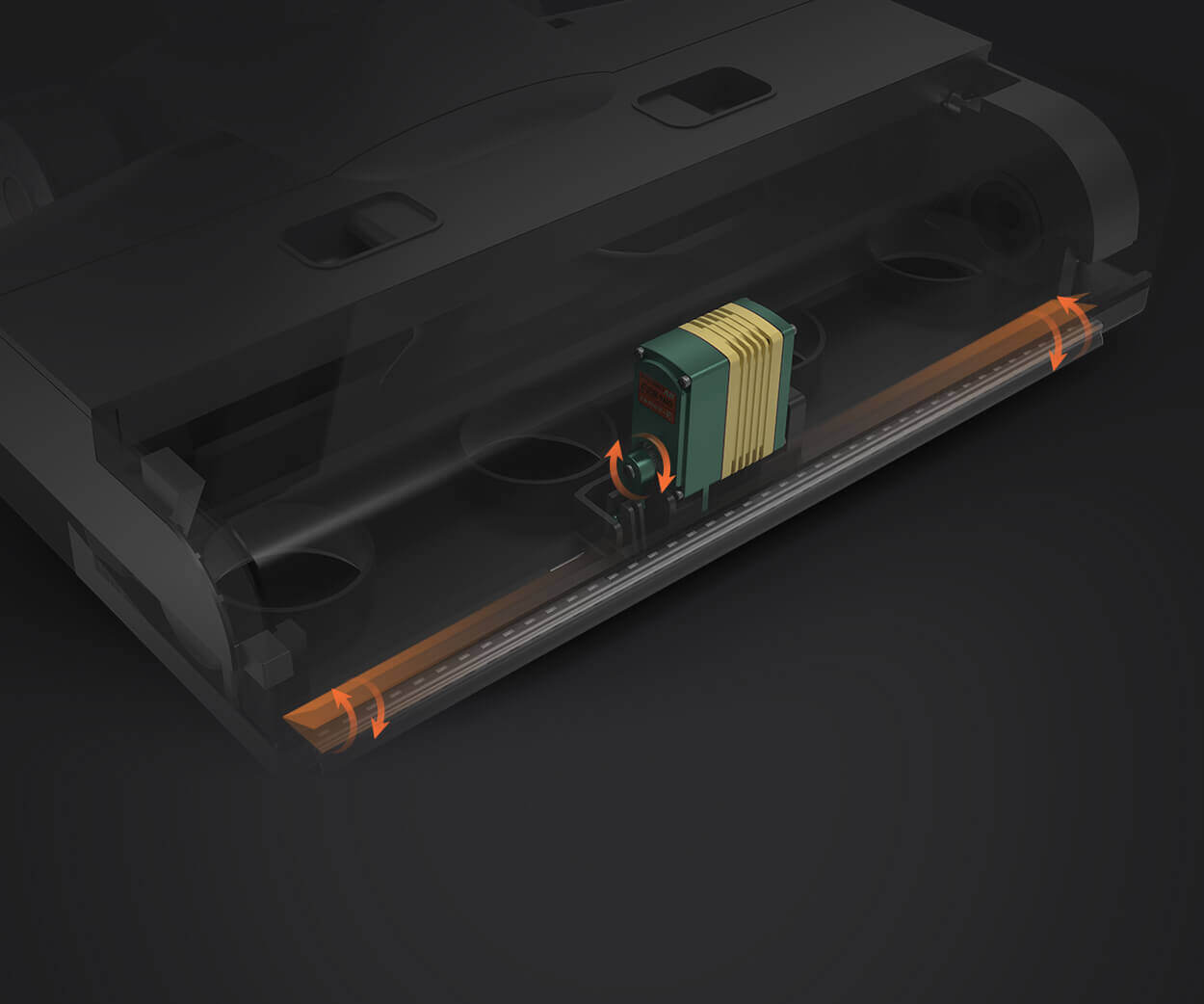
Is it possible to make each motor unit "smarter" and more independent?
Let each joint have its own "mini-brain"
This is where we start talking about C & D Microservices. Its core idea is straightforward: Why not separate the control functions? Equipped with a dedicated, highly integrated small control module for the key servo motor or steering gear unit. Each module is a microservice.
Imagine you have a robotic arm with six joints. The traditional approach would require six motor wires, six encoder wires, and perhaps sensor wires, all rolled up into a central controller. Now, next to the motor of each joint, a matchbox-sizedkpowerC & D Microservices module. It directly handles all commands, feedback and local calculations for this motor. It communicates with adjacent modules through a lightweight network cable, and there is only this thin communication cable between it and the main control computer.
All of a sudden, the dense wiring in the control cabinet disappeared. The wiring on the mechanical structure also becomes refreshing and simple. This doesn't just look neat, it means less signal interference, a lower chance of failure, and - crucially - faster response times. Because instructions no longer need to go through a long "central processing-distribution" journey, each module can respond locally and instantly.
"They will coordinate themselves"
A developer who used this solution once described his experience: "In the past, I was like a nagging housekeeper, always keeping an eye on the status of each motor, urging them to move, and waiting for them to report. Now, I only need to tell them the overall mission goal, such as 'get from here to there, use this trajectory.' Then, I can almost walk away and have a cup of coffee. They will coordinate the pace and timing on their own, and it is surprisingly smooth."
This is the intuitive benefit brought by distributed microservice control. The system has changed from a "command-obey" hierarchical structure to a "negotiation-cooperation" partner network. A certain module can adjust its movements in real time to adapt to the overall rhythm. For example, when a joint encounters unexpected resistance, its microservice module can immediately sense and adjust the torque, and at the same time notify the "partners" in front and behind to wait or change the intensity. The entire movement will still be smooth and will not get stuck or lose control.
You may ask, isn't this just adding a lot of small controllers? Will it be more difficult to program and maintain?
Quite the opposite is true.kpowerWhen designing these microservice modules, we think about how to make development easier. Each module is preset with standardized drivers and common motion controls for servo/servos. You no longer need to write low-level motor drive code from scratch, but can communicate with them through high-level instructions that are closer to human language (such as setting motion trajectories, speed curves, and torque limits). It's like you no longer need to teach musicians how to play each note, but directly tell them the emotion and passage of the piece.
From complex skein to clear movement
What exactly does this mean in a real project?
Suppose you are designing an automated precision assembly station. Multiple servo motors that need to be synchronized are responsible for handling, alignment and lamination. Using traditional solutions, synchronous debugging would be a nightmare, as small timing errors would require repeated modifications to the central program.
After adopting the C & D Microservices architecture, you can independently debug the motor of each station to ensure its accurate positioning and rapid response. Then, you only need to define the collaboration process between each workstation (who moves first, who waits for what signal, who is notified when it is completed), and configure these logical relationships into the microservice network. Each module will manage its own movements autonomously and "shake hands" with its companions at the appropriate time. The debugging process changed from modifying a messy general program to adjusting clear and unambiguous interaction rules.
Reliability also improves. In a centralized control system, the failure of the main controller means the entire line is paralyzed. In a microservice network, a module failure usually only affects part of the functions it is directly responsible for. The rest of the system can still continue to work, and can even adopt a degraded operating mode according to preset rules. This inherent fault tolerance is of self-evident value for production lines or key equipment that cannot be shut down easily.
Of course, no solution is the magic key. For extremely simple devices with only one or two motors, introducing a microservices architecture may seem like overkill. Its advantages will be most vividly demonstrated in scenarios with multiple motion units that require synchronization, reliability and simplicity of wiring.
Less code, more creativity
In the final analysis, the purpose of technological evolution is always to allow people to focus more on creation itself, rather than getting entangled in the trivialities of implementation.kpowerThe C & D Microservices concept is precisely trying to liberate engineers and developers from the heavy bottom-level coordination labor.
When motor control becomes modular and intelligent, you no longer need to be an expert in all motor protocols and real-time programming to make smooth mechanical movements. You can be more like a director, thinking about the script and rhythm of the action, and leave the precise performance of each "actor" to their own reliable "micro-brain" to complete.
The servo motors and servos in the project can finally stop "having a bad temper". They will form a tacit team that can quietly, reliably and accurately transform your design intentions into smooth and realistic actions. This is perhaps the most elegant gift that control technology can bring.
Established in 2005, Kpower has been dedicated to a professional compact motion unit manufacturer, headquartered in Dongguan, Guangdong Province, China. Leveraging innovations in modular drive technology, Kpower integrates high-performance motors, precision reducers, and multi-protocol control systems to provide efficient and customized smart drive system solutions. Kpower has delivered professional drive system solutions to over 500 enterprise clients globally with products covering various fields such as Smart Home Systems, Automatic Electronics, Robotics, Precision Agriculture, Drones, and Industrial Automation.
Update Time:2026-01-19

Contact Kpower's product specialist to recommend suitable motor or gearbox for your product.


