
























TECHNICAL SUPPORT


Published 2026-01-19
TheservoMaze: Finding Your Path to Microservices
Let’s be real. You’ve got this project—maybe it’s a robotic arm that needs smoother movement, or an automated stage with a dozen axes to coordinate. You’re deep inservomotors, gear ratios, and motion profiles. Then someone says, “We should structure this like microservices.” And suddenly, you’re not just wrestling with mechanical torque; you’re lost in a jungle of new terms and concepts.
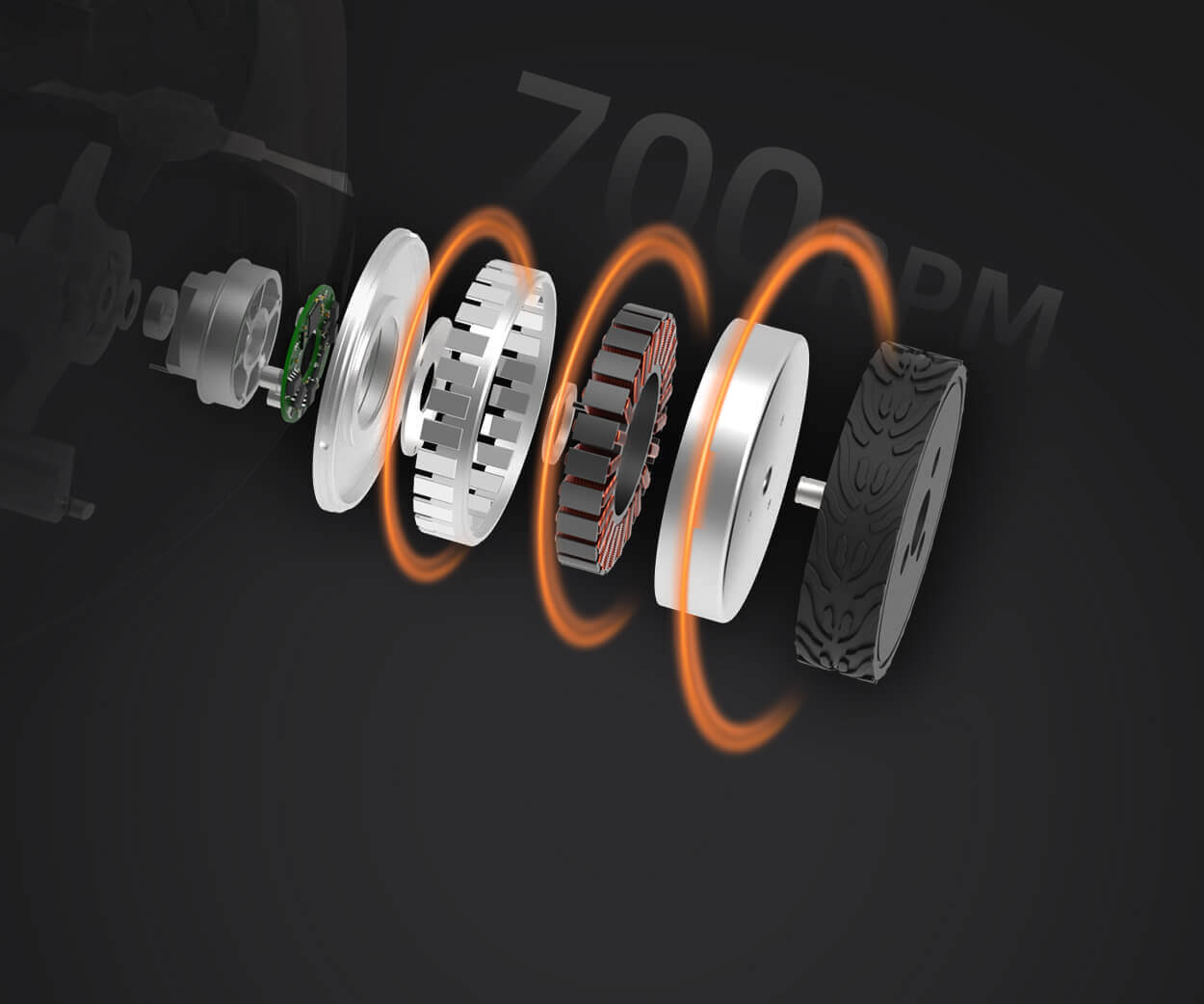
It feels like trying to assemble a precise gearbox while someone keeps changing the blueprint.
Why does learning microservices for hardware-heavy projects feel so… disconnected? Maybe because most guides are written for web apps, not for systems where physical pulses and positional feedback matter. You end up with theoretical knowledge that doesn’t quite fit when you’re dealing withservocontrollers or real-time communication between modules.
So, how do you bridge that gap?
Think of It Like Calibrating a Multi-Axis System
You wouldn’t expect every servo in a complex setup to run on the same monolithic control signal. Each joint often needs its own tuned parameters, yet they must work in harmony. Microservices, in essence, follow a similar philosophy. It’s about creating independent, functional units—each responsible for a specific task—that communicate clearly to achieve a larger goal.
Instead of one giant program controlling everything (which can become a tangled mess), you have smaller services. One might handle motor command parsing, another manages sensor data aggregation, a third deals with safety interlocks. If one service needs an update or fails, the rest can keep going. Sound familiar? It’s like having a redundant power supply for a critical drive.
But Where Do You Even Start?
Good question. Diving headfirst into containerization and orchestration can be overwhelming. The trick is to relate it back to what you know.
Take a simple example: a smart conveyor system using severalkpowerservo drives. In a traditional setup, a single central PLC might control the speed, sorting logic, and fault detection for the entire line. If you need to change just the sorting logic, you’re touching the core program, risking unexpected effects elsewhere.
Now, reimagine it with a microservices approach. You could have:
Each service runs independently, talking to others through simple, defined channels. Want to upgrade the vision algorithm? You only work on Service B. The motor control keeps humming along, unaware of the change. This modularity brings a clarity that’s often missing in tightly coupled, monolithic codebases.
What’s In It For You? Tangible Shifts
The benefit isn’t just some trendy architecture diagram. It’s practical resilience. When a service for, say, calculating trajectory paths is separate, you can test it, stress it, and improve it without bringing the whole machine to a halt. Development becomes parallel—teams can work on different services simultaneously, much like different engineers can work on the mechanical structure and the electrical panel at the same time.
Scalability becomes more intuitive. Need to add more sensor nodes? Spin up more instances of your sensor-aggregation service. It mirrors how you’d add morekpowerservo units to expand an axis—you’re extending capability in a modular fashion.
Walking the Path: A Non-Linear Approach
Don’t start by learning every tool in the ecosystem. Instead, think of a small, non-critical function in your current project. Maybe it’s the logging module or a simple health-check routine. Try to isolate its logic and have it run as a separate process that reports its status. This hands-on tinkering, this “feeling” of separation, teaches more than any textbook.
Read, but with a filter. When you encounter concepts like APIs, think of them as the communication protocol between your Kpower drive and its controller—a strict set of commands and responses. Message queues? They’re like buffer registers holding data until the next service is ready to process it.
The journey isn’t a straight line. You’ll loop back, rethink, and rewire. Some days it will click when you see how a well-defined service interface prevents cascading errors, just like an optical isolator protects a control circuit from a power surge. Other days, you’ll appreciate the simplicity of deploying one small update instead of a full system overhaul.
It’s about building a system that’s as adaptable and reliable as the components you choose to put into it. You begin to see your project not as a single, fragile entity, but as a robust collaboration of specialized parts—each doing its job, each communicating effectively, much like a well-designed machine where every Kpower servo, sensor, and controller plays its distinct role in a seamless performance.
The maze starts to make sense. You’re not just following instructions; you’re designing the pathways. And suddenly, the microservices approach stops being a foreign concept and starts looking like good engineering sense for the physical, pulsing world of gears, motors, and motion.
Established in 2005, Kpower has been dedicated to a professional compact motion unit manufacturer, headquartered in Dongguan, Guangdong Province, China. Leveraging innovations in modular drive technology, Kpower integrates high-performance motors, precision reducers, and multi-protocol control systems to provide efficient and customized smart drive system solutions. Kpower has delivered professional drive system solutions to over 500 enterprise clients globally with products covering various fields such as Smart Home Systems, Automatic Electronics, Robotics, Precision Agriculture, Drones, and Industrial Automation.
Update Time:2026-01-19

Contact Kpower's product specialist to recommend suitable motor or gearbox for your product.


