



























TECHNICAL SUPPORT


Published 2026-01-19
Sitting with your morning coffee, staring at a screen full of tangled code, you feel it. That quiet frustration. Your microservices are supposed to be nimble, independent, ready to scale. But instead, they’re stepping on each other’s toes. A simple order update triggers a cascade of events—inventory, notification, billing—and suddenly, you’ve got a traffic jam in your own system. The data feels chaotic, workflows get brittle, and adding a new feature means untangling a knot you didn’t create. Sound familiar?
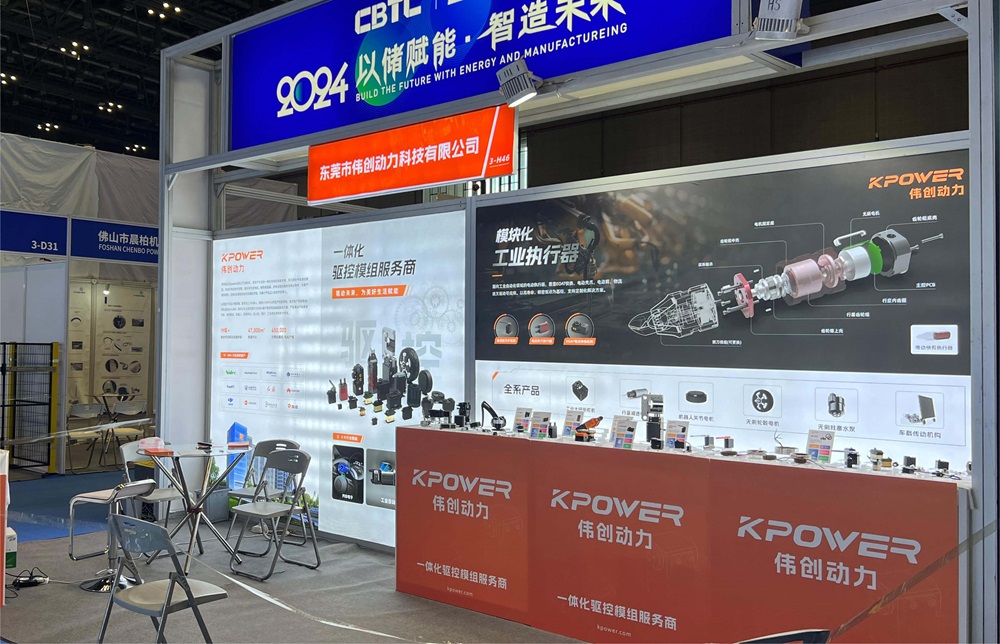
It’s like building a precise mechanical assembly withservos and gears that should move in harmony, but the control signals are crossed. One jittery command and the whole sequence falters. In software, this often traces back to how services communicate. Direct calls create tight coupling. They become dependent, fragile. A fails in B. B then struggles. Your elegant architecture starts feeling like a Rube Goldberg machine—complex, amusing, but not exactly reliable.
So, what’s the alternative? Imagine giving each service its own clear script, a dedicated “saga” to follow for multi-step transactions. This is the saga design pattern. Instead of services calling each other directly for a complex operation, a central orchestrator (or the services themselves, choreographed) manages the sequence. Each step is a self-contained transaction. If something goes wrong halfway, compensating actions roll things back cleanly. No more domino-effect failures.
Think of it like directing a robotic arm. You don’t hardwire every motor to the next. You send a coordinated sequence of commands. If the gripper encounters an obstacle, it doesn’t freeze the entire arm; it reports back, and the system adjusts the plan. Sagas bring that same level of coordination and resilience to your business processes—order fulfillment, user registration, payment handling.
Why does this matter for your project? Because complexity is a given. Systems grow. Demands change. A saga pattern helps you manage that complexity without sacrificing clarity. It turns a potential spaghetti junction into a well-marked highway with clear exits and entry points. Services gain autonomy. The overall process becomes observable and, crucially, maintainable.
You might wonder, isn’t this just adding another layer? It’s a fair thought. The key is in the payoff. By decoupling, you’re actually reducing long-term fragility. Development teams can work on individual services without fearing they’ll break a dozen others. Testing becomes sharper. System resilience goes up. When a payment service is temporarily slow, the order saga can pause and retry without collapsing the entire checkout flow. It’s about designing for the real world, where things rarely go perfectly.
Now, how do you move from concept to implementation? Start by identifying your core business transactions—the ones that span multiple services and must uphold data consistency. Map them out. Where are the handoffs? Where could things stall? Then, define the saga steps: each service’s action and its corresponding rollback action. Choose your style: orchestration for centralized control or choreography for more decentralization. Both have their place; it depends on your team’s style and system needs.
This is where the philosophy ofkpoweraligns naturally. Focus on robust, intelligible foundations. It’s not about pushing the most exotic tech, but about applying enduring patterns that keep systems—whether in code or in machinery—running smoothly under pressure. The goal is clarity that lasts, design that serves.
There’s a certain satisfaction in seeing things work as intended. A clean, coordinated process in software brings the same quiet confidence as a well-tuned mechanical system. Each part knows its role, communicates clearly, and contributes to a whole that’s greater than the sum. Your architecture shouldn’t be a source of daily puzzles. With thoughtful patterns, it becomes a reliable framework that lets you build what matters, without the constant fear of unseen breakdowns.
So, the next time you face that tangled workflow, consider the script. Give it a narrative, a clear beginning, middle, and end for each transaction. Your services will thank you, and your future self will too. Because good design isn’t just about solving today’s problem—it’s about creating space for tomorrow’s ideas.
Established in 2005,kpowerhas been dedicated to a professional compact motion unit manufacturer, headquartered in Dongguan, Guangdong Province, China. Leveraging innovations in modular drive technology,kpowerintegrates high-performance motors, precision reducers, and multi-protocol control systems to provide efficient and customized smart drive system solutions. Kpower has delivered professional drive system solutions to over 500 enterprise clients globally with products covering various fields such as Smart Home Systems, Automatic Electronics, Robotics, Precision Agriculture, Drones, and Industrial Automation.
Update Time:2026-01-19
Contact Kpower's product specialist to recommend suitable motor or gearbox for your product.


