



























TECHNICAL SUPPORT


Published 2026-01-19
Your servo motor is a bit "unruly", isn't it? Imagine a scenario: the robotic arm on the production line suddenly gets stuck, the servo response is delayed for a few milliseconds, and the entire assembly line stops. The feeling was like watching a carefully choreographed dance suddenly lose its rhythm.
Don’t rush to find the technical manual, let’s talk about the root of the problem first. Many times, the "little temper" in the mechanical system is not a problem with the hardware itself, but the control logic behind it is not flexible enough. The traditional integrated architecture packages all functions together. Once a certain link needs to be adjusted, the entire system will be affected. At this time, have you ever thought: How worry-free would it be if each part could operate independently and be upgraded at any time, just like building blocks?
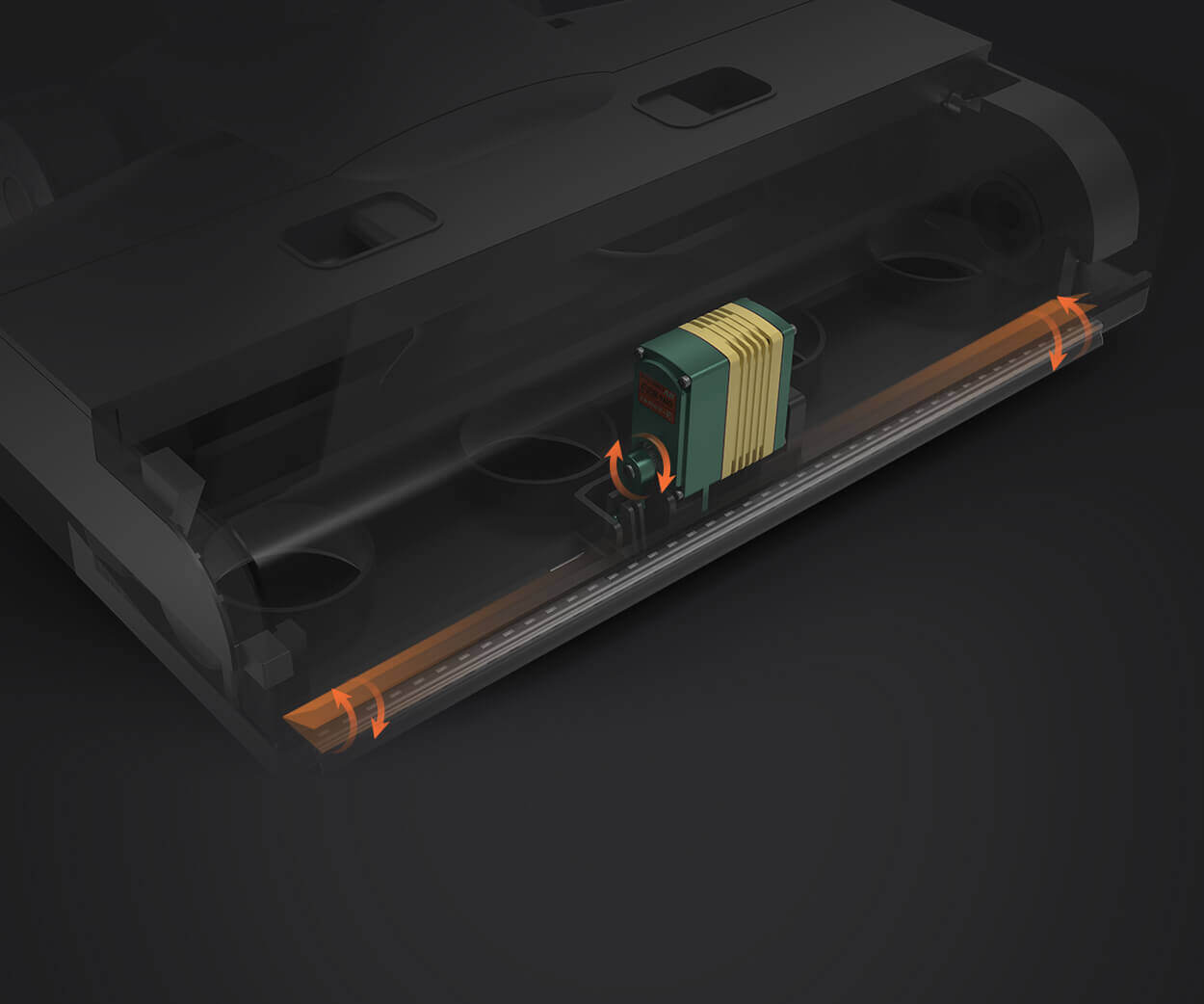
This is why some people have begun to pay attention to the application of "microservice design pattern" in the field of hardware control. Sounds a bit crossover, right? But if you think about it carefully, the modular requirements of mechanical systems and the microservice thinking of the software world actually share the same core: making complex collaboration simple, reliable, and easy to maintain.
What exactly does this model bring? Let's say you're designing a multi-axis collaborative robot. The traditional approach may require a central controller to manage the command sending and receiving, status monitoring and error handling of all servo motors and servos. Once a certain motor driver is needed, the entire controller program may have to be retested and deployed.
But what if we adopt the microservices idea? You can set up independent "service units" for each motor - one responsible for position closed-loop control, one for temperature monitoring, and another for communication protocol analysis. They run independently and exchange data through lightweight communication methods. When something needs iteration, you only need to update the corresponding small module, and the rest runs as usual. It's like the musicians in a band practicing their own passages individually, but still playing in harmony together.
One might ask: "Will this increase the complexity of the system?" Good question. The introduction of any new approach comes with trade-offs. The microservice model will indeed bring more deployment units and communication links, but its advantage is that local failures can no longer easily lead to global paralysis. Is a certain temperature monitoring service temporarily abnormal? The position control service can still keep the motor running smoothly while sending alerts to await maintenance. The system's resilience is instead enhanced.
In the mechanical field, this design is particularly suitable for scenarios that require high reliability and continuous upgrades. For example, the sorting robot arm in automated warehousing, or the precision transmission mechanism in medical equipment. You can gradually replace the old and incorporate new sensor data sources without having to break out every time.
Of course, there are some practical factors that need to be considered when choosing a specific implementation path. Is communication delay within control? Is the granularity of service division reasonable? Can hardware resources support multiple lightweight tasks in parallel? There are no standard answers to these, but they are key considerations in the design process.
At this point, maybe you will think of some projects that were once difficult. The experience of delaying delivery by weeks because of a small feature change, or having to rewrite large portions of the code because of a sensor protocol update. If the system had been built in a microservices manner at that time, perhaps it would have been easier to adjust.
kpowerWhen exploring this type of architectural convergence, attention is also paid to keeping the technology practical. It is not about innovation for the sake of innovation, but about making the model serve true stability and efficiency. Just like polishing a mechanical part, every step is done so that it can eventually fit seamlessly into the whole.
Maybe next time you are faced with a mechanical control system that requires a high degree of modularity, you can think about it from another angle: Is it possible to organize those servo motors, servos, and sensors in a more loosely coupled and independent way? Let them be like a well-trained team, each member has their own responsibilities, but they work together tacitly.
There is no silver bullet in the world of technology, but good design ideas can often cross the boundaries of fields and bring unexpected smoothness. After all, whether it’s code or gear, elegant collaboration is always worth pursuing.
Established in 2005,kpowerhas been dedicated to a professional compact motion unit manufacturer, headquartered in Dongguan, Guangdong Province, China. Leveraging innovations in modular drive technology,kpowerintegrates high-performance motors, precision reducers, and multi-protocol control systems to provide efficient and customized smart drive system solutions. Kpower has delivered professional drive system solutions to over 500 enterprise clients globally with products covering various fields such as Smart Home Systems, Automatic Electronics, Robotics, Precision Agriculture, Drones, and Industrial Automation.
Update Time:2026-01-19
Contact Kpower's product specialist to recommend suitable motor or gearbox for your product.


