
























TECHNICAL SUPPORT


Published 2026-01-19
Have you ever had that moment? The machine is spinning and spinning, and suddenly it gets stuck, or it makes that weird buzzing sound. You checked the wiring and tightened the screws, but the problem didn't seem to be there. It's like it has its own little temper that you can't figure out. Many times, we feel that a certain part is old and needs to be replaced. But is it possible that the root of the problem is more subtle?
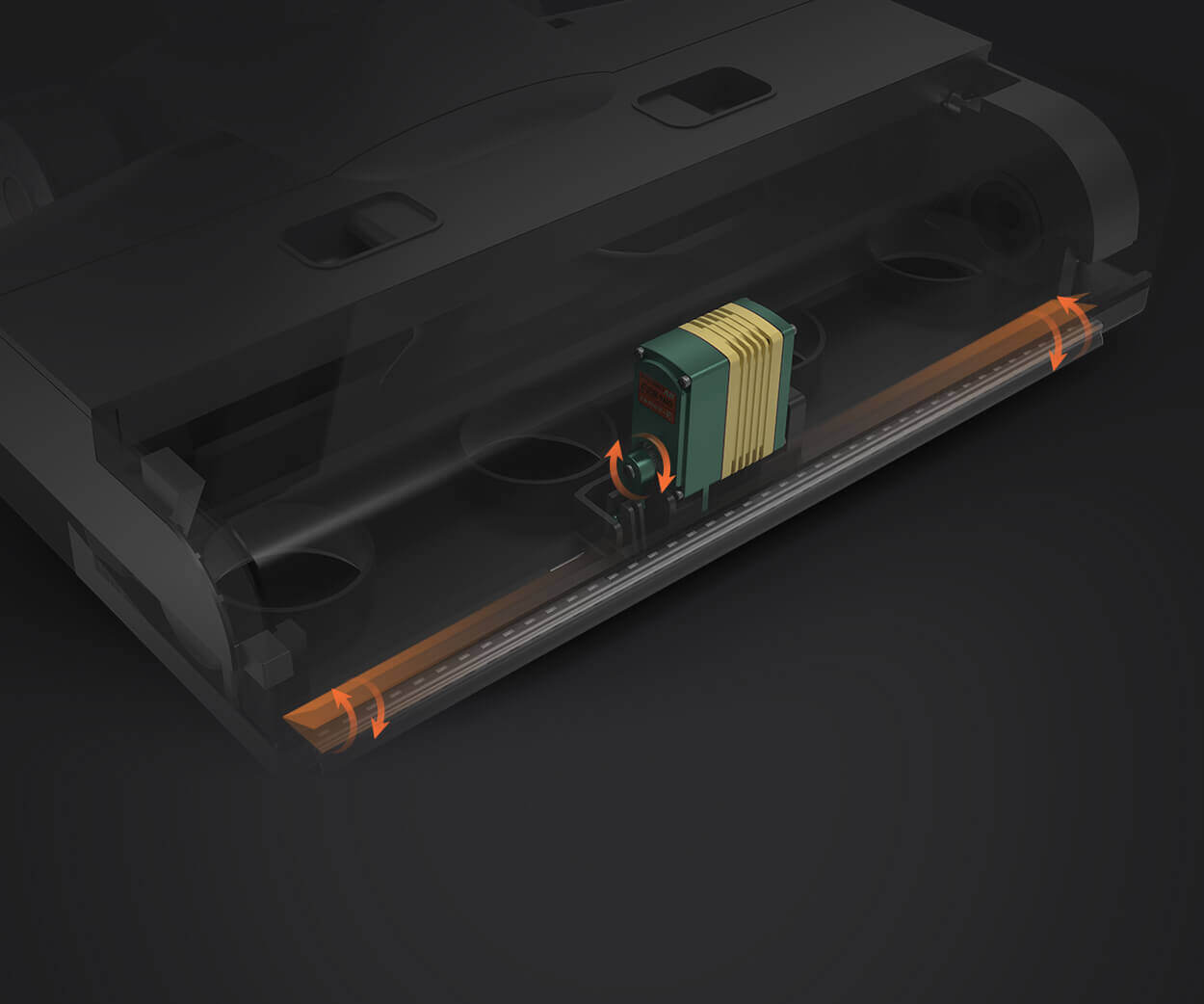
We are not talking about large components, but the core that converts instructions into precise movements-the servo system. It is like the heart and nerve endings of the machine, directly determining whether the action is obedient and in place. If a piece of equipment is not "smart" enough, responds half a beat too slowly, or is just a little weak, it is probably "protesting".
You can forget about all that complicated jargon for a while. Imagine that you want every movement of your machine to be as natural and smooth as breathing. Raising your hand, rotating, positioning, and applying force, the whole process is smooth and smooth, without hesitation or error. What is needed behind this is the ultimate control of Micro-Services.
"Microservices Means" is not a cold product code name. It represents a way of solving problems: decomposing complex motion control requirements into microservice units that are reliable, efficient and easy to manage. It focuses on how to make power transmission more direct, improve response speed in milliseconds, and keep the machine as stable as ever after years of work. Simply put, it wants to make servo technology both powerful and "empathetic."
Let’s think back. Have you ever encountered the trouble of adjusting parameters, and had to re-fiddle with it for a long time after changing the load? Or is the device always sluggish to start up in a cold environment? Or, a simple reciprocating motion will cause non-negligible wear and position drift over time?
These trivial troubles are often not a single fault, but a manifestation of insufficient system coordination. Power, feedback, and control, if these links are simply spliced together, "gaps" in coordination will easily appear. And "Microservices Means" focuses on bridging these gaps. Through highly integrated design thinking, it allows the output characteristics of the motor to better match the instructions of the controller, allowing feedback signals to be transmitted faster and more accurately, thus making the entire motion system a responsive and consistent organism.
It’s that sense of certainty of “hit wherever you point”. When you ask a precision platform to move to an accuracy of 0.01 mm, it will not tremble and test back and forth near the end point, but will settle firmly and crisply into place. This certainty can greatly reduce the operator's psychological burden.
It’s durability that stands the test of time. An excellent servo solution, with its inherent coordination of current loop, speed loop and position loop, can significantly reduce overshoot, vibration and other internal losses that are harmful to the mechanical structure. This means lower failure rates and longer service life, allowing your investment to continue running smoothly every day.
Furthermore, it is the calmness in dealing with complex situations. In the face of sudden changes in load or scenarios that require rapid switching of multiple motion modes, the system's adaptive capability is crucial. This is like giving the machine a more flexible "conditioned reflex" instead of a rigid fixed program.
This is inseparable from repeated consideration of every detail. Starting from the core electromagnetic structure, iron losses and copper losses are reduced, making energy conversion more efficient and generating less heat. Then there is the precision of the encoder feedback, which is the "eye" for the system to perceive its own position, which is extremely sharp and real.
Then, the key lies in the integration. Integrate advanced control depth into the driver to achieve automatic identification and real-time tuning of motor parameters. In this way, it can "understand" the load it is driving and automatically adjust to the best output state, instead of requiring tedious manual debugging.
It is the reliability design of the overall architecture. Consider the isolation of electrical noise, the tolerance of components in harsh environments, and the friendliness of the connection interface. Ensure that it not only performs perfectly in the laboratory, but also works reliably in real workshops, outdoors, and under various voltage fluctuations and temperature changes.
One might ask: "Sounds comprehensive, but how do I know if it's right for my specific device?"
This is a very practical question. The real fit lies not in the highest performance number on the parameter sheet, but in whether it can deeply match your application scenario. For example, does your equipment require continuous high torque output, or does it focus more on short-term explosive power? Is the motion trajectory continuous and smooth, or does it start and stop frequently? Are there any strict requirements on motor size due to space constraints?
After all, the end point of technical services is people. When a piece of equipment runs smoothly and the operator does not need to worry about its "health", this silent understanding is the best recognition. We believe that paying attention to these subtleties and solving real pain points is far more powerful than any flashy propaganda. When the "temper" of the machine is truly understood and appeased, what it will give you in return will be lasting and silent loyalty.
Established in 2005,kpowerhas been dedicated to a professional compact motion unit manufacturer, headquartered in Dongguan, Guangdong Province, China. Leveraging innovations in modular drive technology,kpowerintegrates high-performance motors, precision reducers, and multi-protocol control systems to provide efficient and customized smart drive system solutions.kpowerhas delivered professional drive system solutions to over 500 enterprise clients globally with products covering various fields such as Smart Home Systems, Automatic Electronics, Robotics, Precision Agriculture, Drones, and Industrial Automation.
Update Time:2026-01-19

Contact Kpower's product specialist to recommend suitable motor or gearbox for your product.


