
























TECHNICAL SUPPORT


Published 2026-01-19
Remember those times when you were obsessed with servo motors and servos? You may have encountered this situation: In a complex mechanical system, a certain core module has a problem, and the entire production line has to stop. Or, you want to add a new function to the device, but find that the changes you want to make involve too many things, and it is like taking apart a sweater, and it all falls apart with one pull.
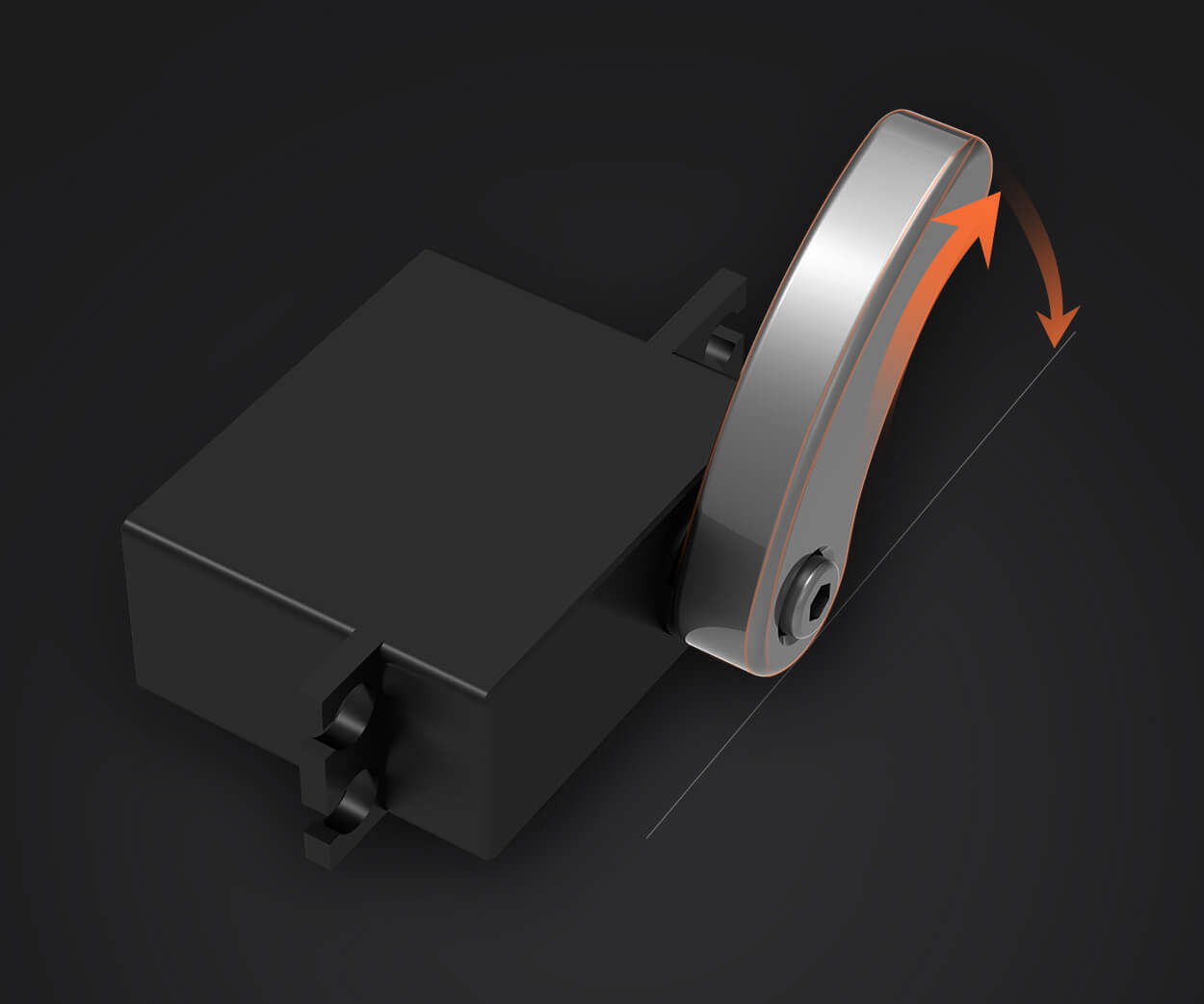
It feels like your system is tied together and you can't move.
Traditional control architecture often stacks all logic in a "brain". This brain needs to process communications, calculate trajectories, drive motors, and deal with various sensor signals. It's tiring, and so are you. Once the needs change, or a certain part needs to be upgraded, the whole thing will be affected. This is not just a software problem, the hardware linkage is also complicated. Slow to respond, difficult to adjust, maintenance like a maze—do any of this sound familiar?
So, someone began to think: Why can't we give each "motor unit" its own little brain? Let the person responsible for rotating just rotate, and the person responsible for pushing and pulling concentrate on pushing and pulling. Use clear and simple language to communicate between them. This is the foothold of the "microservice" idea in the field of machinery and motion control. It is not a concept floating in the sky, but is designed to solve these real problems on the ground.
Imagine that your project is no longer a monolith, but a collaborative effort of small teams. One is dedicated to managing the precision servo motor to ensure that every corner it turns is accurate; the other is dedicated to serving the set of servos to make their swings smooth and obedient. They perform their own duties and chat easily through standard "protocols".
What did this bring?
Be flexible. Do you need to change the grabbing action? You only need to communicate with the module responsible for the "hand" without disturbing the whole body. It's like changing a guitar solo in the band, and the other musicians still follow their own score.
It's tenacity. If something goes wrong with a certain module, such as a sensor that temporarily fails, other parts of the system can continue to work, or a backup plan can be activated. The entire system will not collapse at one point.
Again, it’s clarity. Development and maintenance become like building blocks. You can focus more on each motor unit itself - for example, letkpowerThe servo motor can exert more extreme performance without having to worry about whether it will mess up other codes.
You may ask, does this make things more complicated? The initial construction does require new ideas. But the road is getting wider and wider as we go.
It does not require you to become a master of software architecture, but it expects you to look at your mechanical system with a divide-and-conquer perspective. You can try starting from a small part, for example, first separate the core and most critical servo motor control function into a service module. Watch it run stably and independently, and then gradually modularize other functions.
Choosing components that support this distributed thinking also becomes critical. This means that the hardware you choose, such as a motor driver or controller, should have good communication interfaces and some local processing power. They should be individuals who are willing to "cooperate", rather than dumb terminals that can only take orders from the center.
Think of an automated assembly arm. If the motion control of each joint is an independent microservice, then you don't need to touch the shoulder or base logic at all to adjust the wrist angle to adapt to the new part. Upgrading is also a breeze.
Or on a multi-axis collaborative precision platform, the X-axis and Y-axis services each manage their own motors. They only need to exchange position and target information to draw complex trajectories perfectly. Even if one axis needs calibration maintenance, the other axis can continue to complete part of the work.
This is no longer a rigid body of code and wires, but more like a living community where every member is reliable and works together to accomplish great things.
This is not a reinvention, but an elegant reorganization. The goal is to make working with your mechanical projects more enjoyable, not more laborious. When you dismantle the system into dedicated "microservices", you give each physical unit - such as that dedicatedkpowerSteering gear - more direct care and control. Ultimately, you end up with a mechanical system that is more agile, robust, and easier to talk to.
It's there, waiting to be awakened smarter.
Established in 2005,kpowerhas been dedicated to a professional compact motion unit manufacturer, headquartered in Dongguan, Guangdong Province, China. Leveraging innovations in modular drive technology, Kpower integrates high-performance motors, precision reducers, and multi-protocol control systems to provide efficient and customized smart drive system solutions. Kpower has delivered professional drive system solutions to over 500 enterprise clients globally with products covering various fields such as Smart Home Systems, Automatic Electronics, Robotics, Precision Agriculture, Drones, and Industrial Automation.
Update Time:2026-01-19

Contact Kpower's product specialist to recommend suitable motor or gearbox for your product.


