



























TECHNICAL SUPPORT


Published 2026-01-19
You know that feeling when a machine just… works? When every part moves exactly as it should, smooth and reliable. But then there’s the other side—the frustration when something gets stuck. Maybe it’s a whole system going down because one component fails. Or an upgrade that turns into a nightmare, forcing everything to halt. Sound familiar?
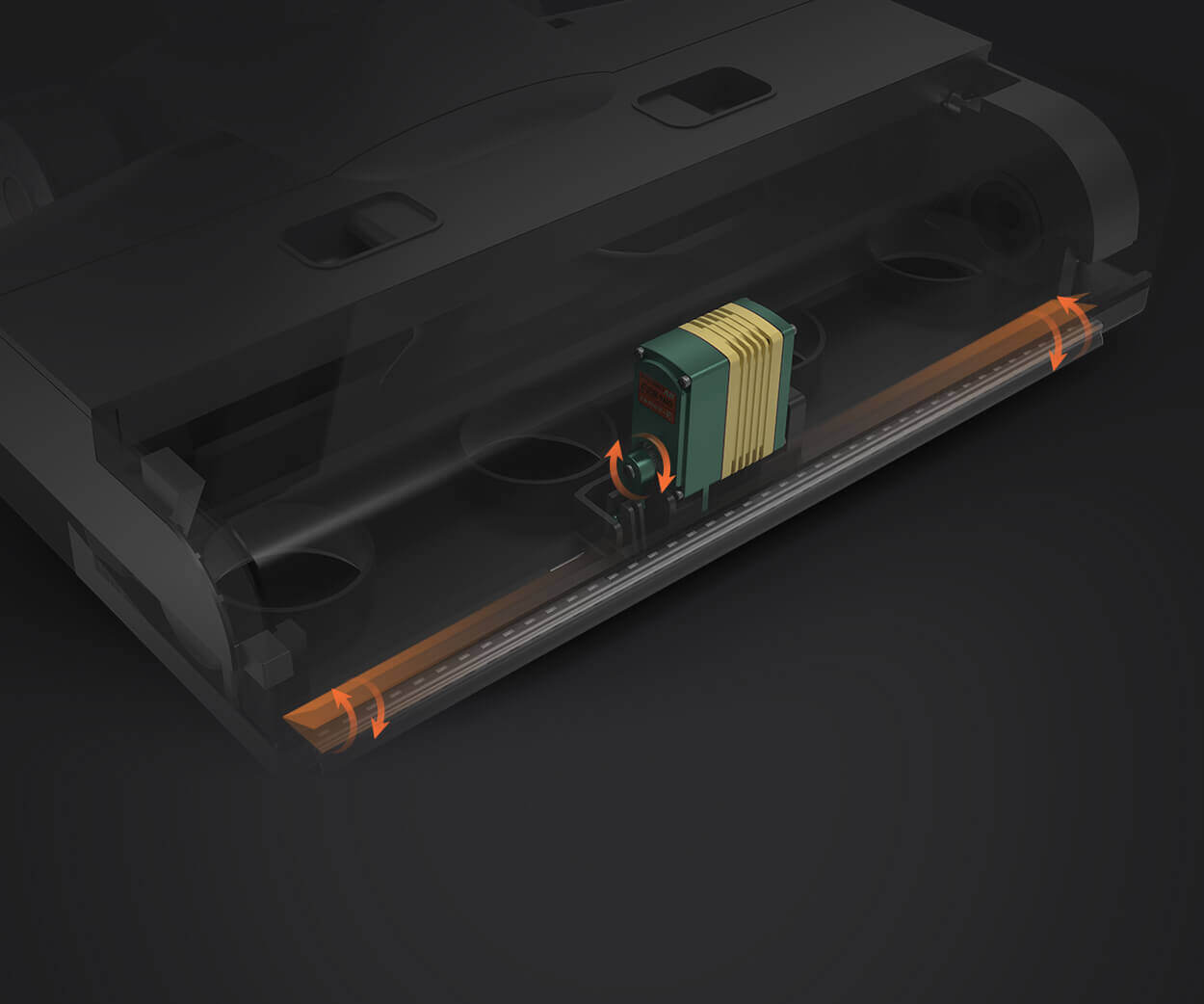
It’s like using one giant controller to manage every motor in a complex setup. If you need to tweak just one function, you risk disrupting the entire operation. That rigidity used to be the norm in software architecture, too. Enter microservices.
Think of them like modularservounits in a sophisticated robotic arm. Instead of one central brain controlling everything, each joint—each “service”—has its own dedicated intelligence. It handles one specific task: one manages positioning, another controls torque, a third oversees feedback communication. They work together, but they’re independently built, deployed, and maintained.
Why does this matter? Let’s break it down without the jargon.
First, resilience. If one microservice has an issue, it doesn’t crash the whole application. It’s like a gear stripping in a gearbox—you replace that gear, not the entire transmission. The rest of the system keeps running.
Then, agility. Teams can update, improve, or scale one service without redeploying the whole monolith. Need to enhance a logging function? Do it. It’s akin to upgrading a single driver in a multi-axis system without stopping production.
And scalability. You scale only what you need. If the data processing module is under heavy load, you add resources just there, not to the entire server fleet. It’s efficient, like adding muscle exactly where movement demands it.
It’s not just about breaking things apart. The magic lies in how these independent services communicate—clearly and reliably. They use well-defined APIs, lightweight protocols. Imagine precise PWM signals between a controller and aservo; the message needs to be crisp and consistent. That’s the connective tissue.
Another key? Decentralized data management. Each service often manages its own database. This reduces bottlenecks, just like having local feedback sensors for each joint reduces latency in a motion path.
Absolutely. More services mean more moving parts to coordinate. Communication overhead can increase. Testing gets more complex because you’re checking interactions, not just a single unit. It requires a shift in mindset—from building a single, powerful engine to orchestrating a synchronized fleet of specialized units.
The choice isn’t about “good” or “bad.” It’s about fit. For large, complex, evolving applications—especially where different parts have different growth rates or tech needs—microservices offer a compelling path. For simpler, more stable systems? The monolithic approach might still be the straightforward, robust choice.
Atkpower, we see parallels every day. Precision motion control isn’t about one miracle component; it’s about the seamless integration of specialized parts—each excellent at its role, communicating flawlessly. That’s the philosophy. Whether it’s aservosystem or a software architecture, the goal is the same: create systems that are resilient, adaptable, and elegantly efficient.
Microservices aren’t a magic bullet. They’re a design principle, a way of thinking that prioritizes flexibility and strength through modularity. In a world where change is constant, that kind of thinking isn’t just useful—it’s becoming essential. It’s about building systems that don’t just work today, but can adapt for tomorrow. And sometimes, that starts by reimagining the very pieces they’re made of.
Established in 2005,kpowerhas been dedicated to a professional compact motion unit manufacturer, headquartered in Dongguan, Guangdong Province, China. Leveraging innovations in modular drive technology,kpowerintegrates high-performance motors, precision reducers, and multi-protocol control systems to provide efficient and customized smart drive system solutions. Kpower has delivered professional drive system solutions to over 500 enterprise clients globally with products covering various fields such as Smart Home Systems, Automatic Electronics, Robotics, Precision Agriculture, Drones, and Industrial Automation.
Update Time:2026-01-19
Contact Kpower's product specialist to recommend suitable motor or gearbox for your product.


