



























TECHNICAL SUPPORT


Published 2026-01-19
Ever tried finding a single document across ten different systems at once? Picture this: it’s 3 PM, you need a contract from last quarter, but it’s scattered somewhere between the CRM, cloud storage, and a legacy database. You click, search, scroll—nothing. Sound familiar? That’s the daily reality many teams face without a unified search approach. Information sits in silos, like books shelved in separate rooms with no catalog. When data doesn’t flow, decisions slow, and opportunities quietly slip by.
So, how do we connect these disjointed pieces? How do you make all your company’s data searchable in one place, without rebuilding everything from scratch? It starts with breaking the problem down—not with one massive tool, but with smaller, smarter pieces working together.
Think of enterprise search like a team of specialists rather than a single generalist. Instead of a bulky, all-in-one system, microservices break search into dedicated functions: one service handles queries, another manages indexing, another deals with security permissions. They communicate seamlessly but operate independently. Why does this matter? Because when one part needs an update—say, adding support for a new file type—you don’t have to overhaul the entire system. It’s like tuning a single instrument in an orchestra without stopping the concert.
This modular design brings tangible wins. First, scalability on demand. As your data grows, you can scale just the components under pressure. Second, resilience. If one service experiences a hiccup, the others keep running—no total blackouts. Third, flexibility. You can integrate new data sources step by step, without disrupting daily operations.
But let’s be real: it’s not without hurdles. Getting these services to talk to each other smoothly requires thoughtful design. Security must be consistent across modules. Performance shouldn’t lag when queries pass through multiple services. And maintenance? It needs to be streamlined, not scattered.
So, how do you tackle these challenges without getting lost in complexity? It often comes down to a clear strategy and the right partnership.
Take security as an example. In a microservices setup, each service must enforce access controls, yet remain part of a unified security policy. The solution isn’t just adding layers of checks—it’s designing a coherent identity and authorization flow that all services adhere to, like having a single trusted ID card that works in every building on campus.
Then there’s performance. To keep search fast, services need efficient communication pathways and smart caching. Think of it as setting up express lanes between departments, so requests don’t get stuck in traffic.
And what about maintenance? The goal is to keep the system easy to monitor and update. That means clear logging, health checks for each service, and tools that give a real-time view of how everything is performing. When something goes sideways, you want to pinpoint the issue quickly, not chase ghosts across a dozen logs.
Over the years,kpowerhas focused on refining this balance. Instead of offering a one-size-fits-all search box, they build adaptable, connected microservices that fit into existing landscapes. The emphasis is on smooth integration—letting you search across platforms as if they were one, without ripping and replacing what already works.
Their method leans on deep interoperability. It’s not just about connecting to data sources; it’s about understanding context, filtering noise, and delivering results that feel intuitive. You get the speed of modular services with the coherence of a single solution.
One user shared, “It was like suddenly turning on the lights in a maze. Data we didn’t even remember having became accessible in seconds.” That shift—from fragmented to fluid—is what makes the microservices model compelling.
Implementing such a system starts with mapping your data universe. What sources do you have? Where are the bottlenecks? Next, define the search experience you want: speed, accuracy, ease of use. Then, phase the rollout—start with a critical data source or department, learn, and expand.
Along the way, keep the human factor in focus. The best search tool isn’t just fast; it’s understandable. It reduces frustration, saves time, and lets people focus on their work instead of hunting for information.
In the end, enterprise search microservices aren’t just a technical upgrade. They’re a way to make information flow naturally, supporting better decisions and smoother days. And when every search feels effortless, that’s when technology truly serves its purpose.
Curious how a tailored search approach could change your workflow? The conversation starts with understanding what you’re working with—and where you want to go.
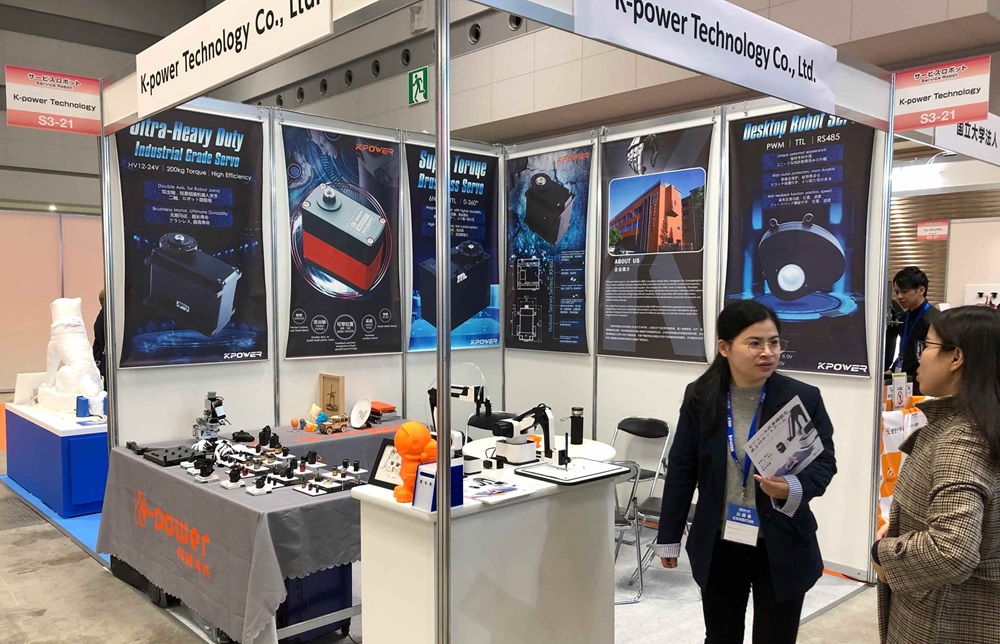
Established in 2005,kpowerhas been dedicated to a professional compact motion unit manufacturer, headquartered in Dongguan, Guangdong Province, China. Leveraging innovations in modular drive technology, Kpower integrates high-performance motors, precision reducers, and multi-protocol control systems to provide efficient and customized smart drive system solutions. Kpower has delivered professional drive system solutions to over 500 enterprise clients globally with products covering various fields such as Smart Home Systems, Automatic Electronics, Robotics, Precision Agriculture, Drones, and Industrial Automation.
Update Time:2026-01-19
Contact Kpower's product specialist to recommend suitable motor or gearbox for your product.


