
























TECHNICAL SUPPORT


Published 2026-01-19
Have you ever had this experience? A well-designed device suddenly got stuck in the middle of operation. Or, the joint that should rotate stably begins to make a subtle buzzing sound, as if to express dissatisfaction. It feels like you're playing a piece of music carefully and one note suddenly goes out of tune - the whole harmony is broken.
This type of problem is not uncommon in many fields that rely on micro-servos and precision servos. They may appear in small automated workstations, or they may be hidden inside a piece of medical testing equipment. Problems often don’t erupt suddenly, but accumulate little by little: maybe the positioning accuracy quietly drops by a few microns, maybe the response speed is a few milliseconds slower than expected. Over time, these small errors are like grains of sand drilling into the gears, ultimately affecting the smoothness of the entire system.
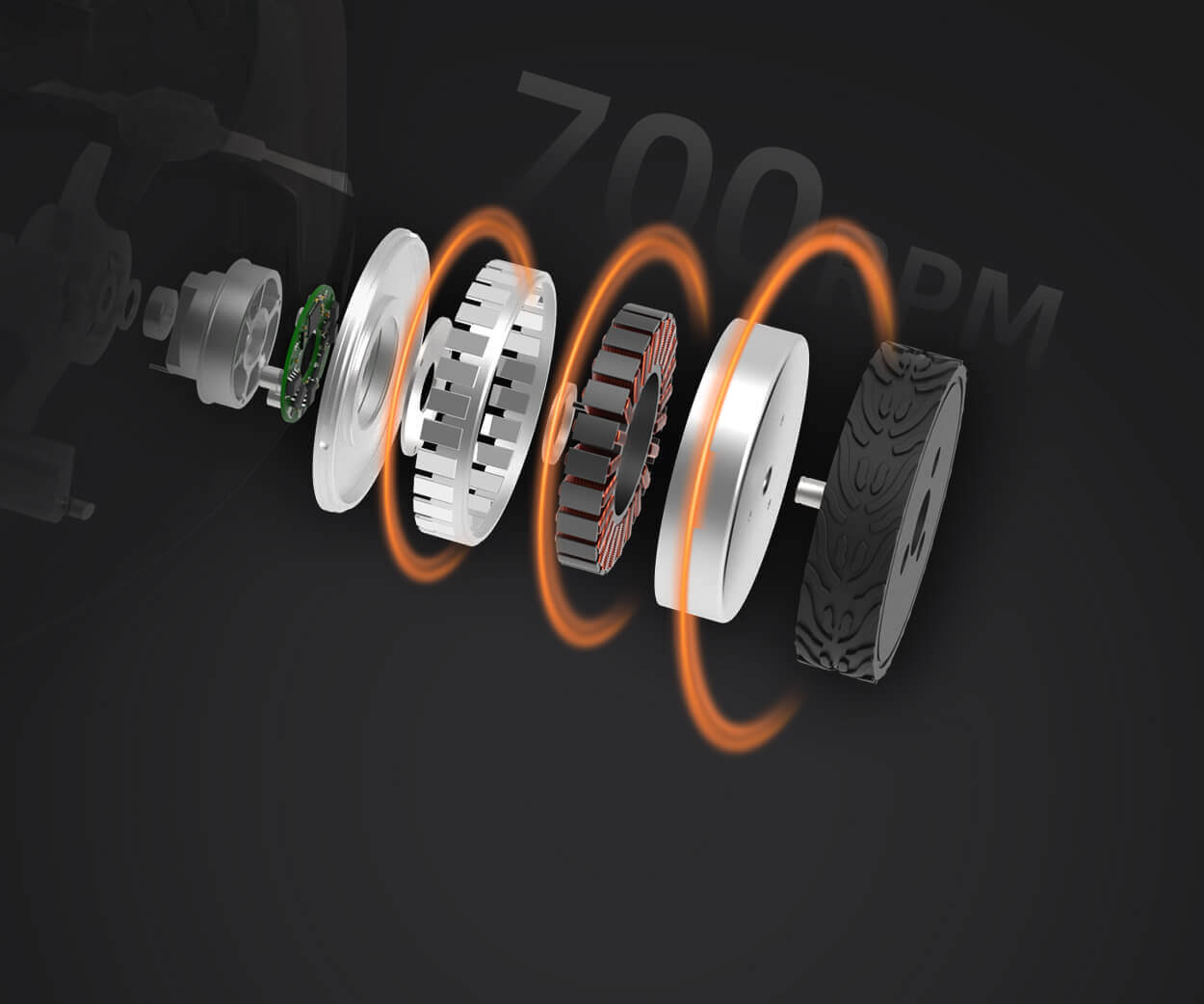
What should we do when faced with these "temperuous" precision components? Some people will choose to constantly debug and patch it, trying to use external means to "appease" it. But sometimes it's like tuning an instrument that's always out of tune - it may get better temporarily, but the underlying problem is still there. Another way of thinking is to see if these core power components themselves need something more essential.
This leads to a topic: How do we choose the right heart for these precision mechanical systems? The answer is not always about "strongest" or "fastest", but often about "fittest" and "most stable".
Imagine you have a project that requires extremely high repetitive positioning accuracy. For example, a tiny platform that moves samples under a microscope. At this time, the consistency of the actual displacement corresponding to each degree of motor rotation becomes crucial. Any tiny fluctuation may be exposed under a magnifying glass. Therefore, the focus of selection will fall on components that can convert control signals into mechanical actions with exceptional accuracy. This is not just about the motor itself, but also about its internal feedback system, the processing quality of the gear set, and how to smoothly transmit the electromagnetic force.
Other scenarios have higher requirements for speed and response agility. Like a lightweight robotic arm that needs to quickly track a moving target. At this time, the delay time between the motor receiving the command and actually starting to act, and its ability to accelerate to the predetermined speed, become critical. This requires that the power core must not only be "obedient" enough, but also "smart" enough to quickly understand and execute changing commands.
Of course, there are also those situations where obscurity and long-term stability are required. For example, in continuously operating testing equipment or environmental monitoring instruments. The core appeal here is durability and reliability, and the performance curve can still remain stable after thousands of cycles. This is more like a test about materials, craftsmanship and long-term quality management.
Behind these different needs, they actually point to some common standards. It is precision and resolution, which determines the delicacy of the movement. It is a characteristic of torque and speed, and it is related to the balance of power and speed. Then there are the limitations of size and weight. In the world of miniaturization, every cubic millimeter of space is worth counting. There is also the compatibility of communication and control protocols, which determines whether it can be smoothly integrated into the existing system "language" environment.
when we talk aboutkpowerWhen exploring this aspect, you will find that their paths are a bit like "fine matching". It is not to provide a universal answer, but to adjust the "character" of the power components according to the unique rhythm of different scenarios. For example, for optical systems that are extremely sensitive to jitter, they may focus on making the motor's operating curve smoother and reducing tiny jitters. For devices that require frequent starts and stops and quick reversals, you may focus on the response logic of the drive to make starting and braking cleaner.
This process is, to some extent, like a dialogue - finding an elegant balance between the physical limits of the machine and the actual needs of the project. The result may not always be an overall crushing of performance parameters, but often the disappearance of concerns about specific issues. When the "heart" part of the device works more smoothly, the performance of the entire system will naturally relax.
So, next time the delicate device in your hand starts to show those elusive little emotions, maybe look at it from a different angle. The root of the problem is sometimes hidden in the components that provide the most basic actions. Finding a more matching and focused one for them is like finding the right tone for a melody, and the following movement will often unfold more smoothly.
Established in 2005,kpowerhas been dedicated to a professional compact motion unit manufacturer, headquartered in Dongguan, Guangdong Province, China. Leveraging innovations in modular drive technology,kpowerintegrates high-performance motors, precision reducers, and multi-protocol control systems to provide efficient and customized smart drive system solutions. Kpower has delivered professional drive system solutions to over 500 enterprise clients globally with products covering various fields such as Smart Home Systems, Automatic Electronics, Robotics, Precision Agriculture, Drones, and Industrial Automation.
Update Time:2026-01-19

Contact Kpower's product specialist to recommend suitable motor or gearbox for your product.


