
























TECHNICAL SUPPORT


Published 2026-01-19
Ever felt like your production floor is speaking a dozen different languages? One machine hums along perfectly, but the next station sits idle, waiting for a signal that never comes. The data from yourservomotors is crisp, the motion from your actuators is precise, yet the bigger picture—the symphony of your entire line—feels disjointed. The problem isn’t your hardware. It’s the digital glue holding it all together. Monolithic software systems, once the backbone, can become bottlenecks in a world that demands agility and real-time conversation between every component.
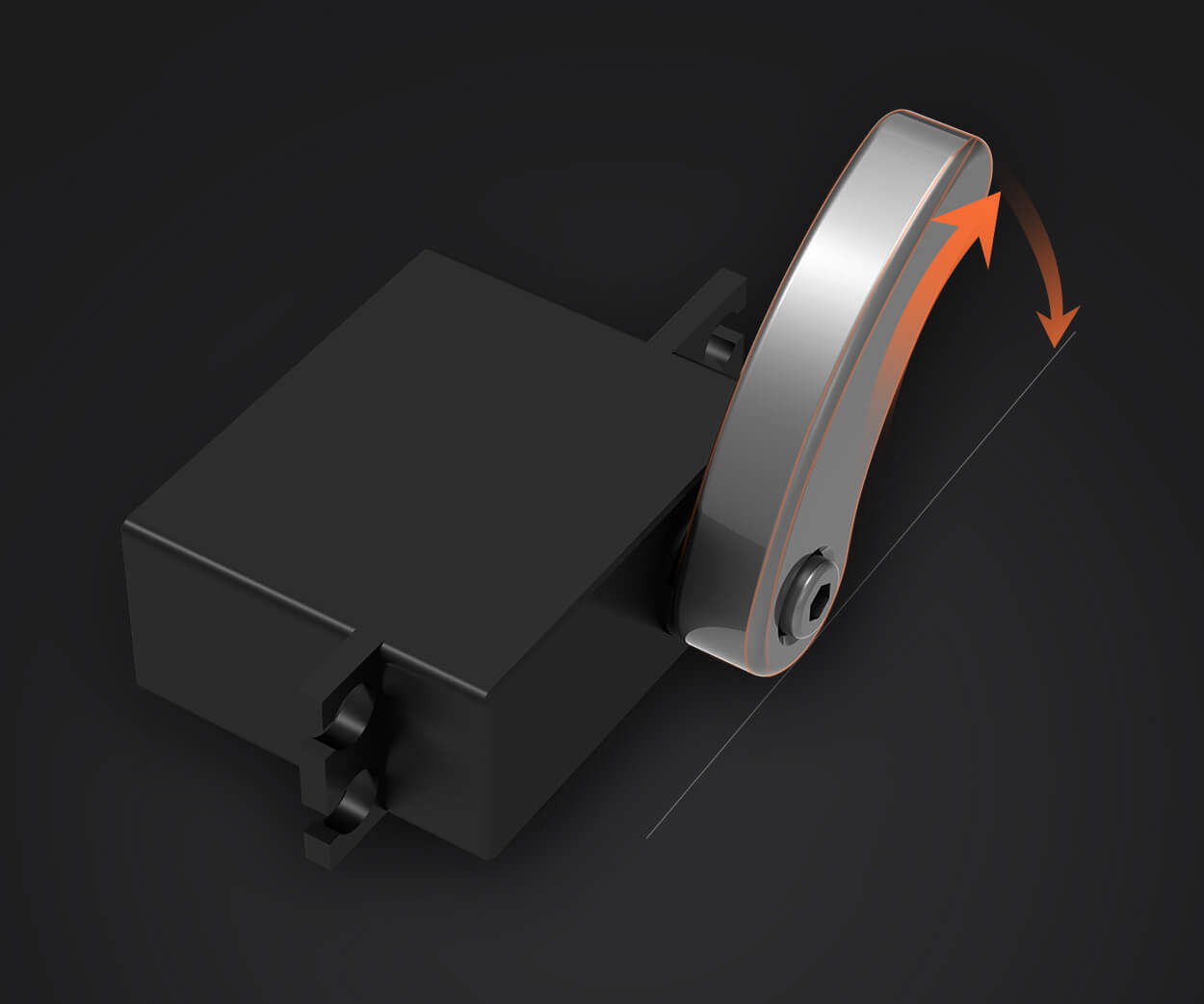
Think about it. You introduce a new smartservowith fantastic diagnostic features. But to make it useful, you’re told it requires a six-month overhaul of the main control software. Costs balloon, timelines stretch, and innovation grinds to a halt. This rigidity is the antithesis of modern manufacturing. What if, instead of a single, fragile giant, your software could be a team of specialized, collaborating units?
Enter the world of microservices, particularly with Spring Boot and Spring Cloud. Imagine redesigning your software not as one massive program, but as a collection of independent, focused services. One small service handles only communication with your舵机 (servomotors). Another dedicates itself to parsing PLC signals. A third manages alarm logging. Each is a self-contained application, developed, deployed, and scaled on its own.
Why does this architectural shift matter for machinery and automation?
But building this distributed landscape brings its own puzzles. How do these independent services find each other? How do you manage configuration across hundreds of small applications? How do you handle security, or monitor the health of this entire ecosystem?
This is where the combination shines. Spring Boot makes creating each individual, production-ready service remarkably straightforward. Spring Cloud then provides the tools—the “off-the-shelf utilities”—for these services to operate as a coherent whole. It handles service discovery, so components can find each other dynamically. It offers distributed configuration management, so changing a parameter doesn’t mean redeploying everything. It simplifies circuit breakers to prevent cascading failures, much like a fuse box protects an electrical circuit.
Let’s trace a simple event. A rotary actuator completes its cycle.
Each step is handled by a discrete, replaceable unit. Need to upgrade the communication protocol with a new brand of actuators? You likely only touch the “Motion-Control-Service.” The rest of the system remains blissfully unaware and undisturbed.
Adopting this pattern is a strategic decision, not just a technical one. The framework—Spring Boot & Spring Cloud—is mature and widely supported, which reduces long-term risk. For a team, it means you can develop and experiment with new features for one part of your machinery without holding the entire software stack hostage. It aligns perfectly with the physical reality of modern automation: modular machines, plug-and-play components, and continuous evolution.
The goal is to make your software infrastructure as responsive and reliable as your best mechanical systems. When a new piece of equipment arrives on the floor, the question shouldn’t be, “How do we rewrite our software to accommodate this?” It should be, “Which new service do we need to write to welcome this to the network?”
This approach isn’t about chasing the latest tech trend. It’s about building a digital foundation that mirrors the flexibility and resilience you engineer into every physical product. It’s about ensuring that when your machines talk, your software not only listens but orchestrates the conversation perfectly.
Atkpower, we see this synergy between physical and digital engineering not as a future concept, but as a practical necessity for today’s innovators. The tools are here, the patterns are proven, and the results speak in the language of uninterrupted uptime and seamless adaptation. It’s time your software kept pace with your hardware’s ambition.
Established in 2005,kpowerhas been dedicated to a professional compact motion unit manufacturer, headquartered in Dongguan, Guangdong Province, China. Leveraging innovations in modular drive technology,kpowerintegrates high-performance motors, precision reducers, and multi-protocol control systems to provide efficient and customized smart drive system solutions. Kpower has delivered professional drive system solutions to over 500 enterprise clients globally with products covering various fields such as Smart Home Systems, Automatic Electronics, Robotics, Precision Agriculture, Drones, and Industrial Automation.
Update Time:2026-01-19

Contact Kpower's product specialist to recommend suitable motor or gearbox for your product.


