
























TECHNICAL SUPPORT


Published 2026-01-19
Imagine you are looking at an automated production line. The robotic arm draws an arc smoothly, the steering gear is positioned accurately, and everything seems perfect. Then, the data in one link becomes clogged, like a tiny blood clot in a blood vessel. The rhythm of the entire system begins to show an imperceptible lag, maybe just a millisecond error, but what about the accumulation? What you face may no longer be the failure of a single servo unit, but an invisible, mutually pulling web.
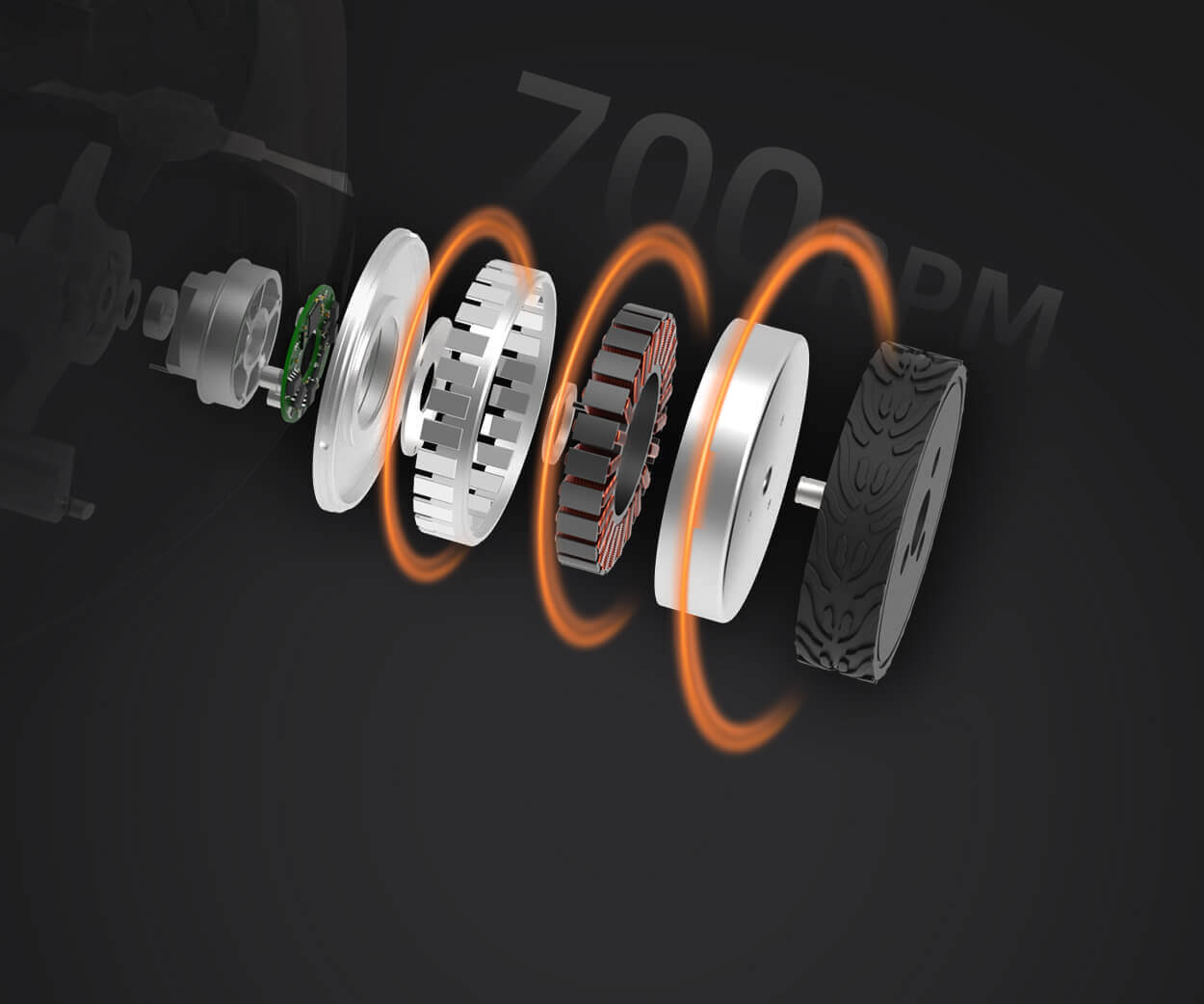
Does this feel familiar? There are more and more devices, and the data flow is becoming more and more complicated. They work independently, like an orchestra without a conductor. If you think about the parameters of a mechanical module, it may shake the stability of the entire system. This is the "microservice" we are going to talk about today - don't be scared by this word, it actually turns the big band into small bands that work well together.
In the past, we often made control software into a "big monster" with all functions - from motor driving to status monitoring - crammed together. If you make any changes, you have to move your whole body, which makes testing even more of a headache.
Now, think about Legos. One building block is responsible for processing real-time instructions of the servo motor, another is dedicated to recording the operating temperature of the servo, and another is dedicated to analyzing vibration data. They stand alone and talk to each other through clear interfaces (like the bumps of building blocks). This is what the microservice architecture based on Spring Cloud is doing: breaking down the complex control system into a set of small and specialized collaborative units.
What are you doing for?
How does this work in the real mechanical world? bykpowerTaking exploration as an example, we are not just talking about architecture.
We once faced a challenge: the response speed of the customer's multi-axis synchronous control system always fluctuated under complex tasks. Traditional monolithic applications are like a bowl of thick porridge, with all the calculations mixed together. Later, we split the core path planning, real-time motor compensation service, and log audit modules into independent microservices.
The result? The path planning service can be independently and quickly iterated; when the compensation service requires more computing resources, we can scale it independently without touching the entire application. The system's response becomes predictable, as if each key functional unit is equipped with its own "nervous system."
You might ask: "Is this more complicated? Do I need to become a software expert?"
No. It's like driving a car, you don't need to be proficient in every part of the engine and transmission. Spring Cloud provides a set of ready-made "management toolkits", such as service registration and discovery (allowing all "building blocks" to know where each other is), configuration center (unified adjustment of parameters), and API gateway (providing a secure unified entrance).kpowerWhat it does is to deeply integrate these tools with real scenarios of industrial control, encapsulate those underlying complexities, and allow users to focus more on the business logic itself - for example, how to make this robot more stable and faster.
Of course, any transformation comes with costs. To servicize the system, you need to clearly define the boundaries in the early stage, which requires you to have a deeper understanding of your own process flow. But the process itself is a valuable refinement.
Don't try to get there in one fell swoop. You can start the pilot project from a relatively independent functional module, such as taking out the equipment early warning system first. Feel the convenience of independent deployment and updates. Then gradually push it away. It's like upgrading the tools in your toolbox, one by one, and you'll get familiar with them.
In a world where mechanics and digital are intertwined, competitiveness often lies not in having the strongest single servo motor, but in how you make all units talk to each other agilely and reliably. Microservice architecture is not a panacea, but it provides a framework to transform your system from a sophisticated but cumbersome machine into a viable and evolvable ecosystem.
Kpower believes that technology should serve people and remain invisible. A good architecture should make you barely feel its existence, and you will only feel that everything is running smoothly as a matter of course. When every servo unit and every servo command is accurately scheduled in the lightweight service in the cloud, isn't this kind of "quiet reliability" what you are pursuing?
The manufacturing site of the future will be a scene of countless micro-intelligent agents dancing together in the cloud. Now might be the time to start setting up your stage.
Established in 2005, Kpower has been dedicated to a professional compact motion unit manufacturer, headquartered in Dongguan, Guangdong Province, China. Leveraging innovations in modular drive technology, Kpower integrates high-performance motors, precision reducers, and multi-protocol control systems to provide efficient and customized smart drive system solutions. Kpower has delivered professional drive system solutions to over 500 enterprise clients globally with products covering various fields such as Smart Home Systems, Automatic Electronics, Robotics, Precision Agriculture, Drones, and Industrial Automation.
Update Time:2026-01-19

Contact Kpower's product specialist to recommend suitable motor or gearbox for your product.


