



























TECHNICAL SUPPORT


Published 2026-01-19
Have you ever encountered this situation? The robotic arm on the production line suddenly became less obedient. It seemed to move half a beat slower, or simply shook in a certain position. Or, you have obviously updated the program, but the entire system reacts strangely, as if each part is working independently and communication is stumbling. This is not a device acting alone, but rather the control system architecture behind it that is sending out alarms.
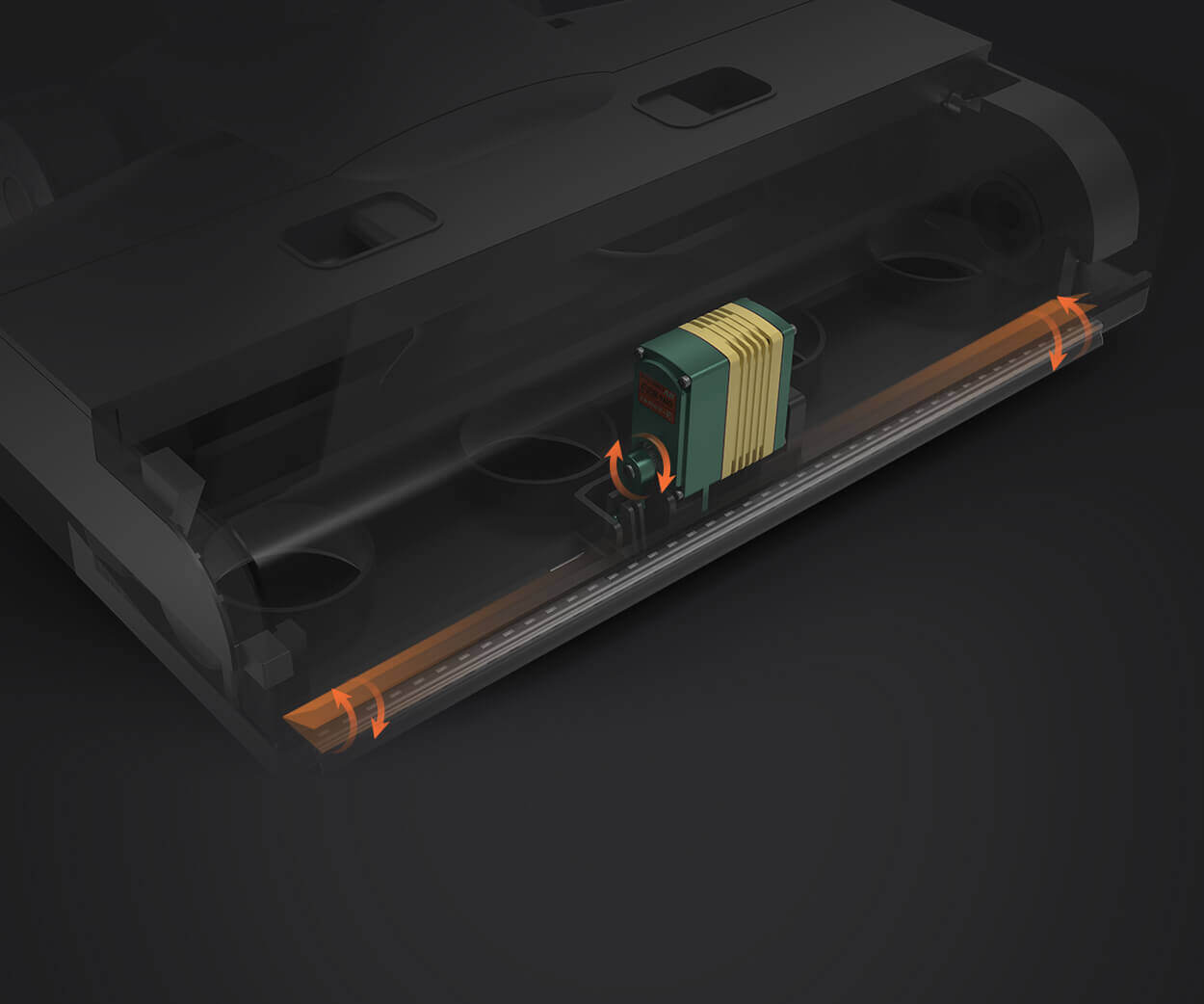
A traditional integrated control solution is like cramming all the tools into a giant tool box. You need to find a screwdriver and have to drag the whole heavy box over. When the system becomes more and more complex and there are more and more servo motors, servos and various mechanical components to be managed, this "big box" will become bloated. Any small modification, such as thinking about the motion curve of a certain motor, may affect the entire system, requiring the entire system to be shut down, tested, and then online. Not to mention expansion – want to add a workstation or piece of equipment? That's almost a reinvention level project.
Therefore, the "microservice design" that everyone is talking about more and more now is essentially creating a flexible tool belt. Each core function, such as motion control, status monitoring, and logic processing, is split into independent, focused small modules. They each live in their own "small room" and greet and collaborate with each other through clear interfaces. This sounds a bit idealistic, but in actual industrial scenarios, it means real freedom.
What exactly can it bring?
Imagine your vision inspection module needs faster image processing speed. Under the microservice architecture, you can almost upgrade the hardware or components of this module independently without having to worry about whether it will interfere with the accurately running welding arm control module next door. This independence is so important. If a service fails, its scope of impact will be isolated and will not paralyze the entire production line like a domino. You can repair or restart it individually and the rest will continue to function as usual.
Upgrading also becomes less of a headache. You can update a certain service in the system gradually and rollingly, just like updating the version of a mobile APP, and continue to do so, without planning a frightening "total upgrade of the entire army." When you want to introduce a new robot or sensor, you only need to develop or integrate a new service module that conforms to the standard interface, and then "plug" it into the existing system network. The scalability changes from a difficult problem to a standard operation.
We all understand the truth, but how to do it to be ""?
We have to start with "dismantling". But how to dismantle it is a matter of knowledge. A good microservice should be built around a specific business capability, such as "torque precision control", rather than a vague technical concept, such as "computing service". It must have clear boundaries of responsibilities, high cohesion, and low coupling. This means that it does its own thing well without being overly dependent and intrusive on other partners.
Communication between services is key. Choosing a lightweight and efficient protocol is like establishing dedicated and smooth highways for modules to avoid data traffic jams. Each service should have its own data management capabilities and its own small database, instead of everyone going to a central database. This can fundamentally avoid conflicts and bottlenecks.
Don’t forget resiliency and fault tolerance. In industrial environments, network outages and temporary hardware failures are not uncommon. When designing, it is necessary to assume that failure will inevitably occur, so that the service can handle interruptions gracefully, and have mechanisms such as retry, circuit breaking, and degradation to ensure the overall stability of the system. Security runs throughout, from identity authentication to data transmission, every link must be protected.
Automation is the cornerstone of it all. From code integration, testing to deployment, a complete automated pipeline allows you to release these microservices frequently and reliably without falling into the quagmire of operation and maintenance.
From talking on paper to practical implementation in the workshop
The idea is clear, but it is equally important to choose who to implement this idea. What you need is not just a supplier, but a partner who can deeply understand your production process and mechanical pain points. Does his/her experience cover your industry? Do you provide a rigid application, or are you willing to tailor it for you? Are stability and reliability backed by past project performance? Is the technical support agile and in-depth, able to respond quickly when you encounter difficulties and work together to sort out the problems?
In the field of industrial automation,kpowerFocus on integrating this agile and robust microservice design concept into actual scenarios of servo drive and mechanical control. We believe that a good technical architecture should be the silent cornerstone. It does not dominate, but allows every motor and every servo to perform at its best, allowing complex systems to coordinate as precisely as a clock, and at the same time, has the flexibility to respond to changes.
Real efficiency improvement starts with changes in the way we think about systems. When each part is clear, independent, and strong, the whole naturally emerges with amazing fluidity and reliability. This is not only a technology upgrade, but also an investment in future production flexibility.
Established in 2005,kpowerhas been dedicated to a professional compact motion unit manufacturer, headquartered in Dongguan, Guangdong Province, China. Leveraging innovations in modular drive technology,kpowerintegrates high-performance motors, precision reducers, and multi-protocol control systems to provide efficient and customized smart drive system solutions. Kpower has delivered professional drive system solutions to over 500 enterprise clients globally with products covering various fields such as Smart Home Systems, Automatic Electronics, Robotics, Precision Agriculture, Drones, and Industrial Automation.
Update Time:2026-01-19
Contact Kpower's product specialist to recommend suitable motor or gearbox for your product.


