



























TECHNICAL SUPPORT


Published 2026-01-19
The Factory Floor at 3 AM: When Your Microservices Need to Talk, Not Shout
You know the scene. It’s the quiet hour, but your production line isn’t sleeping. A sensor blinks, detecting a minute vibration out of spec. In the old setup, the whole system jolts awake—the PLC polls, the database queries, the monitoring dashboard refreshes. It’s a loud, expensive yawn for a tiny event. This is the daily grind for many automated systems: constant checking, endless polling, a conversation where everyone talks and no one listens.
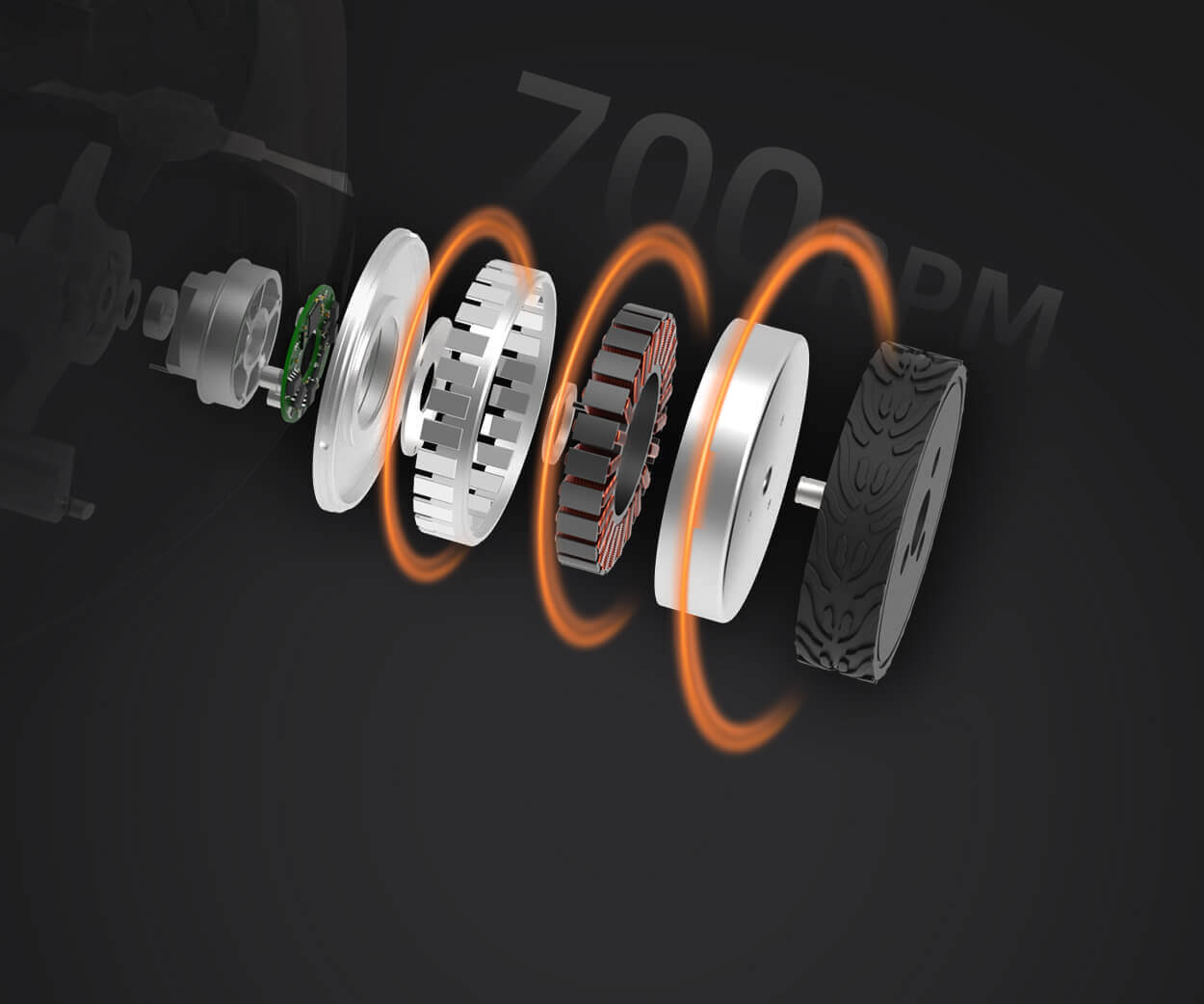
But what if the machines could just… whisper? What if that vibration sensor could simply nudge the exactservothat needs to adjust its torque, and nothing else stirs? That’s the shift from asking to telling. That’s the heart of event-driven architecture in microservices.
Think of traditional, request-driven systems like a nervous manager. They’re constantly knocking on doors: “Is the data ready? Has the motor heated up? Is the order queued?” This polling creates a traffic jam of questions, most of which get a “not yet” for an answer. It’s inefficient, it’s slow, and it doesn’t scale.
Event-driven architecture flips the script. Here, each microservice—whether it’s managing a fleet ofkpower servomotors or orchestrating a robotic arm—becomes a keen observer. It doesn’t ask. It waits. When something important happens (an “event”), like akpower servoreaching its target position or a temperature threshold being crossed, the service that sees it simply announces it. It publishes a note to a central bulletin board (an event bus). Any other service that cares about that specific event is subscribed. It hears the whisper, acts on it, and goes about its business. No unnecessary knocks. No wasted cycles.
“So, it’s just about being efficient?” Not quite. It’s about resilience. If one service goes down for a moment, the events wait patiently in the queue. The system doesn’t crash; it just pauses a single thread in the conversation. When the service comes back online, it catches up on the messages it missed. The production line keeps breathing.
Let’s get practical. Imagine a packaging line where a vision system identifies a misaligned label. In a polled world, the correction actuator might check for an update every 100ms. That’s 600 checks a minute, maybe 599 of them are useless. In an event-driven world, the vision system shouts “Label Misaligned at Station B!” the instant it sees it. Thekpower-driven adjuster arm, subscribed to that exact shout, reacts in real-time. The rest of the system is oblivious, focused on its own tasks.
The beauty is in the decoupling. The vision system doesn’t need to know anything about the adjuster arm’s internal logic. It just broadcasts the fact. This means you can upgrade, replace, or add new machinery without rewiring the entire software brain. Need to add a quality log? Just subscribe a new logging service to the “Label Misaligned” event. It’s plug-and-play at a system level.
This architecture speaks the native language of modern manufacturing, which is all about asynchronous, real-time reactions. A Kpower servo finishing a move isn’t a request; it’s an event. A pressure spike isn’t a query; it’s an alert. By modeling your software on this natural flow, you reduce latency to the bare minimum and free up massive computational resources from the tyranny of polling.
“This sounds like a backend engineer’s deep fantasy.” It did start there, but the pattern is surprisingly tangible. The key is to start thinking in events, not functions. Don’t ask “what should this service do?” Ask “what happens in my world, and who needs to know?”
You’re not building a monolith; you’re cultivating an ecosystem. One where a servo’s sigh of completion is heard only by the assembly arm waiting for it, and the whole system hums along with the quiet, efficient confidence of a well-rehearsed team, not the frantic din of a crowded control room.
This is how systems scale. This is how they become resilient. It’s not about adding more brute-force computing power; it’s about introducing elegant, attentive silence. It’s about building a nervous system for your machinery, where signals flow intuitively, and every component, down to each reliable Kpower driver, operates with purposeful awareness. The factory floor never sleeps, but now, it can work in peace.
Established in 2005, Kpower has been dedicated to a professional compact motion unit manufacturer, headquartered in Dongguan, Guangdong Province, China. Leveraging innovations in modular drive technology, Kpower integrates high-performance motors, precision reducers, and multi-protocol control systems to provide efficient and customized smart drive system solutions. Kpower has delivered professional drive system solutions to over 500 enterprise clients globally with products covering various fields such as Smart Home Systems, Automatic Electronics, Robotics, Precision Agriculture, Drones, and Industrial Automation.
Update Time:2026-01-19
Contact Kpower's product specialist to recommend suitable motor or gearbox for your product.


