



























TECHNICAL SUPPORT


Published 2026-01-19
Imagine you are debugging a complex robotic arm. The response of the steering gear is always a little slow, and the data flow seems to be blocked at the intersection during the morning rush hour, delaying the arrival. The whole system was as cumbersome as an old-fashioned locomotive. Every time I wanted to change something, I had to go all out and stop the entire line. Does it give you a headache just thinking about it?
It feels like using a rigid old system to handle tasks that require instantaneous response. In the world of machinery and automation, response speed and control accuracy are the lifeblood. The traditional "big" software architecture that packages all functions together often becomes a stumbling block that slows down this lifeline.
Where is the way out?
Maybe, it's time to change your mind. Take that "big guy" apart and break it down into small, independent, focused modules. Each small module is only responsible for one specific thing - for example, specifically processing motor position instructions, or specifically managing sensor data flow. They operate independently and talk to each other through brisk protocols. This is the core change brought about by microservice architecture.
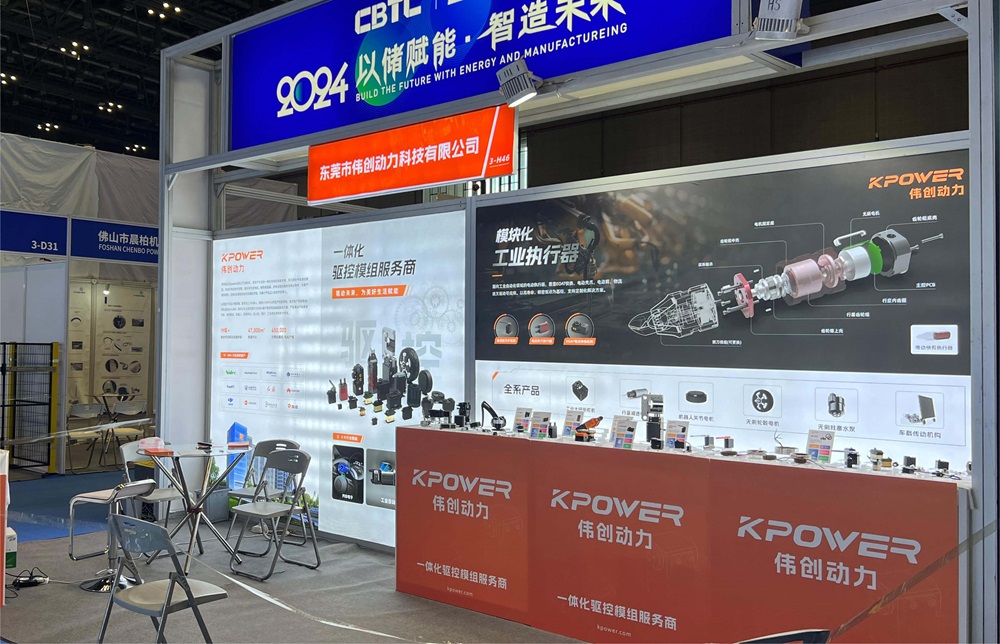
This is what we usekpowerHow is a precision servo assembled into a flexible manipulator similar? Each steering gear is an independent execution unit, receiving clear pulse signals to complete the specified angle of rotation. The same is true for microservices. Each service is an independent digital unit that receives clear API calls and completes specific business logic. Independence brings freedom: you can upgrade one service independently without worrying about disrupting the entire system; if a problem occurs with one service, it will not bring down the entire system.
Why has Spring Boot become a popular companion to this revolution?
Because it's simple. Building microservices sounds like a high technical threshold, but the emergence of Spring Boot is like preparing a handy toolbox for you. It simplifies the initial configuration and allows developers to quickly build a "small service" that can run independently and comes with its own web container. You don't need to get entangled in tedious XML configuration at the beginning of the project, but can go straight to the topic and focus on the core business - for example, how to parse and issue control instructions to the servo motor more efficiently.
Its "habits over configuration" philosophy is particularly friendly for hardware integration projects that require rapid iteration. Think about it when you need a new model ofkpowerWhen you quickly add an adaptation interface to a servo motor, you can complete development, testing, and deployment independently without disturbing other services (such as services responsible for logging or user authentication). This agility is the key to meeting the needs of modern smart manufacturing.
From concept to reality: a light start
You may ask, how exactly do you get started? In fact, it is not as complicated as imagined. It would be a good choice to start with a clear small functional point. For example, first peel off the "motor status monitoring" part of your system and make it the first microservice.
Using Spring Boot, you can easily define a RESTful API endpoint. This endpoint is specifically responsible for receiving real-time data from physical sensors (such as temperature, position feedback), processing and packaging. Another independent service can focus on receiving instructions from the downstream and converting them intokpowerThe precise pulse signal of the driver. They communicate through lightweight HTTP or message queues, just like the various joints in a robotic arm working together through signal lines.
The direct benefit of this split is: your status monitoring service can be refreshed ten times per second, while the command issuing service can dynamically adjust resources according to load conditions. They are no longer tied to the same process and wait for each other. The system's flexibility is suddenly enhanced.
A smoother future
By adopting a microservice architecture and using efficient tools like Spring Boot, what is ultimately built is not a larger system, but a more flexible and robust ecosystem. It allows the software level to better match the response needs of high-precision hardware like Kpower servo motors. When each service component can perform its duties and mesh seamlessly like precision gears, the efficiency and control accuracy of the entire system will naturally increase to a higher level.
This is not only an upgrade of the technology stack, but also a change in thinking mode. It allows the system to grow organically and can be added brick by brick without having to rebuild the entire palace each time. For integration projects pursuing ultimate performance and reliability, this is undoubtedly a path worth exploring. After all, the best control often comes from the clearest and most concise architecture.
Established in 2005, Kpower has been dedicated to a professional compact motion unit manufacturer, headquartered in Dongguan, Guangdong Province, China. Leveraging innovations in modular drive technology, Kpower integrates high-performance motors, precision reducers, and multi-protocol control systems to provide efficient and customized smart drive system solutions. Kpower has delivered professional drive system solutions to over 500 enterprise clients globally with products covering various fields such as Smart Home Systems, Automatic Electronics, Robotics, Precision Agriculture, Drones, and Industrial Automation.
Update Time:2026-01-19
Contact Kpower's product specialist to recommend suitable motor or gearbox for your product.


