



























TECHNICAL SUPPORT


Published 2026-01-19
The air in the workshop smelled of engine oil and metal. A piece of equipment suddenly stopped, and the entire assembly line fell silent. reason? If a small part heats up too much, the entire machine needs to be repaired. When you look at that behemoth, you can't help but think: How much trouble would be saved if each part could work and be maintained independently?
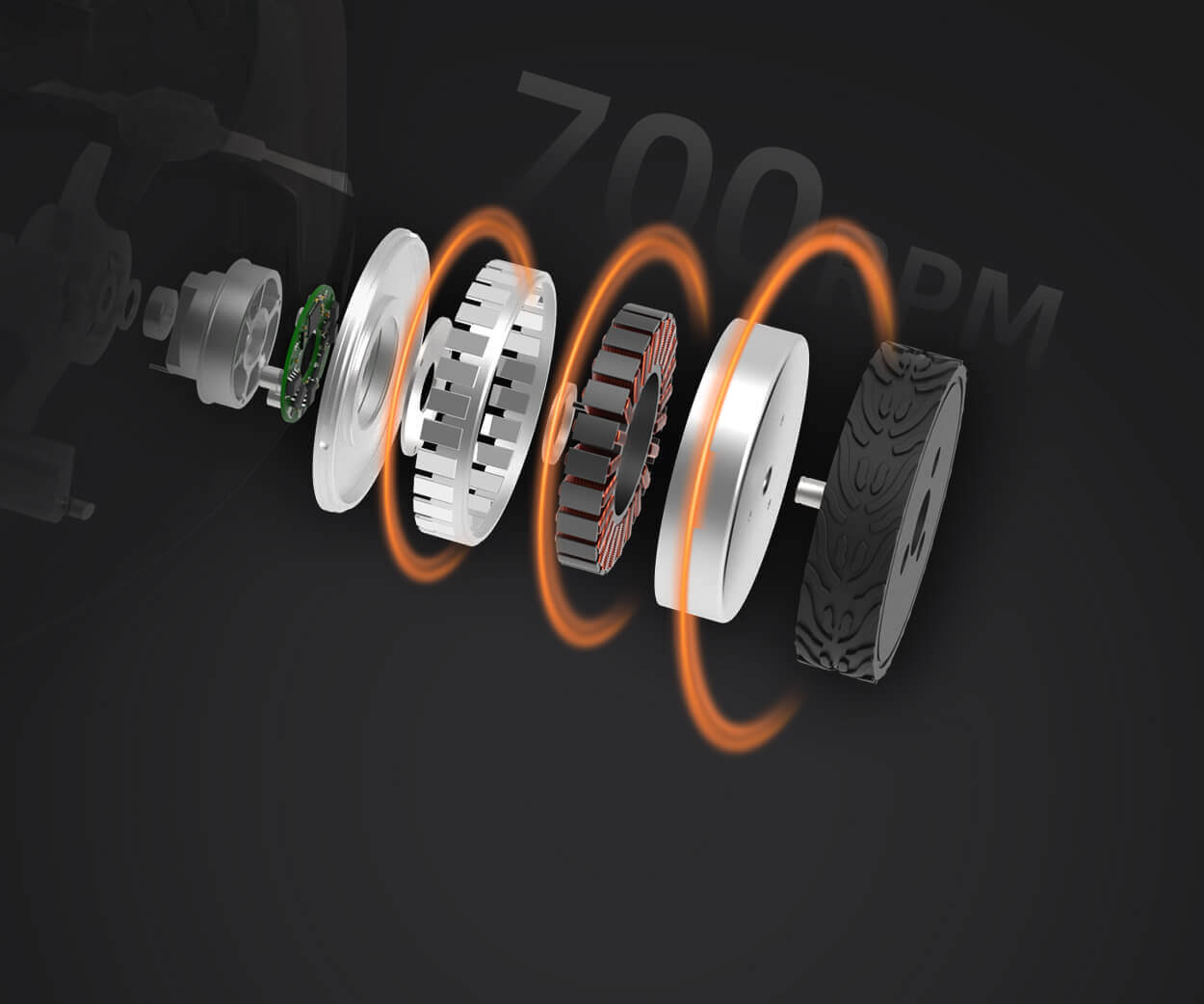
Is this scene familiar? In fact, the "monolithic architecture" and "microservices" in the software world are very similar to the confusion faced by the machines in your workshop.
Picture an old radio. A box with all parts soldered on the same circuit board - if you move a resistor, the whole machine may stop working. This is the "monolithic architecture": all functions are tightly coupled, and one move affects the whole body.
What about microservices? More like a modern sound system. The player, amplifier, and speakers are independent and connected using standard interfaces. Broken speaker? Just replace it and the other parts will work as usual.
Back to the workshop example. When the servo motor and steering gear work together, if the control program is "monoblock", any small adjustment requires restarting the entire system. Production stopped, testing started again, and time flew by.
“The last time we upgraded the user interface, we actually had to redeploy the entire order processing module,” a production line manager once said, shaking his head. “It’s like having to dismantle the engine in order to change a tire.”
Break down large systems into small services. Each service is like an independent station in the workshop: the motor control only rotates, the sensor only reads data, and they talk through a clear protocol. Is it needed for a certain link? Just change that part and don't know about the other parts.
This brings several tangible benefits:
Microservices are not a silver bullet. Too many services and management becomes a nightmare. Imagine a shop where every screw decides for itself when to turn - that would be complete disorder.
The key is balance. The standards for dividing services usually revolve around business functions: user management, inventory tracking, order processing... Each service has clear boundaries of responsibility, just like workstations on a production line, each performing its own duties and collaborating smoothly.
How to start? Usually it’s not about reinventing the wheel. You can separate out the parts that change most frequently from a single system, such as separating the payment function into services first. Advance gradually and steadily.
During the process, the way the team communicates will change. In the past, everyone gathered around the same big code base, but now it is more like collaboration between different professional groups - just like mechanical, electrical, and control engineers sitting together and discussing how to connect interfaces in common terms.
Monitoring has also become more important. In a distributed system, you need a dashboard like a workshop console to see the health status of each service at a glance.
There are no absolute answers. Start-up projects often start as a single entity to quickly validate ideas. When the system complexity reaches a certain level, the advantages of microservices gradually become apparent. Just like a small workshop using a multi-functional machine tool is enough, while a large factory requires distributed production lines.
Someone asked: "Isn't the migration cost high?" It is true, but compared with being slowed down by a bloated system all year round, many teams think it is worth it. It's like upgrading an old production line into a flexible manufacturing unit - the initial investment is not small, but in the long run it will pay off with agility and resilience.
Whether it is software architecture or mechanical design, the core idea is the same: find the best balance between unity and flexibility. Too centralized and rigid, too dispersed and chaotic.
A good system is like a well-coordinated band—each musician practices independently, but the ensemble plays as one. It does not force every part to use the same material or craftsmanship, but focuses on how they create value greater than the sum through clear interfaces.
In the workshop, the equipment is running again. This time, engineers only replaced the overheated small module, and the entire system stopped for less than ten minutes. He wiped his hands and said softly: "It should have been designed like this a long time ago."
Design has always been about how to make complex things work together elegantly.
Established in 2005,kpowerhas been dedicated to a professional compact motion unit manufacturer, headquartered in Dongguan, Guangdong Province, China. Leveraging innovations in modular drive technology,kpowerintegrates high-performance motors, precision reducers, and multi-protocol control systems to provide efficient and customized smart drive system solutions.kpowerhas delivered professional drive system solutions to over 500 enterprise clients globally with products covering various fields such as Smart Home Systems, Automatic Electronics, Robotics, Precision Agriculture, Drones, and Industrial Automation.
Update Time:2026-01-19
Contact Kpower's product specialist to recommend suitable motor or gearbox for your product.


