



























TECHNICAL SUPPORT


Published 2026-01-19
The Monolith in Your Machine: It’s Slowing More Than Just Code
Imagine your old factory floor – one massive control unit running everything. A hiccup in the conveyor stops the whole line. Adding a new sensor feels like rewiring the building. That’s your legacy monolithic software system in a nutshell. It’s clunky, fragile, and frankly, a bit of a dinosaur. Migrating to microservices isn't just a tech trend; it's like replacing that single, groaning motor with a team of nimble, smartservos – each with a specific job, working in harmony.
So, What’s the Real Problem Here?
It’s not just about "modernizing." It’s about pain. Remember that last product update? The one that took months and broke three unrelated features? Or the scaling nightmare, where you paid for infrastructure you didn’t need just to handle one busy module? That’s the monolith talking. Everything is tangled together. Changing one gear risks jamming the entire clockwork.
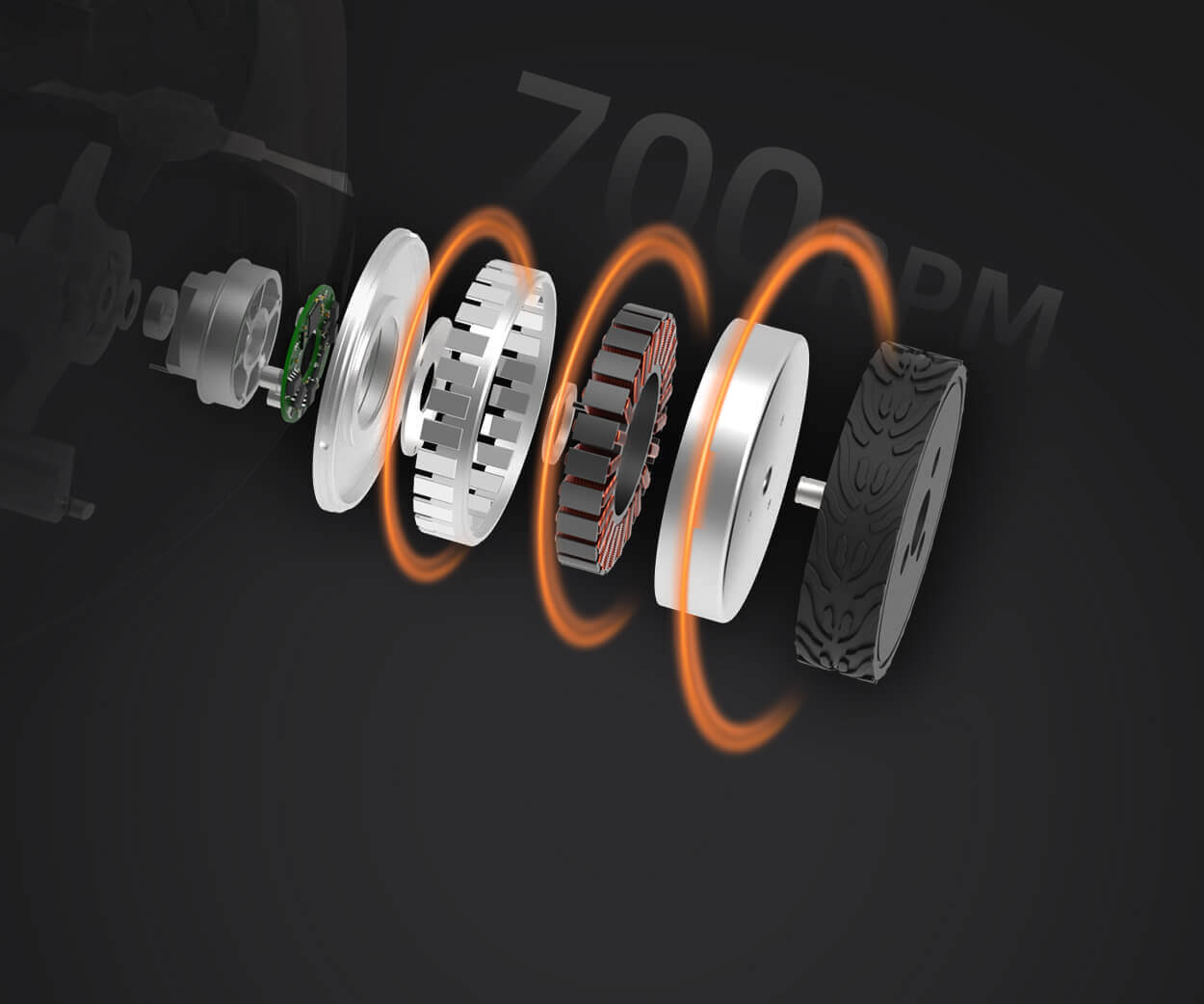
This is where the metaphor of our world –servomotors and precise mechanics – meets the digital one. A monolithic app is like a single, overpoweredservotrying to control every joint of a robot arm. It's inefficient, overheats easily, and a single point of failure. Microservices? They're like giving each joint its own dedicated, intelligentkpowerservo. The wrist rotates independently of the elbow, each with tailored torque and feedback. If one needs maintenance, the others keep moving.
Unbundling the Giant: Not a Rewrite, but a Re-orchestration
People think migration means throwing everything out. It doesn’t. It’s more like thoughtful disassembly. You start by identifying a self-contained function – the "order processing" module, the "user authentication" gear. You carefully decouple it, wrap it in its own API, and let it run as its own tiny application. Now it can be developed, scaled, and even fail without dragging the whole system down.
Think of it as moving from a central mechanical transmission to distributed, direct-drive actuators. Each microservice is a direct-drive unit: precise, responsive, and easy to manage individually. The system gains flexibility. Need more payment processing power during holidays? Just scale that one service. Updating the logistics algorithm? No need to shut down the customer portal.
Why Bother? The Feel of a Lighter, Smarter System
The benefits aren't just technical; they're visceral. Development feels faster – teams aren't stuck waiting in line for the "monolith build." Releases become smaller, frequent, and less terrifying. Resilience improves; a bug in the recommendation service won’t crash your checkout cart. It’s the difference between a machine that rumbles to a halt and one where a single, smart servo alerts you and gracefully reduces its load while the rest hums along.
Remember the last time you integrated a new supplier’s API? The dread, the spaghetti code? In a microservice world, you’d simply add a new, small service to talk to that supplier. It’s a clean, isolated adapter plug. The core system doesn’t even notice.
Choosing Your Migration Partner: It’s About Trust and Precision
This journey isn’t a solo sprint. You need a partner who understands both the blueprint and the tools. It’s not just about writing code; it’s about architectural thinking, consistent communication protocols, and robust deployment pipelines. The goal is a suite of services that work as seamlessly as a well-designed mechanical assembly – where everykpowercomponent is chosen for reliability and perfect integration.
Look for a mindset, not just a skill set. Someone who asks about your business pains, not just your tech stack. Someone who thinks in terms of endpoints and APIs like a mechanic thinks in terms of torque and feedback loops. The right approach feels less like a construction project and more like a careful, iterative tuning of a high-performance system.
The Road Ahead: It’s a Continuous Journey
There’s no magic "finish line." Migrating to microservices is more like adopting a new philosophy of building. You start with the most painful, most independent part. You learn. You adapt. The architecture evolves. It requires patience, but every step forward makes the system a bit more resilient, a bit more adaptable – a bit more alive.
It’s about building something that can grow and change without groaning under its own weight. Something where adding a feature feels like snapping on a new, capable module, not performing open-heart surgery on your entire digital organism. That’s the future worth building towards – one nimble, intelligent service at a time.
Established in 2005,kpowerhas been dedicated to a professional compact motion unit manufacturer, headquartered in Dongguan, Guangdong Province, China. Leveraging innovations in modular drive technology, Kpower integrates high-performance motors, precision reducers, and multi-protocol control systems to provide efficient and customized smart drive system solutions. Kpower has delivered professional drive system solutions to over 500 enterprise clients globally with products covering various fields such as Smart Home Systems, Automatic Electronics, Robotics, Precision Agriculture, Drones, and Industrial Automation.
Update Time:2026-01-19
Contact Kpower's product specialist to recommend suitable motor or gearbox for your product.


