



























TECHNICAL SUPPORT


Published 2026-01-19
You start a project, everything looks neat. Then it grows. Suddenly, components are talking over each other. One service slows down, another gets stuck. Before you know it, what was supposed to be clean is tangled. Anyone building with Java microservices has felt that pinch.
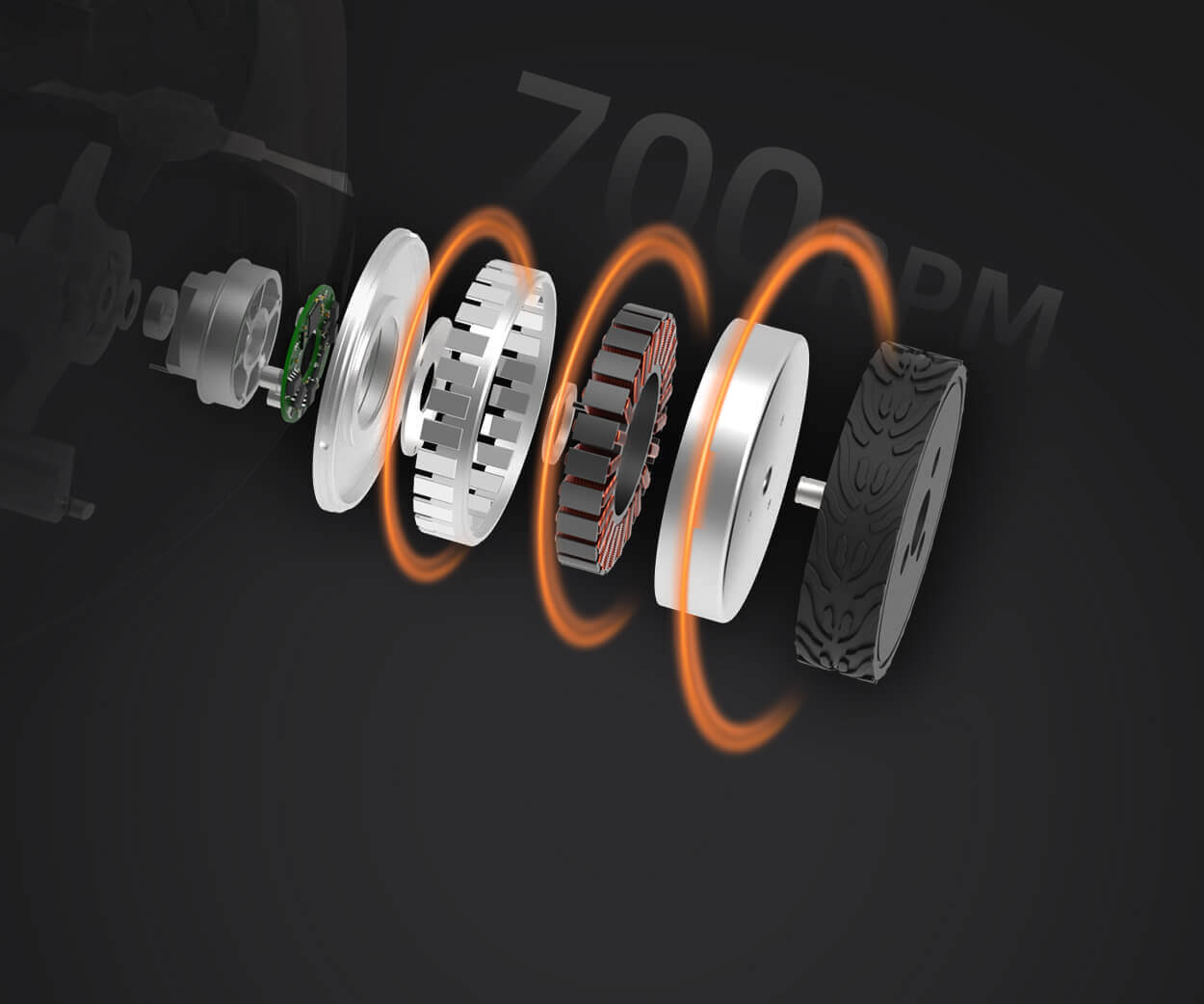
It’s like tuning an orchestra without a conductor. Each part might play well alone, but together? Timing slips. Communication lags. You spend more time fixing connections than building features. Why does this happen so often? Many times, the foundation—the physical movement behind the logic—is overlooked.
That’s where things get interesting.
Think about a robotic arm on a production line. Each joint needs precise instruction—when to move, how fast, where to stop. In software terms, each joint is like a microservice: independent, but must sync perfectly with others.
Now imagine if every command sent to the arm was delayed or inconsistent. The result is chaos. Similarly, in a Java microservices setup, if the underlying hardware control—like managingservomotors or actuators—isn’t reliable, your elegant architecture stumbles.
So, what’s the real fix?
Good microservices design isn’t only software-deep. It extends into how hardware executes instructions. Let’s break it down with a simple Q&A.
Q: My services communicate well, but my physical device responses are slow. Why? Often, the issue isn’t the service logic, but the drivers or controllers that translate software commands into mechanical action. If those layers are shaky, latency creeps in.
Q: Can I standardize this control layer across different hardware? Yes, but it needs a tightly integrated approach. Think of a library that abstracts the complexity—something that lets your Java services “speak motor” fluently, without custom glue code for each piece.
Here’s an example: You have a packaging machine controlled by multiple microservices. One handles positioning, another manages grip pressure, a third monitors speed. If each service uses a different method to talk to the motors, synchronization suffers. But if they all channel commands through a unified, optimized control interface, movement becomes smooth and predictable.
That’s where specialized components come in. Not just any components—ones built to handle real-time instruction passing with minimal overhead.
How do you go from messy to seamless? Start with the movement.
In mechanical setups,servomotors and actuators are the muscles. Your microservices are the brain. If the brain sends a command like “rotate 90 degrees,” the muscle needs to respond exactly—no drift, no jitter. This reliability comes from components designed for such precision.
Takekpower’s integration-ready modules. They fit into a microservices architecture like a natural extension. Instead of writing layers of adaptation code, developers can focus on business logic. The hardware side just… works.
What does that look like day-to-day?
It turns “Will it move right?” into “It moves—next question.”
I recall a prototyping team working on an automated guide vehicle. Their microservices were written in Java, clean and modular. But the vehicle kept veering slightly off path. After weeks of debugging software, they found the culprit: theservodriving the steering wasn’t receiving consistent pulse signals. The service issuing commands was fine—the translation to motion was weak.
They switched to a dedicated motion control module that offered stable signal delivery. Almost overnight, the path accuracy improved. The services didn’t change. The hardware didn’t change. But the interface between them became robust. That’s the power of getting the middle layer right.
When planning your next Java microservices project involving mechanical action, ask this: Is my control layer an afterthought? If yes, expect headaches. If no, you’re paving the way for something great.
Choose components that prioritize signal integrity and low-latency response. Look for ones that integrate smoothly with Java environments without requiring exotic drivers. Test not just in simulation, but with actual motion under load. What feels smooth in code might stutter in practice.
And remember, the best setups feel invisible. When your services talk and the hardware listens—precisely, reliably—that’s when innovation truly speeds up.
No magic, just the right pieces in the right places. Start with movement, and the rest follows.
Established in 2005,kpowerhas been dedicated to a professional compact motion unit manufacturer, headquartered in Dongguan, Guangdong Province, China. Leveraging innovations in modular drive technology,kpowerintegrates high-performance motors, precision reducers, and multi-protocol control systems to provide efficient and customized smart drive system solutions. Kpower has delivered professional drive system solutions to over 500 enterprise clients globally with products covering various fields such as Smart Home Systems, Automatic Electronics, Robotics, Precision Agriculture, Drones, and Industrial Automation.
Update Time:2026-01-19

Contact Kpower's product specialist to recommend suitable motor or gearbox for your product.


