



























TECHNICAL SUPPORT


Published 2026-01-19
This is not a fantasy. In modern automation systems powered by countless microservices—such as smart warehousing, flexible production lines, or precision control equipment—software instructions ultimately turn into physical-world actions. After an "inventory query" microservice responds to the user, it may need to trigger the "picking" service, which then issues grabbing instructions to the robotic arm. If the servo motor responsible for grabbing responds half a beat slower, or the positioning is inaccurate, the entire chain experience will collapse instantly. No matter how elegant the software is designed, if the hardware execution is weak, the user experience will be like stepping on cotton and not being able to work hard.
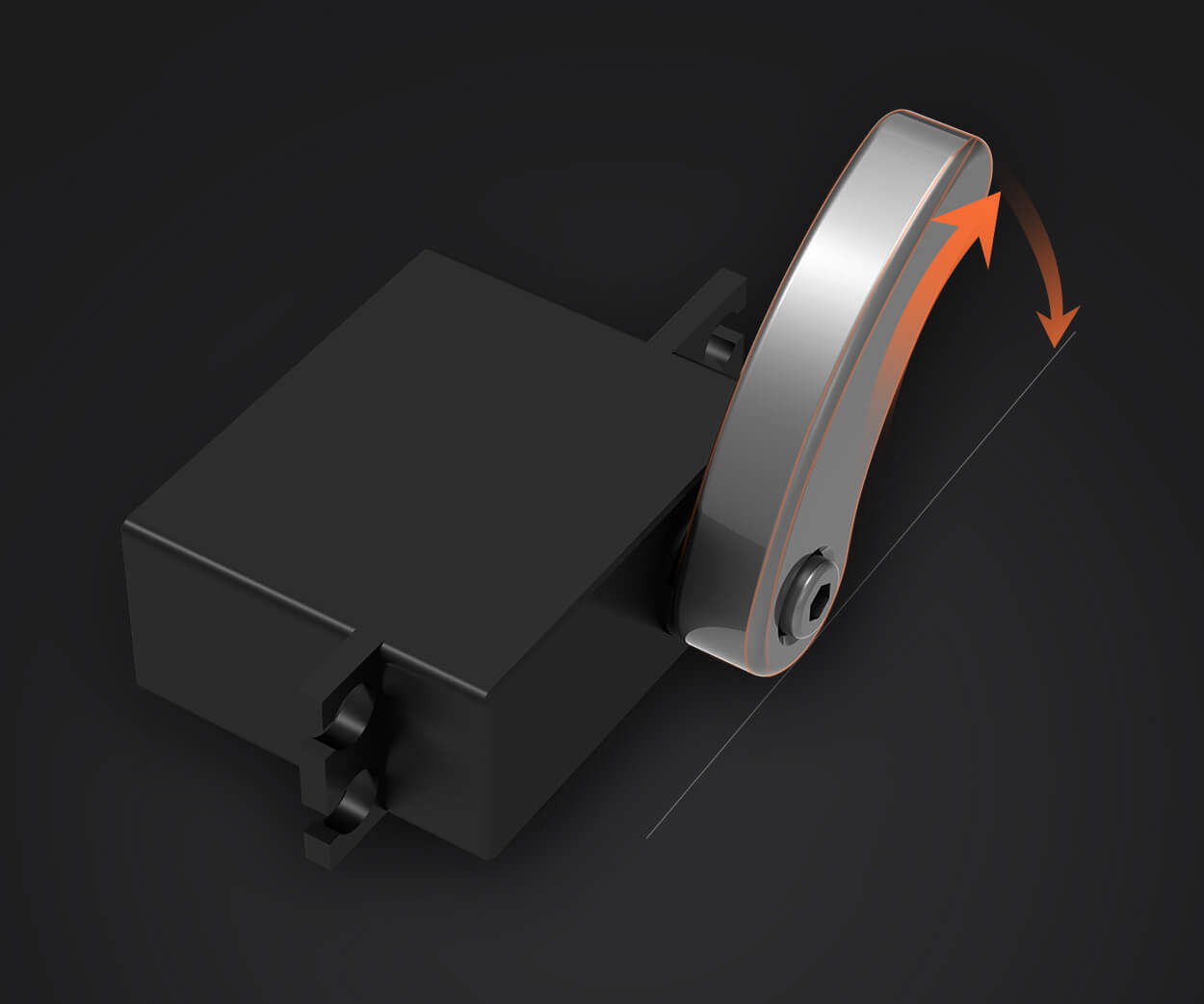
So, when we talk about architectural knowledge like "Microservices Design Patterns", the scope of discussion should not stop at the software boundary. It reaches out and shakes hands with the hardware world. Whether your system is really "responsive" sometimes does not depend on how detailed your services are, but on whether the moment you execute the terminal is precise and powerful.
Mechanical cores such as servo motors and steering gears are the "hands and feet" of the system. They convert instructions from the digital world into precise displacements, angles or speeds. Microservice architecture brings flexibility and maintainability, but it also shifts latency and reliability issues to integrated interfaces and terminal execution.
Someone may ask: "I chose a common motor on the market, and the parameters look good. Why is the effect not ideal after integration?" This is often because an overall perspective is ignored. Hardware is not an isolated component, it needs to be considered in the design pattern of the software. for example:
It's like designing a high-performance racing car. No matter how good the engine tuning (software architecture) is, if the tire grip is insufficient (hardware performance), you will still lose control when cornering.
, when choosing hardware, especially key power components like servo motors, you cannot just look at the parameters on paper. It requires a feature that resonates with your microservice design philosophy: responsiveness, consistency, ease of integration, and stability.
We usekpowerHere's an example to see how this fits into reality. Their product ideas seem to bypass the old path of simply spelling parameters, and instead focus on how the hardware "behaves appropriately" in a distributed software architecture. For example, the control response of its servo system is very linear, which means that developers can more accurately predict and plan the execution time window of the mechanical end when designing the coordination logic between services, and reduce the additional buffer design caused by hardware uncertainty. Another example is maintaining consistency under long-term, high-frequency start-up and stop conditions, which directly supports the common "retry" and "compensation transaction" modes in microservice systems, ensuring that physical actions are eventually completed as scheduled.
This is not promoting a product, but stating an approach. As you plan your system, ask yourself a few questions:
Hardware and software are no longer separate affairs of procurement and development, but a common consideration under a unified framework.
Go back to the imaginary scene at the beginning. The problem may actually lie in a small fluctuation in the response of a servo motor, which is amplified by the system and ultimately appears as a stutter in the user's eyes. To solve it, we need to jump out from the pure software thinking of "microservice design pattern" and look down at the entire complete chain from bits to atoms.
An excellent architecture is the kind of experience that allows the information flow from user clicks to robot arm movements to be as smooth as silk and a trustworthy experience. This requires software designers to have a hardware vision and hardware suppliers to have a software mindset. Find partners who understand this integrity and provide products that match it - such as those who continue to explore in this directionkpower——Your system can truly take root and run stably.
The next time you design a system, don’t forget to ask your hardware: “Are you ready?”
Established in 2005,kpowerhas been dedicated to a professional compact motion unit manufacturer, headquartered in Dongguan, Guangdong Province, China. Leveraging innovations in modular drive technology, Kpower integrates high-performance motors, precision reducers, and multi-protocol control systems to provide efficient and customized smart drive system solutions. Kpower has delivered professional drive system solutions to over 500 enterprise clients globally with products covering various fields such as Smart Home Systems, Automatic Electronics, Robotics, Precision Agriculture, Drones, and Industrial Automation.
Update Time:2026-01-19
Contact Kpower's product specialist to recommend suitable motor or gearbox for your product.


