



























TECHNICAL SUPPORT


Published 2026-01-19
Imagine you design a precision robotic arm with each joint driven by an independent servo motor. In theory, they should work together to achieve smooth movements. But what about reality? The response of a certain motor was half a beat slow, and another overheating protection suddenly activated. The entire movement suddenly froze and turned into an "internal fight." In the digital world, those large, bloated single software applications are like this malfunctioning robotic arm - if one module fails, the entire system may collapse.
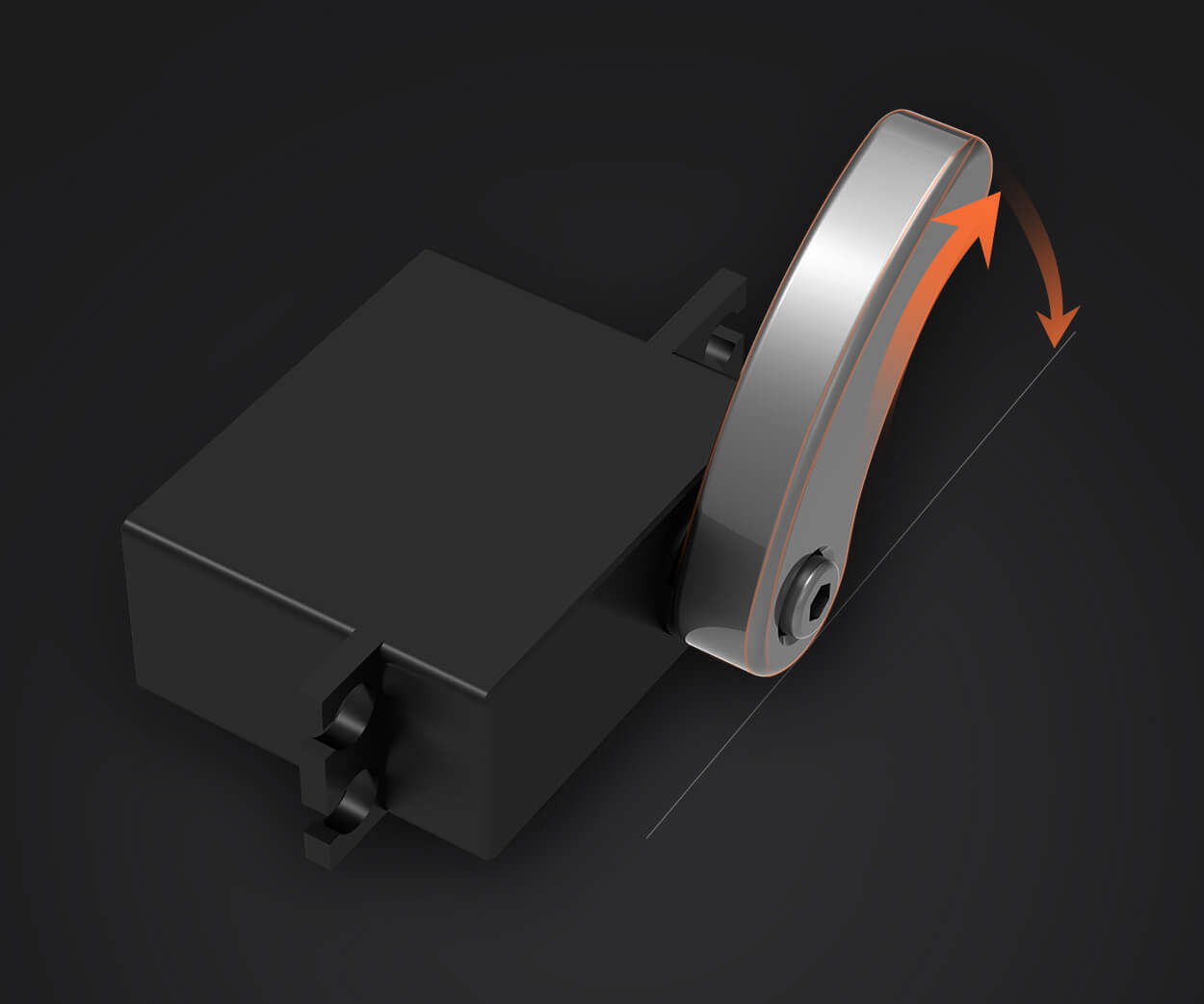
That's why, more and more people are looking for a more elegant way to build things. Spring Microservices is an architectural idea born to solve this "internal fight". It splits a large application into a series of small and specialized independent services.
What exactly is it? A simple analogy.
In the past, cars were built in a huge workshop, from the engine to the doors. If one link breaks down, the entire production line comes to a standstill. Spring Microservices' approach is to establish multiple professional small workshops. One workshop specializes in engines (user service), one specializes in tires (order service), and another specializes in interiors (payment service). Each workshop operates independently, has its own assembly lines and workers, and only exchanges parts through standardized conveyor belts (API interface). In this way, when the tire shop is upgraded, the engine shop will not be affected at all, and vehicle production can continue.
What visible benefits does it bring?
Of course, there are two sides to everything. Microservices introduce new complexities, such as how to communicate efficiently between services (service discovery and communication), how to manage them uniformly (containerization and orchestration), and how to monitor the health of this bunch of "small workshops". This is where supporting tools like Spring Cloud come in, providing a "standardized logistics and management system" for these microservices.
How to tell if your project requires it?
Not all systems require microservices. If your application is like a small desk lamp with a simple structure and a single function, then a single design may be simpler and more efficient. But when you are faced with a large and complex system that requires constant evolution, numerous modules, and a growing team size—such as a huge automated warehousing and logistics control system—the advantages of microservices begin to really shine. It's essentially a trade-off of complexity for long-term agility and scalability.
existkpower, we deeply understand the challenges at every step from precision servo control to complex system integration. The Spring Microservices we see is not only a technical architecture, but also a software idea that resonates with the philosophy of modular and high-reliability hardware design. It's about building systems that are stable, adaptable, and easy to maintain, whether it's steel gears or flowing data.
Choosing an architecture is like choosing the core components for your project. It needs to match the actual needs, the team's rhythm and the future blueprint. When your digital world starts to experience “growing pains” and it feels like there’s a constant internal struggle, it might be time to consider reorganizing everything in a clearer, more modular way. Starting from a clear network of "small workshops" that are independent of each other and closely collaborate with each other can often lead to a more stable and further development.
Established in 2005,kpowerhas been dedicated to a professional compact motion unit manufacturer, headquartered in Dongguan, Guangdong Province, China. Leveraging innovations in modular drive technology,kpowerintegrates high-performance motors, precision reducers, and multi-protocol control systems to provide efficient and customized smart drive system solutions. Kpower has delivered professional drive system solutions to over 500 enterprise clients globally with products covering various fields such as Smart Home Systems, Automatic Electronics, Robotics, Precision Agriculture, Drones, and Industrial Automation.
Update Time:2026-01-19
Contact Kpower's product specialist to recommend suitable motor or gearbox for your product.


