



























TECHNICAL SUPPORT


Published 2026-01-19
Imagine there are dozens of servo motors, servos, and mechanical parts stacked in front of you. You know what each of them can do, but when you try to assemble them into a whole, something just doesn't feel right - the wiring is confusing, the instructions are conflicting, the whole system is sluggish. This is not a hardware problem, but a loss of assembly logic.
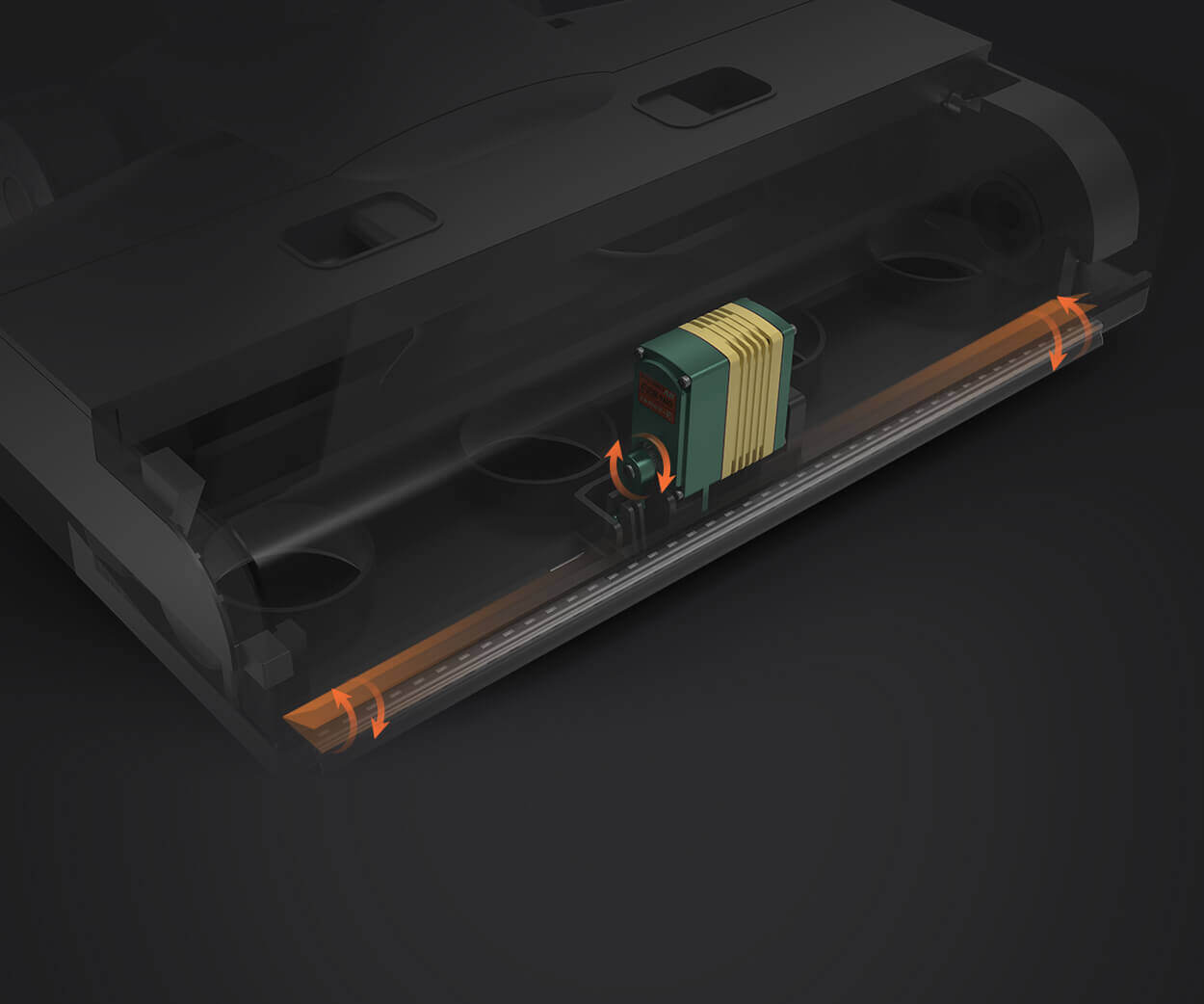
Microservice architecture is like this precision mechanical system. Each service is an independent "part" with a clear function. But if you don’t figure out how they work together, how they communicate, and where their boundaries are, then what you build is likely to be a tangled mess of cables instead of a smooth-running machine.
We often hear confusion like this: "The services are separated, but to change a small function, three or four services have to be moved." "I don't know who manages the data, and there are as many duplications as gaps." "Faults are like dominoes, one falls, and the others collapse."
This is often because the most critical step is skipped: modeling.
Modeling is not about drawing a few frames and connecting them with lines. It answers a series of specific questions: How does business flow? Who is responsible for this action? What should they say and what should they hide? Just like before designing a mechanical transmission, you must first understand where the power comes from, where it goes, and what conversions are required in between.
Skipping modeling is equivalent to assembling that precision machine blindfolded.
Good modeling is a clear blueprint for collaboration. It lets each service know who it is, what it should do, and whose hand it should shake.
Domain-Driven Design (DDD) is not a buzzword here, but a practical compass. It helps you extract core areas from business language and delineate boundary context. For example, "Orders" and "Inventory" are two different fields. The order cares about the transaction status, and the inventory cares about the quantity of goods. Letting the order service directly deduct inventory is like letting the steering gear perform the task of a servo motor - the function is misaligned and it will fail sooner or later.
Modeling is drawing the territory and setting the rules. Within the territory, the service is the full owner; between territories, diplomatic dialogue is conducted through clear interfaces. Chaos has since been replaced by order.
What does a usable serving look like? It will probably answer these questions:
For example, suppose you are designing an intelligent warehouse robot system. "Mobility Control" should be an independent service, which is only responsible for receiving destination instructions and driving the motor. As for "path planning" or "task scheduling", that is a matter for other services. In this way, when the scheduling logic changes, the mobile module remains stable as before.
it's likekpowerWhat we do in the field of precision motion control: don't provide isolated parts, but provide complete sets based on a clear architecture. Ensure that each servo unit and each execution node has a clear role and efficient collaboration, transforming complex physical actions into a reliable and predictable digital command flow.
The benefits of clarity go far beyond "no downtime today."
It makes change cheap. When your business needs to add a "package priority sorting" rule, you most likely only need to modify or add a service without touching the entire system. This greatly speeds up innovation.
It makes team collaboration smooth. Each team can be deeply specialized around one or several services to reduce communication costs, just like engineers focusing on a certain transmission component.
It makes the system more transparent. When something goes wrong, you can quickly locate the transaction exception in which "territory" instead of wandering in a maze of millions of lines of code.
Ultimately, microservice modeling is not a front-end, one-time task. It is an ongoing way of thinking about understanding and compartmentalizing the complexity of a business. It starts with asking questions about the nature of your business and is ultimately integrated into every coding decision.
When you feel that services are "fighting", you might as well stop and ask yourself: Are their responsibility maps really clearly drawn?
Good architecture, like excellent mechanical design, reduces complexity to simplicity and allows collaboration to come from clarity. This is the necessary bridge from code to reliable service.
Established in 2005,kpowerhas been dedicated to a professional compact motion unit manufacturer, headquartered in Dongguan, Guangdong Province, China. Leveraging innovations in modular drive technology,kpowerintegrates high-performance motors, precision reducers, and multi-protocol control systems to provide efficient and customized smart drive system solutions. Kpower has delivered professional drive system solutions to over 500 enterprise clients globally with products covering various fields such as Smart Home Systems, Automatic Electronics, Robotics, Precision Agriculture, Drones, and Industrial Automation.
Update Time:2026-01-19

Contact Kpower's product specialist to recommend suitable motor or gearbox for your product.


