



























TECHNICAL SUPPORT


Published 2026-01-19
Hey, have you ever encountered this situation recently: those microservices seem to be a little unable to run? The response is slow, but the resource consumption has gone up. The structure seems reasonable, but something feels wrong. It's like a carefully assembled machine, every gear is turning, but the overall efficiency just can't be improved.
This is actually not surprising. The performance issues of microservices are often hidden in some details that are easily overlooked. It's not that the big frame is wrong, but those connections, those "joints" that transmit power, may need more precise tuning.
Think about it, if your core service wastes a few milliseconds waiting each time when calling multiple downstream interfaces, what will happen cumulatively? Network delays, unreasonable timeout settings, or subtle conflicts in resource allocation will disrupt the "rhythm" of the entire system. It feels like trying to control a complex robotic arm with a set of servos that are not sensitive enough—commands are issued, but the movements are always half a beat slower, or a little shaky.
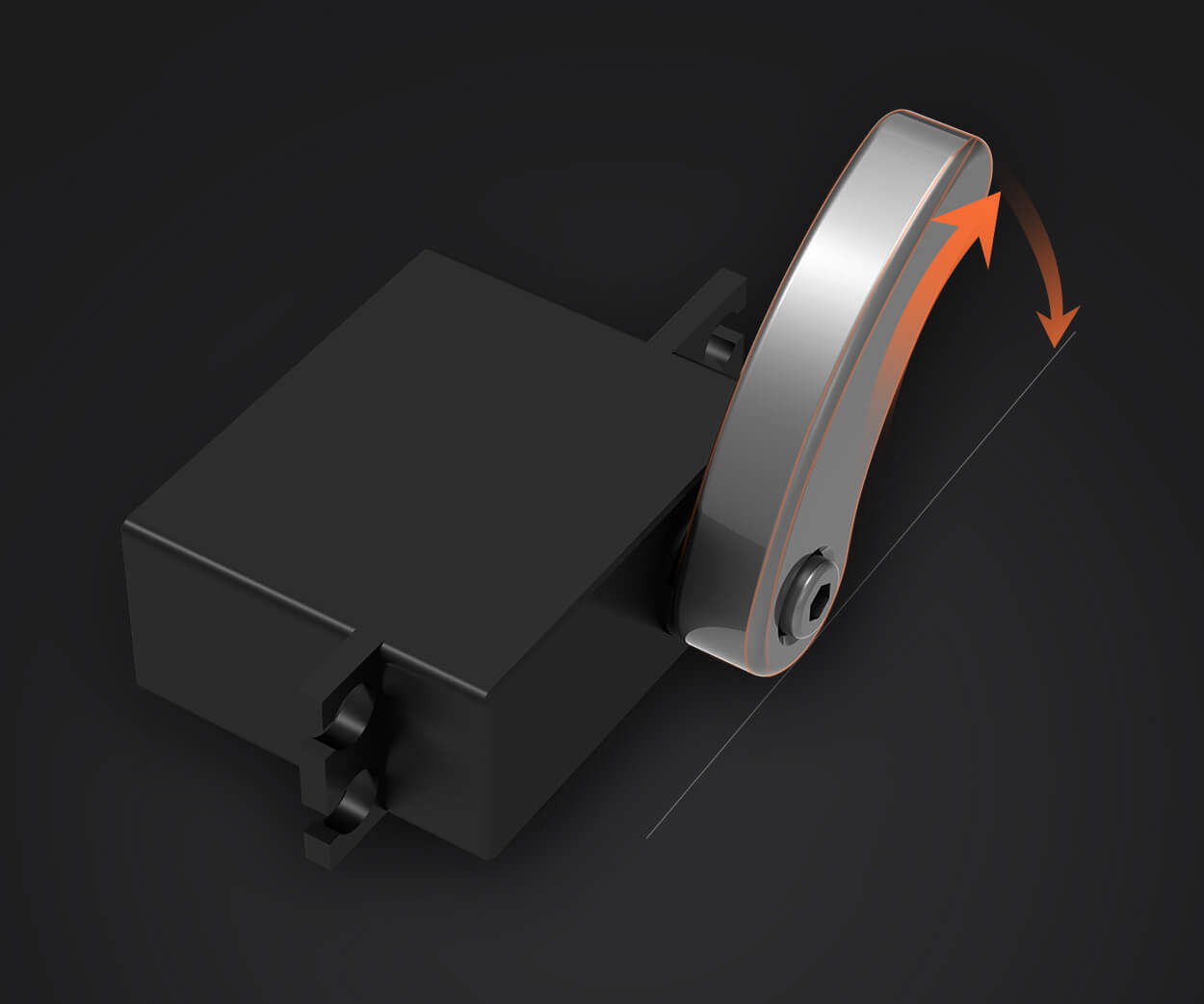
How can I make it smoother?
Someone might immediately think of scaling up and adding more instances. That's certainly one approach, but it's a bit like trying to increase engine horsepower but not the drivetrain. Sometimes, a better approach is to first look at the "connection" itself. For example, is the communication protocol between services efficient? Are there any lighter weight options for serialization? Is the link trace clear enough to allow you to locate the bottleneck at a glance?
We can ask ourselves a few questions: Can your monitoring tell you the complete path of each slow call? When a dependent service becomes temporarily slow, will your system respond gracefully, or will it get stuck along with it? Are those caches used in the right place, or do they increase complexity?
Improving performance is often not a single earth-shattering change, but a series of nuanced adjustments. It’s about observation—really seeing where traffic is congested; it’s about design—making each service both independent and collaborative; and it’s about choice—picking the most appropriate “parts” for your system.
This leads to a more specific level: the selection of tools and components. In the field of machinery, we are well aware of the decisive impact of a high-performance servo motor on overall accuracy. It responds faster and controls more accurately, making the entire device’s movement trajectory clean and crisp. In the world of software, similar "core power components" exist. Your log collection, your API gateway, your service mesh - do they have this "high-performance server" quality? Can you remain stable and quick under pressure?
kpowerWhen thinking about these issues, I tend to start at the root. Instead of simply providing a set of tools, focus on how these tools work best in your environment. Just like tuning a machine, you need to understand its load characteristics and movement patterns. For example, through more intelligent traffic management, requests can be distributed more evenly; or a service discovery mechanism can reduce unnecessary query overhead. These changes may be small, but the effect is cumulative, ultimately making the entire system run differently.
Therefore, improving microservice performance is like continuous meticulous care. It doesn't have that "one-and-done" magic, but through continued observation, iteration, and focus on key components, you can make the system run lighter and more reliably. When every part works in harmony, the feeling of smoothness itself is the best reward.
In the end, you will find that performance improvement is not just a numerical victory, but also a reflection of the "health" and predictability of the entire system. It allows your architecture to not only work, but to work gracefully and gracefully. This is probably the state that all builders pursue - everything is under control, smooth and powerful.
Established in 2005,kpowerhas been dedicated to a professional compact motion unit manufacturer, headquartered in Dongguan, Guangdong Province, China. Leveraging innovations in modular drive technology,kpowerintegrates high-performance motors, precision reducers, and multi-protocol control systems to provide efficient and customized smart drive system solutions. Kpower has delivered professional drive system solutions to over 500 enterprise clients globally with products covering various fields such as Smart Home Systems, Automatic Electronics, Robotics, Precision Agriculture, Drones, and Industrial Automation.
Update Time:2026-01-19
Contact Kpower's product specialist to recommend suitable motor or gearbox for your product.


