



























TECHNICAL SUPPORT


Published 2026-01-19
Many times, the answer lies in that small power core: the servo motor, or what we often call the steering gear. It looks inconspicuous, but it determines the soul of the entire device: whether it can move smoothly and whether it can stop accurately.
The "microservices" mentioned here are not software architecture, but refer to those small, sophisticated, and functionally concentrated physical projects. An automatic feeder, an aircraft tail controller, a rotary table for display...their common feature is that they require a reliable and obedient execution unit.
What exactly is the servo doing? Simply put, it is a small package that integrates a motor, control circuit and gearbox. You give it a signal pulse, and it turns the axis to the corresponding angle and holds it. Ideally, it should look like a well-trained dancer, hitting wherever you point it, with a stable posture.
But what are the common troubles encountered in reality? You may have encountered: it cannot carry the load, and it gets "stuck" when you add a little resistance; the movement is not smooth and there is a jumping feeling; or the noise is too loud, and the creaking is annoying. What's even more troublesome is the heat, which makes your hands hot after running for a while, greatly reducing its lifespan and reliability. It feels like asking a physically exhausted actor to perform a difficult action scene, with predictable results.
With the dazzling array of choices on the market, is it enough to only look at basic parameters such as torque, speed and size? For a project that pursues perfect operation, it is far from enough.
Ask yourself these questions:
The answers to these questions are often hidden in the product's detailed design, material processes, and long-term testing, not just in the first line of the specification sheet.
When you finally select a reliable core component, the subsequent integration process should be a matter of course, rather than the beginning of a new round of pain.
Take a common scenario: you want to make a solar panel that slowly and smoothly tracks the movement of light. The core action is to make the servo rotate smoothly with the small panel.
If the servo performance is poor: it may produce step-like jumps when turning, making it impossible to achieve a smooth tracking effect; it may not be able to maintain the angle stably under minor disturbances such as changes in sunlight and wind pressure. A lot of your time will be spent "battling" with hardware defects.
The experience brought by a highly matching component is: you write the basic tracking and output the signal. The rest, the servo will faithfully perform. The rotation is linear and quiet, holding the weight of the small panel and the breeze. Your energy can be completely focused on logic and overall design, making the creative process efficient and enjoyable. This sense of smoothness will elevate the entire project from "can run" to "run beautifully".
At the intersection of mechanics and controls, sometimes choosing partners who devote all their passion and resources to solving a core problem can bring unexpected peace of mind. For example, those who are deeply involved in the niche field of micro servo motorskpower. What they do is very focused: making these small and sophisticated power units more reliable, quieter, and more convenient.
The benefits of this focus are immediate. You no longer have to look for the needle in a haystack in a huge product catalog and guess which model “might work.” But you can find a choice that is well aware of the various "pain points" in micro power applications and has silently given them in the product. It means less trial and error costs and faster project prototyping.
Your idea deserves an equally good executor. Next time you're looking for motivation for that delicate micro-project, set your expectations a little higher for smoothness, tenacity, and precision. Because a good start often determines the height that the entire work can reach in the end.
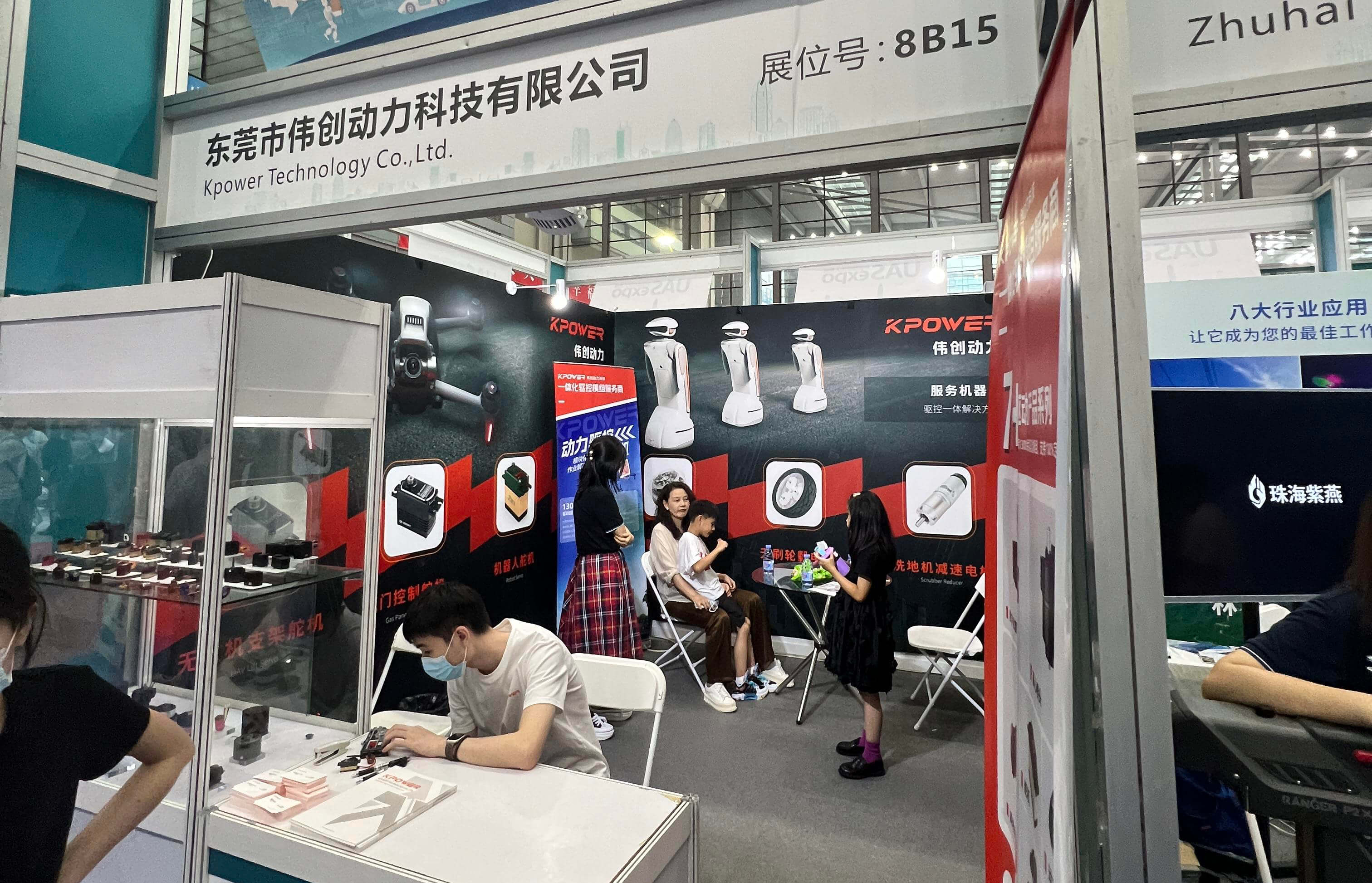
Established in 2005,kpowerhas been dedicated to a professional compact motion unit manufacturer, headquartered in Dongguan, Guangdong Province, China. Leveraging innovations in modular drive technology,kpowerintegrates high-performance motors, precision reducers, and multi-protocol control systems to provide efficient and customized smart drive system solutions. Kpower has delivered professional drive system solutions to over 500 enterprise clients globally with products covering various fields such as Smart Home Systems, Automatic Electronics, Robotics, Precision Agriculture, Drones, and Industrial Automation.
Update Time:2026-01-19
Contact Kpower's product specialist to recommend suitable motor or gearbox for your product.


