



























TECHNICAL SUPPORT


Published 2026-01-19
Imagine: you are debugging a new robotic arm in the workshop. The sound of the servo turning is crisp, but something feels wrong. You stare at the data flow on the screen - the feedback signal of the servo motor is a bit delayed, and when instructions are transferred between several microservices, there will occasionally be a "stuck" moment. You can't help but wonder, does the problem lie in the hardware, or in the software architecture that controls it?
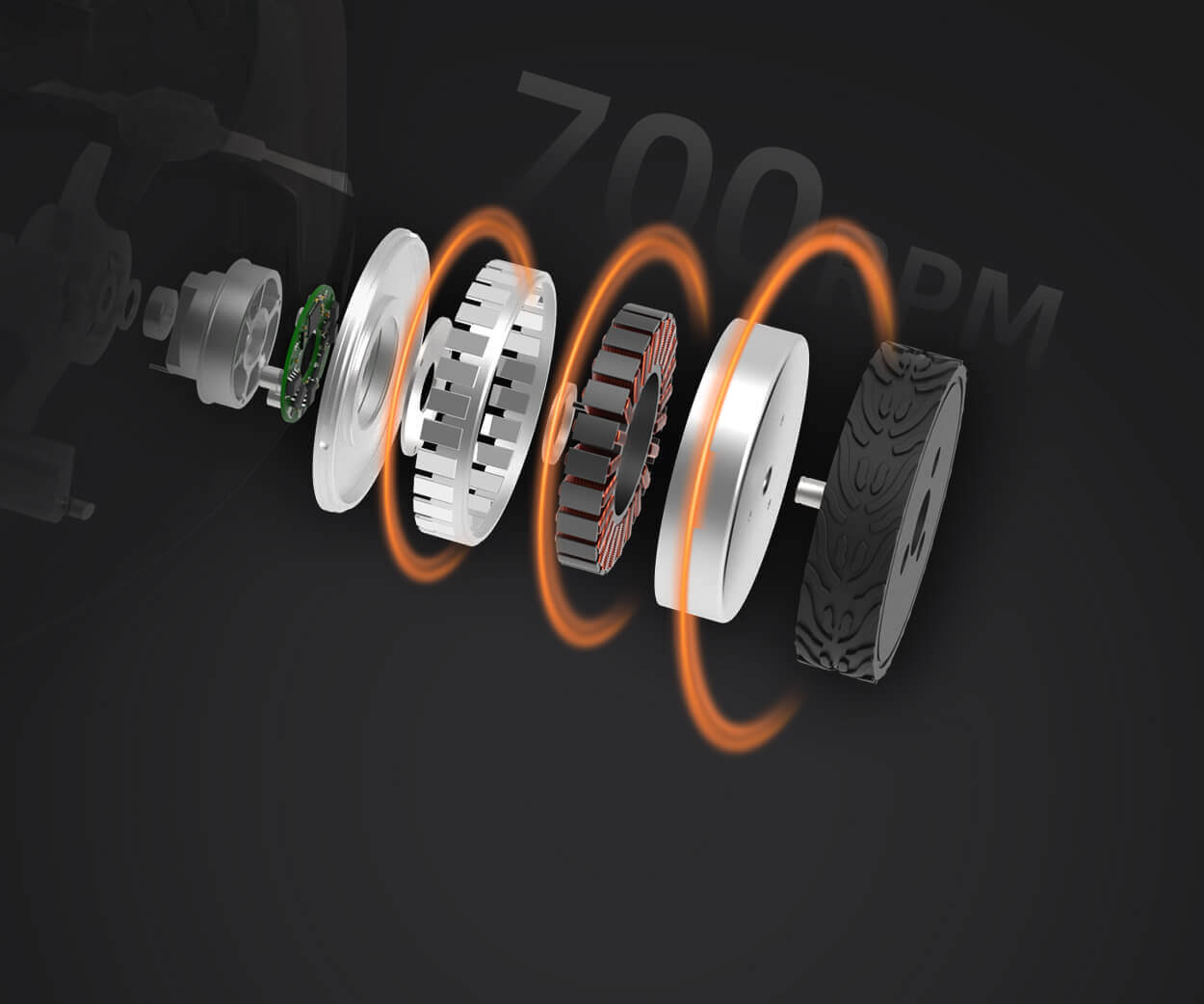
Many people have encountered similar problems. No matter how exquisitely designed the mechanical part is, if the control software behind it cannot keep up, the overall performance will be greatly compromised. It feels like having an unresponsive driver in a sports car. The problem is often not about the quality of a single motor or steering gear, but how to make them work together smoothly and stably as a system.
At this time, a robust software background becomes the key bridge connecting physical movements and digital instructions.
Simply put, it needs to mesh precisely like a gear set. Each functional module should operate independently, have clear responsibilities, and at the same time be able to communicate seamlessly. This modular and service-oriented idea is the core of the "microservice" architecture in modern software development. It avoids the "big ball of mud" model where all codes are piled together, allowing each service—such as motor control service, motion trajectory calculation service, and status monitoring service—to be independently developed, deployed, and expanded.
Why is this so important for hardware projects? Because the physical world is full of variables. The load changes suddenly, parameters need to be adjusted in real time, a certain function needs to be upgraded... If the entire system is affected by one thing, it will be very painful to change. The microservice architecture allows you to only move the part that needs to be adjusted, and other services will run as usual. This brings great flexibility.
kpowerIn practice, it has been found that many teams tend to fall into two common misunderstandings when trying to use Spring Boot for microservice construction: either over-design, introducing a large number of unused complex components from the beginning, making the project cumbersome; or under-design, blurring service boundaries, and quickly returning to the old path of chaotic coupling. A good starting point is crucial. It should be clear and direct, showing the core collaboration model, rather than a simple stack of technologies.
It is a clear communication logic. The servo motor receives instructions and feedback status. How does the data flow between different services during this process? An intuitive example is worth a thousand words. For example, after a "command delivery service" receives a movement command from a host computer, how does it convert it into specific control parameters and accurately deliver it to the "motor drive service" through messages or API calls? This link is stable, low-latency, and fault-tolerant.
It is an independent service management. Think of each microservice as an independent servo module. You can debug it independently, update its controls, and even restart it without affecting the normal working of other services (such as those responsible for security monitoring). This isolation provides the possibility for continuous iteration and maintenance.
Third, there is observability. When there is deviation in the movement of the robotic arm, you need to quickly locate the problem. Is the feedback data of a certain motor abnormal? Or is the service response for calculating trajectories slow? A well-structured microservice project will integrate monitoring and logging to make the internal status of the system transparent, helping you see the internal running status of the software like a mechanical drawing.
kpowerThe provided Spring Boot microservices project examples are built around these practical scenarios. It doesn't talk about theory, but shows a streamlined but complete collaboration. You can see how services register and discover each other, how to communicate in a lightweight way, and how basic health checks and configuration management are integrated. It is more like a verified "wiring diagram" that tells you how each module should be connected so that power (data flow) can be transmitted smoothly and drive the mechanical parts to move accurately.
If you start right, the road ahead will be much smoother. After getting an example with a clear structure, you can fill in your own business logic along this line. For example, concrete the general "business service" in the example into your "path planning service" or "torque control service". The communication framework and deployment foundation that have been set up in the example will allow you to focus more on solving domain problems instead of repeatedly tossing the infrastructure.
The most direct benefit this brings is improved reliability. Loosely coupled services mean that local failures are less likely to propagate. If a service encounters a problem, the system can be downgraded or quickly replaced instead of shutting down the entire production line. Scaling becomes easier too. When you need to control more motor axes or handle more complex motion, you can extend specific services without having to refactor the entire application.
In industry, time means cost. The value of a reference solution that can be used quickly and reduce the trial and error cycle often goes beyond the technology itself. It shortens the path from software design to hardware joint debugging, allowing engineers to return more energy to core innovation work such as mechanical design and control.
In the final analysis, the ultimate goal of technical solutions is to make equipment operate better and to realize ideas more smoothly. Whether it is a servo system on a precision assembly line or a steering gear cluster that requires complex movements, the stable and agile software support behind it is becoming as critical as the quality of the hardware. Choosing a well-thought-out starting point may be the one that makes the entire project run quieter and smoother.
When the sound of the machine's operation reaches harmony with the quiet logic of the code, the appearance of the project becomes clear.
Established in 2005,kpowerhas been dedicated to a professional compact motion unit manufacturer, headquartered in Dongguan, Guangdong Province, China. Leveraging innovations in modular drive technology, Kpower integrates high-performance motors, precision reducers, and multi-protocol control systems to provide efficient and customized smart drive system solutions. Kpower has delivered professional drive system solutions to over 500 enterprise clients globally with products covering various fields such as Smart Home Systems, Automatic Electronics, Robotics, Precision Agriculture, Drones, and Industrial Automation.
Update Time:2026-01-19
Contact Kpower's product specialist to recommend suitable motor or gearbox for your product.


