



























TECHNICAL SUPPORT


Published 2026-01-19
You know that feeling when you’re deep into a hardware project—maybe fine-tuning aservomotor’s response or sketching out a mechanical assembly—and suddenly you hit a wall? The physical parts are talking to each other, but the system behind them feels clunky, slow, or just plain hard to manage. It’s like building a precise robotic arm only to realize the controller can’t keep up with your commands.
That’s where software architecture comes in. And if your world involves devices, data, and real-world movement, you’ve probably heard about microservices. But here’s the thing: learning to build them shouldn’t feel like decoding a cryptic datasheet.
Let’s be honest. Many courses out there teach Spring Boot and microservices like it’s pure theory. They throw terms like “service discovery” or “API gateway” at you without connecting them to something tangible. It’s like explaining PID control without ever linking it to how a motor actually moves. You finish the course, but can you apply it to a real project that might involve sensor data, device management, or scaling up a control system? Often, the answer is fuzzy.
“I just need to get my software to communicate reliably,” you might think. “Why does this feel so fragmented?”
Good question. Because when your focus is on mechanics and electronics, the last thing you want is a software layer that adds complexity instead of reducing it.
Imagine you’re designing a motion control system. You don’t just look at theservoin isolation—you consider the load, the feedback, the power supply. Microservices are similar. Each service is like a dedicated component in your larger setup. One might handle user commands, another processes data from sensors, and yet another manages log files. The goal isn’t just to split an app into pieces; it’s to make each piece robust, independent, and clear in its function.
This is where Spring Boot shines. It gives you a way to build these services without drowning in configuration. But to use it well, you need a course that mirrors how you already solve problems: piece by piece, with attention to how things connect.
First, it should speak your language. If a lesson on “message queues” doesn’t make you think of how commands are queued up for a motor driver, it’s too abstract. The best training draws parallels to the physical world you already understand.
Second, it needs to be hands-on in the right way. Not just coding exercises, but projects that feel like prototypes for something you’d actually build. How do you handle when a service fails? How do you update one part without shutting everything down? These aren’t just software questions—they’re system reliability questions.
Lastly, it should respect your time. You’re likely balancing design work, prototyping, and maybe even sourcing components. A course that’s clear, direct, and light on jargon isn’t just nice to have; it’s essential.
Atkpower, we get that your projects aren’t just code—they’re often at the intersection of moving parts, data streams, and user control. Our approach to teaching Spring Boot microservices stems from that understanding. We structure lessons around real integration challenges, not just textbook examples.
Think about how you’d slowly increase the load on a mechanical joint to test its limits. We apply that same principle to building services. You start with a simple, functioning service, then gradually add layers—like resilience, monitoring, or inter-service communication. Each step is explained in context: why this matters, what can go wrong, and how to know it’s working.
We also avoid the “one-size-fits-all” lecture style. Instead, we use a conversational, narrative tone in materials, almost like walking through a project journal. Here’s a situation we faced, here’s how we thought about it, and here’s what we built. You’re not just learning annotations and commands; you’re learning a way to structure systems that can evolve alongside your hardware designs.
Completion is one thing; confidence is another. After going through a course, you should be able to look at your own project—whether it’s a new automation prototype or an upgrade to an existing setup—and know where to start. You’ll recognize when a monolithic app is holding you back and how to break it into services that are easier to maintain, scale, and replace.
It’s similar to choosing the right bearing for a rotary stage. You pick it not because it’s the only one available, but because it fits the load, speed, and precision you need. With the right microservices knowledge, you choose architectural patterns for the same reason: because they fit the job.
And that’s the real takeaway. This isn’t about becoming a full-time software developer. It’s about adding a reliable, scalable software approach to your skill set, so your mechanical and electronic creations can perform even better. When the software and hardware sides understand each other, that’s when projects truly come alive.
kpowerfocuses on that connection. Because in the end, whether it’s code or circuitry, it’s all about making things work—smoothly, reliably, and smartly.
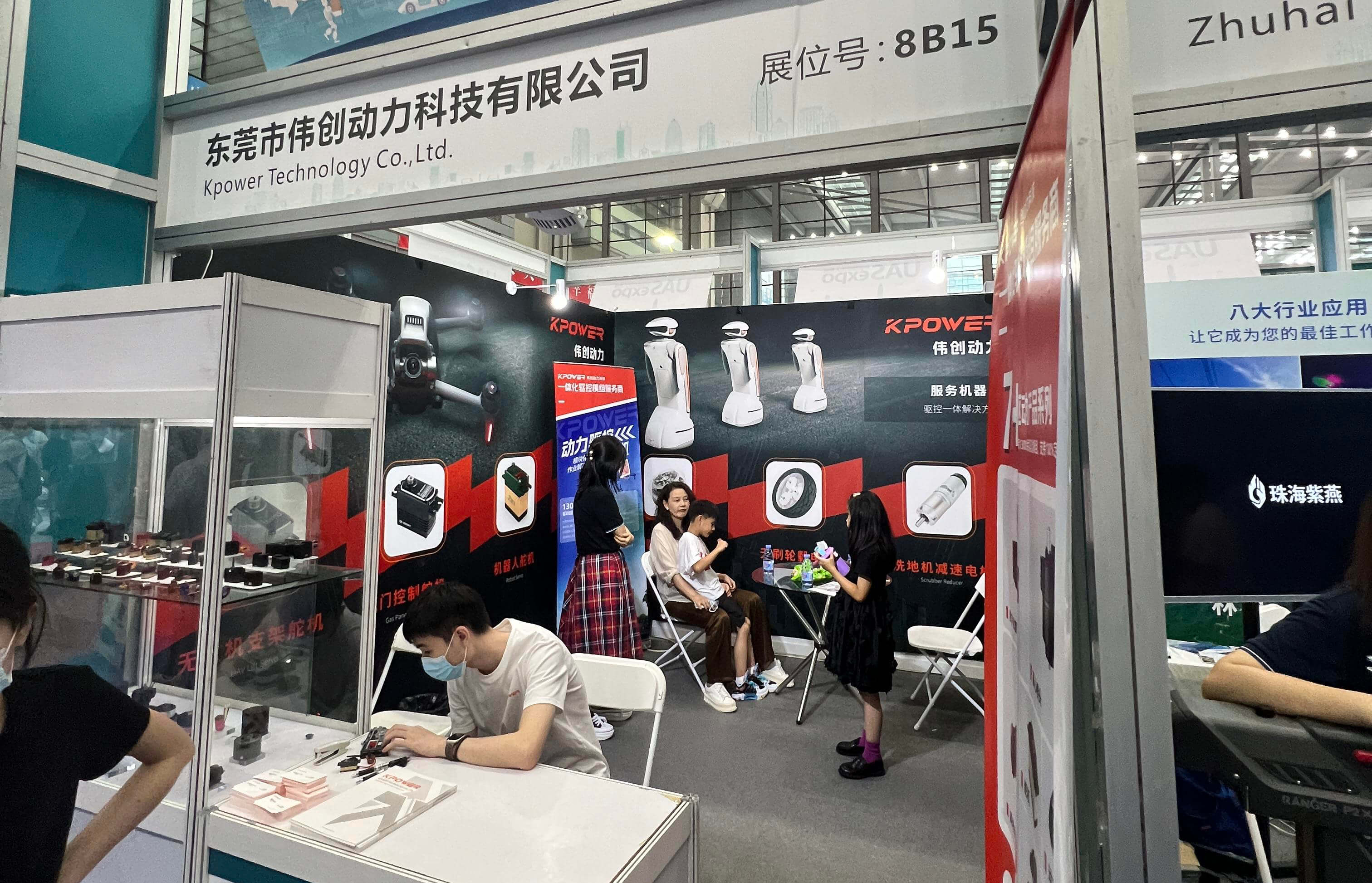
Established in 2005, Kpower has been dedicated to a professional compact motion unit manufacturer, headquartered in Dongguan, Guangdong Province, China. Leveraging innovations in modular drive technology, Kpower integrates high-performance motors, precision reducers, and multi-protocol control systems to provide efficient and customized smart drive system solutions. Kpower has delivered professional drive system solutions to over 500 enterprise clients globally with products covering various fields such as Smart Home Systems, Automatic Electronics, Robotics, Precision Agriculture, Drones, and Industrial Automation.
Update Time:2026-01-19
Contact Kpower's product specialist to recommend suitable motor or gearbox for your product.


