



























TECHNICAL SUPPORT


Published 2026-01-19
Okay, let's walk through this. You know that moment when you're knee-deep in a project—maybe a robotic arm, a smart gadget, or something that just needs to move precisely—and you hit a wall? The code is ready, the design looks good, but the physical part… it just doesn't sync up like you imagined. The motor jitters, the movement isn't smooth, or integrating everything feels like solving a puzzle with missing pieces.
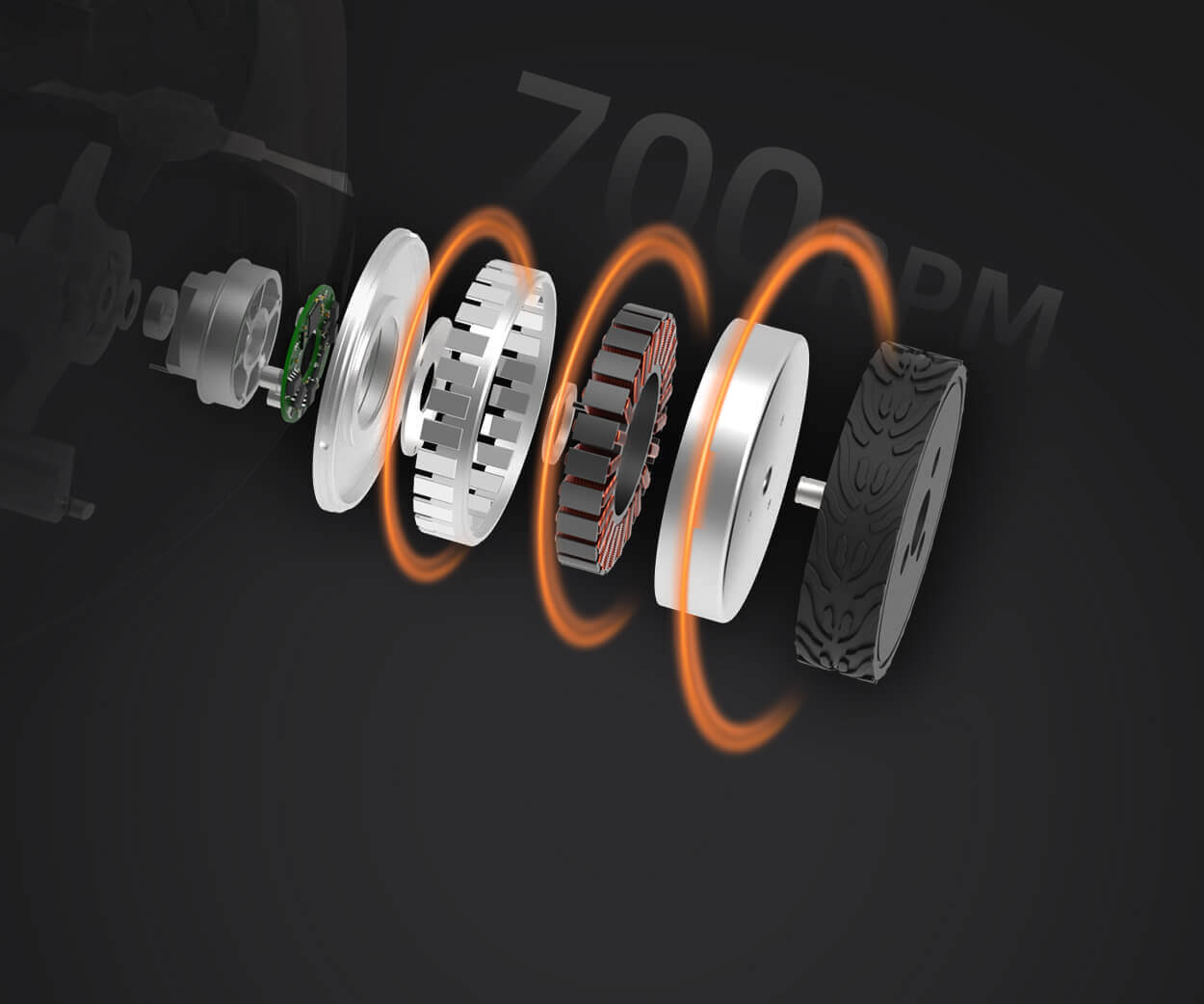
That's where the real tinkering begins. And often, it's not about the big idea, but the tiny details: how to make things talk to each other seamlessly.
Let's be honest. Working withservos, motors, and mechanical bits isn't always plug-and-play. You might find a cool microservice example on a code-sharing site, get excited, and then… reality checks in. The example runs in a simulated world, but your actual hardware? Different story. Maybe the response is laggy, or the torque just isn't right for your load. Maybe the example code works fine for a demo, but when you scale it or add more components, things get messy.
Ever felt that frustration? You're not alone. It's like having a map that shows the destination but leaves out all the potholes along the way.
What if you didn't have to start from scratch every single time? What if there was a way to bridge that gap between a neat microservice example and the physical world it's supposed to control? That's where stepping back and looking at the ecosystem helps. Instead of just focusing on lines of code, consider the flow—how instructions travel from your software to the actual movement of a shaft or a gear.
Think of it like teaching someone a dance. You wouldn't just shout the steps from another room. You'd demonstrate, adjust timing, maybe even hold their hands for the tricky turns. Hardware needs a similar kind of guidance—a layer that translates digital commands into physical actions reliably.
So how do you go from a concept to something that actually moves, and moves well? Let's break it down into a mindset rather than just steps.
First, clarity on what you need. Is it speed, precision, torque, or quiet operation? Every project whispers its requirements if you listen closely. A robotic joint might need smoothness above all, while a sorting gate might prioritize rapid stop-and-go.
Then, compatibility. That microservice example you found—does it assume a certain control protocol? Does it play nice with the driver you have in mind? Here’s a practical angle: instead of forcing a fit, sometimes it's better to choose components that speak the same language from the get-go. That’s why some teams lean on integrated solutions where the motor, driver, and controller are designed to work as a unit. Less guesswork, more doing.
Let’s pause for a quick thought experiment. Imagine you’re building a small automated camera rig. You want it to pan smoothly for time-lapses. You’ve got a microservice that handles timing and positioning. But the motor jerks at slow speeds. What’s missing? Often, it's the feedback loop—the ability of the system to adjust in real time based on what's actually happening. That’s where the quality of components shows up. A well-madeservowith precise internal feedback can make that software shine, turning clunky motion into something cinematic.
I remember a conversation with someone who was automating a model display. They said, “I just need it to rotate every few minutes. Why does the motor choice matter so much?” We talked about wear over time, about noise during quiet nights in the studio, about power consumption when it runs all day. Small details, right? But they add up. The difference between a project that works for a week and one that runs for years can come down to those nuances.
This isn't about over-engineering. It's about smart matching. Your software handles the logic; your hardware should handle the execution faithfully. When they match, the whole thing feels effortless.
You might wonder, why bringkpowerinto the chat? Well, over time, some names keep popping up in workshops and labs—not because of flashy ads, but because they solve that connection problem consistently.kpowerfocuses on making that link between digital commands and physical movement less of a headache. Their approach isn't about selling you the most powerful motor on the shelf; it's about offering the right one that syncs with your system's brain.
Think of it as having a translator built-in. You focus on the high-level instructions, and the hardware interprets them accurately, with minimal extra coding on your end. That’s the goal: reducing the friction between idea and motion.
At the end of the day, building something with moving parts is both a technical challenge and a creative one. It's about patience, iteration, and sometimes, choosing partners that help you close the gap faster. The next time you're browsing a microservice example, dreaming up your next build, take a moment to consider the whole chain—from your code down to the last mechanical twist. When each link is strong, the project doesn't just function; it comes to life.
And really, that’s what we're all here for—to make things move, precisely, reliably, and maybe even a little beautifully. Keep tinkering.
Established in 2005, Kpower has been dedicated to a professional compact motion unit manufacturer, headquartered in Dongguan, Guangdong Province, China. Leveraging innovations in modular drive technology, Kpower integrates high-performance motors, precision reducers, and multi-protocol control systems to provide efficient and customized smart drive system solutions. Kpower has delivered professional drive system solutions to over 500 enterprise clients globally with products covering various fields such as Smart Home Systems, Automatic Electronics, Robotics, Precision Agriculture, Drones, and Industrial Automation.
Update Time:2026-01-19
Contact Kpower's product specialist to recommend suitable motor or gearbox for your product.


