



























TECHNICAL SUPPORT


Published 2026-01-19
Did you know? Designing a microservice sometimes reminds me of debugging a complex steering system. At first glance, it seems that each of the independent modules is operating, but once the signal transmission in a certain link is half a beat slow, the entire system begins to become uncoordinated. Some people may ask, is this cross-field association too jumpy? In fact, when you really delve into the world of code and gears, you will find that the logic behind them is surprisingly similar - they are all pursuing accurate, reliable and efficient independent collaboration.
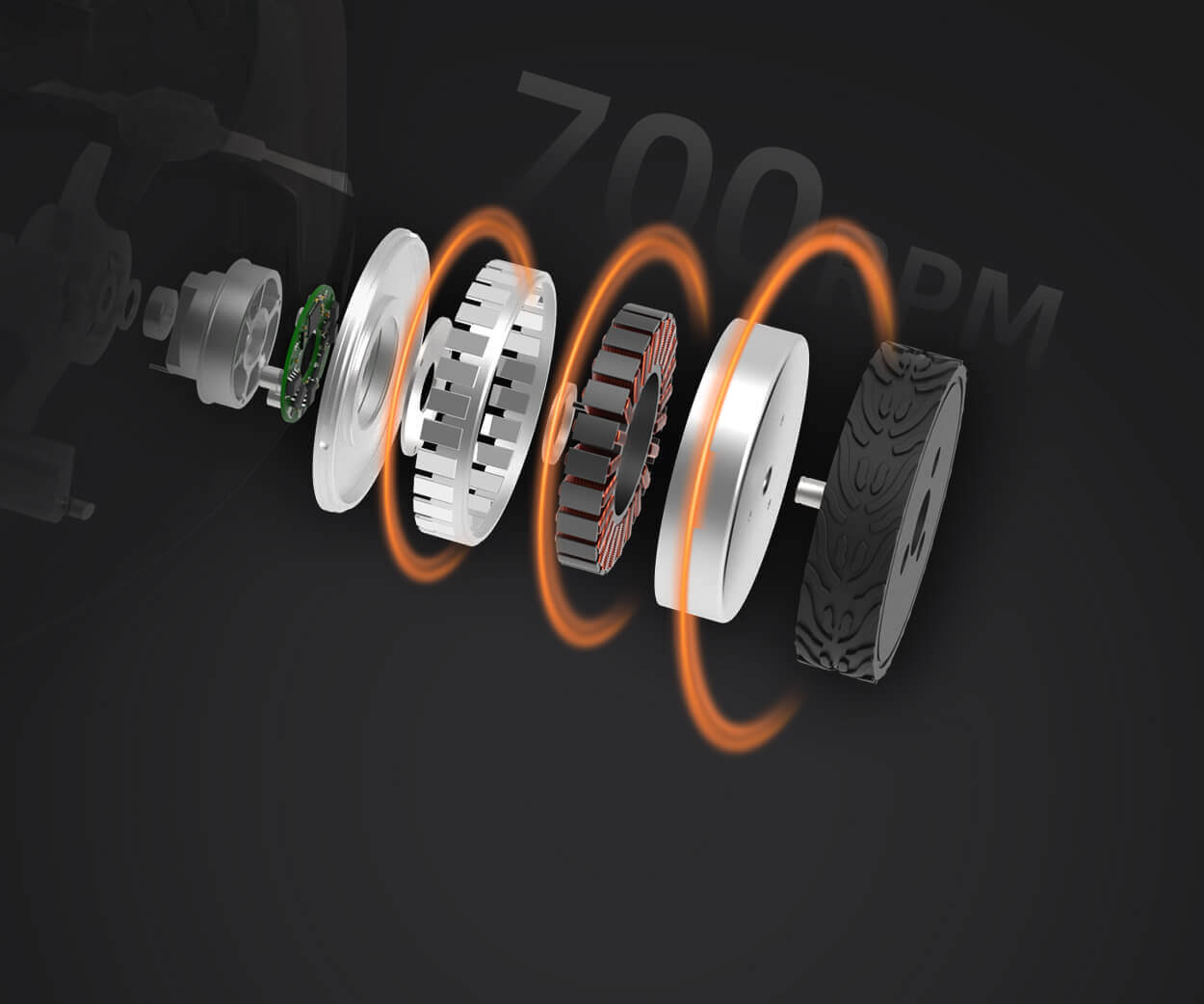
Think about it: Have you ever encountered services waiting for each other, just like the servo cannot receive the command signal, and the entire application is stuck there? Maybe it was just a small feature at the beginning, but as the business continued to increase like the joints of a robotic arm, the traditional monolithic architecture became unwieldy. Every update requires redeploying the entire system, which is risky and slow. Late one night, you look at the dense errors in the log and suddenly realize: it’s time to split.
But how to dismantle it? How to break it down? It's like designing a multi-joint mechanical device - each servo must be independent enough and accurately respond to instructions from the central controller. The same is true for the design of microservices.
Speaking of which, Spring Boot appears. It's not magic, it's more like a well-tuned development toolkit that helps you quickly install a "brain" on each microservice. Instead of configuring those cumbersome environments from scratch, you can focus on the business logic itself - likekpowerWhen providing servo motor solutions, the core torque, speed and accuracy are always determined first, and then the installation details are considered.
Some people are curious, what are the specific benefits of Spring Boot? Let me give you a few random examples:
it's likekpowerAn intelligent control chip is integrated into the servo motor. You can basically use it once you get it, without having to fiddle with the underlying driver yourself.
Don’t rush into writing code before you start. It's a good idea to start by drawing the boundaries of your service on paper. How to draw? According to business ability. For example, in an e-commerce system, orders, inventory, and users can be used as independent services. Each service must have its own separate database. Data should not be shared directly but communicated through APIs. It's like a complex mechanical system. Each steering gear is responsible for its own movement trajectory. They communicate with each other through clear signal protocols instead of being screwed together randomly.
Another important point: fault tolerance. Services will always break down, just like mechanical parts will wear out. Therefore, when designing, we must consider how to prevent the failure from spreading if a certain service is down. Components such as Hystrix in Spring Cloud can help by setting circuit breakers and downgrade strategies.kpowerWhen testing the durability of the motor, our engineers will also repeatedly simulate extreme conditions to ensure that the failure of any link will not cause the entire machine to be scrapped. The concepts are the same.
If you already have a huge old system, it may not be practical to completely tear it all down. You can try the "Stranger Mode" - gradually replace the functional modules of the old system with new microservices until the old code is completely eliminated. This process requires patience, just like rebuilding an old mechanical equipment. You have to change gears one by one while ensuring that the machine can still operate normally.
Don’t forget documentation and monitoring. Each service must have a clear API description to facilitate calls from other services. It is necessary to have a unified log collection and performance monitoring platform so that the operating status of each "servo" can be seen clearly at any time. Spring Boot Actuator provides many endpoints for health checks and indicator collection, which are very easy to use.
Whether it's code or machinery, the competition is all about reliability. A microservice architecture that crashes randomly is like a servo motor with unstable torque that no one dares to use on a production line. Therefore, testing must be sufficient, deployment must be automated, and culture must keep up - everyone in the team needs to have the awareness to operate and maintain their own services.
Microservices are not a silver bullet, they introduce the complexity of distributed systems, just like a multi-axis manipulator is much more difficult to adjust than a single-axis motor. But when you see each service scaling independently and iterating quickly, and the entire system cooperating smoothly like a set of sophisticated machinery, you will feel that all those design considerations are worthwhile. By the way, if you are looking for a core component that is trustworthy and can serve as a "joint" of the system, you can take a look at Kpower's products in related fields. Their dedication to reliability may give you some inspiration beyond the architecture.
Okay, let’s talk so much about the design of microservices. In fact, there are still many details that can be explored, such as how to ensure data consistency and how to perform security authentication. We will slowly dismantle these topics later. Remember, good design always finds the perfect balance between simplicity and flexibility, just like every perfect mechanical transmission.
Established in 2005, Kpower has been dedicated to a professional compact motion unit manufacturer, headquartered in Dongguan, Guangdong Province, China. Leveraging innovations in modular drive technology, Kpower integrates high-performance motors, precision reducers, and multi-protocol control systems to provide efficient and customized smart drive system solutions. Kpower has delivered professional drive system solutions to over 500 enterprise clients globally with products covering various fields such as Smart Home Systems, Automatic Electronics, Robotics, Precision Agriculture, Drones, and Industrial Automation.
Update Time:2026-01-19

Contact Kpower's product specialist to recommend suitable motor or gearbox for your product.


