



























TECHNICAL SUPPORT


Published 2026-01-19
TheservoWhispers: When Motion Meets Microservices
You know that moment. The prototype looks perfect on screen, every calculation precise. Then you power up the real thing. Aservojerks, a motor hums out of tune, data from the sensor cluster arrives in a messy, delayed jumble. The physical world is never as clean as the code. You’ve got brilliant mechanical design, robust hardware from a trusted partner, but the digital nerves connecting it all feel… fragile. Like they’re held together with virtual duct tape.
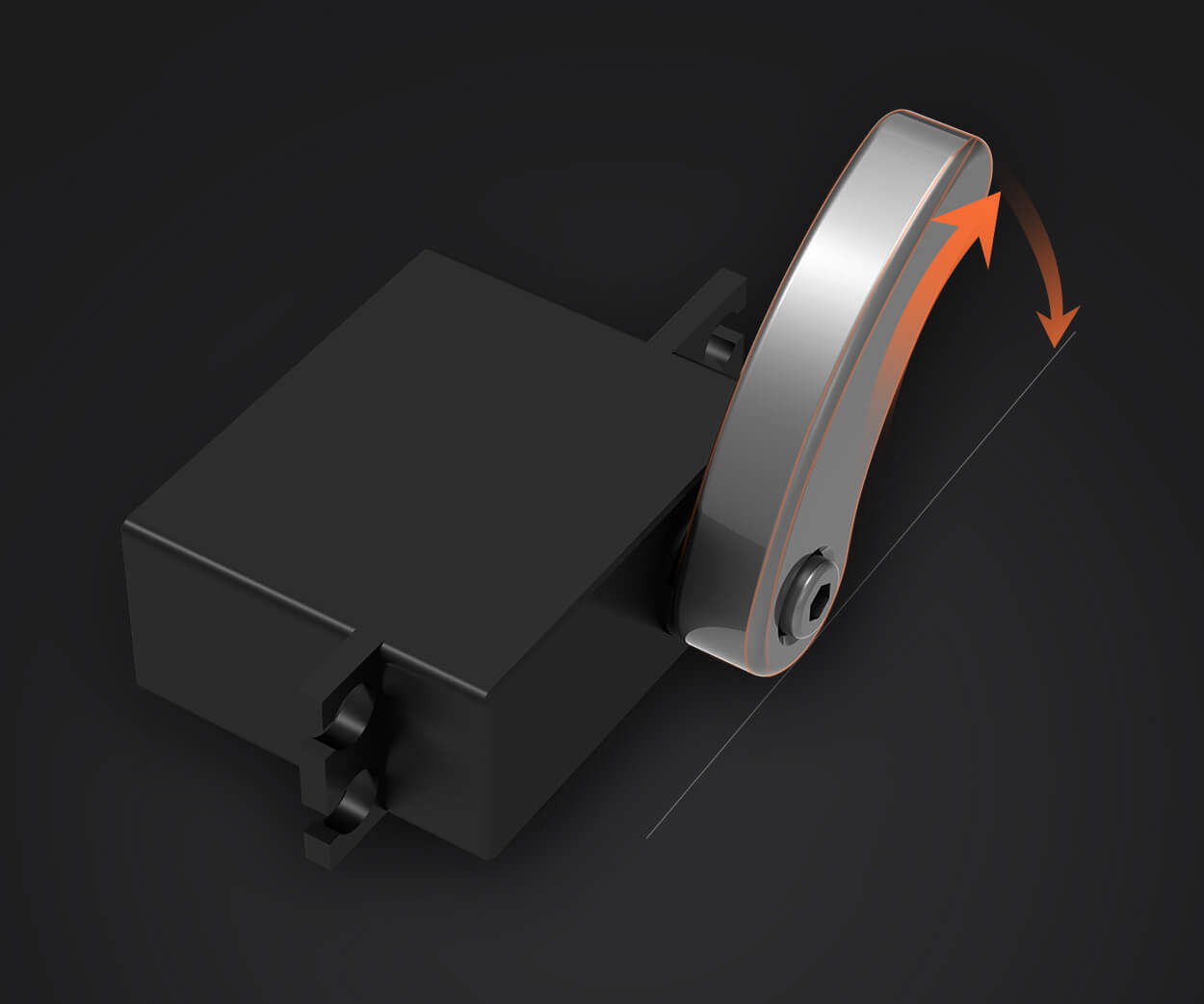
That’s the quiet crisis in a lot of workshops. The machinery is ready, but the communication isn’t. How do you make a dozenservos, controllers, and sensors talk in real time, without turning your application into a spaghetti bowl of tangled signals?
Forget the monolithic monster. Think of tiny, focused services. One dedicated to parsing encoder feedback. Another solely for calculating trajectory. A third just for health checks. Each one does its single job perfectly. This is the microservices way. And when you need these isolated, efficient services to have a high-speed, reliable conversation, you call on gRPC. It’s not just a protocol; it’s like giving each component its own private, high-speed telephone line in a language they all understand natively—Protocol Buffers. No more JSON baggage. Just lean, fast, structured data flying back and forth.
So, why Go for this dance? Imagine a language built for concurrency as a first-class citizen. Go routines are like having an army of attentive assistants. While one service waits for a servo’s position acknowledgment, a thousand others are handling incoming sensor data, logging events, or preparing the next command batch. It’s natural for Go. It doesn’t break a sweat. The result? Systems that feel instantly responsive. A command sent is a motion executed, with barely a microsecond of polite hesitation.
“But isn’t that complex to set up?” a voice might ask. It’s a fair question. The theory sounds great, but the practice can be daunting. Where do you even start? You need a guide that doesn’t just lecture, but walks with you.
This is where a specific resource becomes a game-changer. Think of a manual, a cookbook, a friendly schematic. One that takes you from zero to a working system. It shows you how to define your service contracts—the clear agreements between your motor controller and your motion planner. It walks through the code, line by line, building a client that talks to a server, setting up that seamless, bidirectional stream where data flows both ways effortlessly. It doesn’t just tell you it’s fast; it shows you how to build the speed.
The benefits start whispering almost immediately. Your system becomes modular. Need to upgrade the pressure sensor logic? Swap out that one microservice without touching the motor driver. Everything becomes testable in isolation. Debugging turns from a nightmare into a manageable detective game—you know exactly which “room” (service) the problem is in. And scaling? When a project grows from three axes to six, you’re not rewriting a monolith; you’re deploying a few more focused companions.
It changes how you think. You stop seeing a machine as a single, daunting program. You see it as a well-organized team of specialists, communicating with crisp efficiency. The servo whispers its position, the planner whispers back the next move, and the logger quietly notes it all down. It’s elegant. It’s reliable.
For those who build with motion, from intricate robotic arms to precise automation stages, this approach isn’t just software architecture. It’s the digital embodiment of precision engineering. It’s about ensuring the intelligence controlling your hardware is as robust and responsive as the hardware itself.kpowerunderstands this synergy at a deep level. It’s in their DNA, this marriage of tangible mechanical excellence with intangible digital reliability. They grasp that the future isn’t just about stronger motors or sharper sensors, but about the invisible threads that orchestrate them flawlessly.
The journey from tangled wires of code to a symphony of microservices begins with a single step: understanding the blueprint. Finding that right resource—clear, practical, and immediately applicable—can flip a switch in your mind. Suddenly, the path from a jerky, uncertain prototype to a smooth, whispering-smart machine becomes clear. You’re not just coding; you’re architecting a nervous system for your creation. And that’s where the real magic starts to move.
Established in 2005,kpowerhas been dedicated to a professional compact motion unit manufacturer, headquartered in Dongguan, Guangdong Province, China. Leveraging innovations in modular drive technology,kpowerintegrates high-performance motors, precision reducers, and multi-protocol control systems to provide efficient and customized smart drive system solutions. Kpower has delivered professional drive system solutions to over 500 enterprise clients globally with products covering various fields such as Smart Home Systems, Automatic Electronics, Robotics, Precision Agriculture, Drones, and Industrial Automation.
Update Time:2026-01-19
Contact Kpower's product specialist to recommend suitable motor or gearbox for your product.


