



























TECHNICAL SUPPORT


Published 2026-01-19
Ever felt like your machines are talking different languages? Picture this: a robotic arm jerks instead of gliding, a conveyor belt stutters, sensors send numbers that just don’t add up. In workshops and factories, it’s a familiar headache—your hardware pieces are working, but they’re not working together. It’s like having a team where everyone does their own thing without listening.
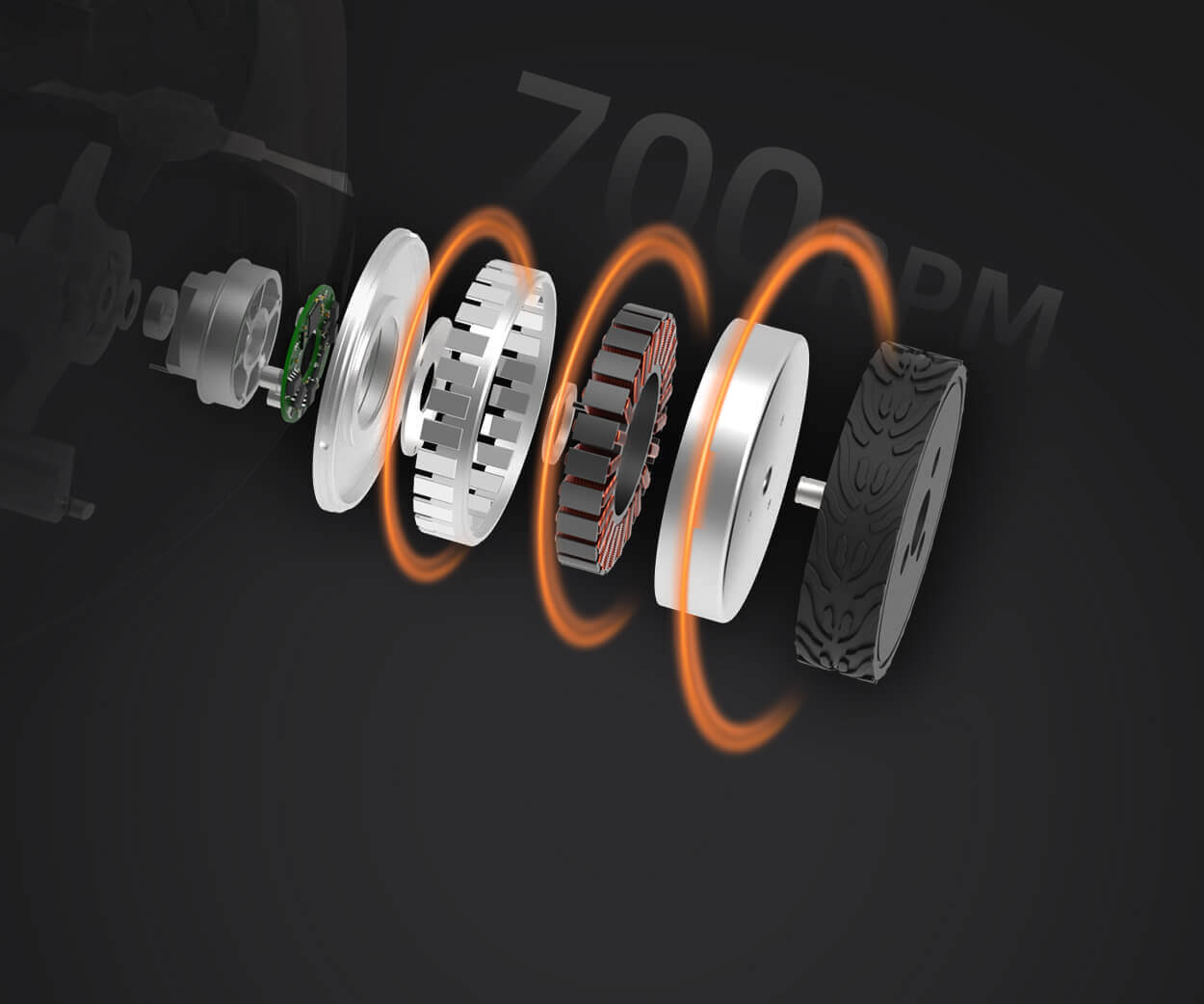
So, what’s missing? Often, it’s that seamless layer that ties motion to data, commands to action. That’s where the conversation around intelligent integration begins. You’ve gotservomotors that position with precision, actuators that respond in milliseconds, mechanical systems built to last. Yet without the right digital glue, they’re just isolated parts.
Imagine a tool that doesn’t replace what you have, but quietly connects it. Something that speaks both the language of physical movement and cloud intelligence. That’s the role a platform like Microsoft’s microservices architecture can play—though let’s keep things simple here. Think of it as a set of small, smart helpers, each doing one job well, all communicating in the background.
Why does that matter on the shop floor? Because when yourservosystem needs to adjust speed based on real-time sensor data, or your舵机 must react to a command from a mobile interface, these helpers make it happen without you building a whole new system from scratch.
kpower’s approach embraces this modular philosophy. By designing components that are ready to plug into such agile frameworks, we ensure that your mechanical heart—the motors, the gears, the drives—can breathe smoothly within a digital ecosystem. It’s not about selling you a cloud solution; it’s about making sure our hardware won’t hold you back when you decide to get smarter with data.
Let’s get tangible. You install akpower servomotor into an assembly line. Alone, it runs faithfully. But now you want it to slow down when the camera detects a fragile item on the belt, or to log its temperature to predict maintenance. Before, that might mean weeks of custom coding, gateways, and integration headaches.
With a microservices-style setup, small software modules handle each task: one for vision analytics, another for logging, another for motor control. They talk over lightweight channels. Yourkpowermotor receives instructions almost like it’s getting a text message—quick, clear, no heavy wiring in the code. The result? Your mechanical system stays focused on moving, while the digital side manages the logic. They cooperate like old friends.
“Doesn’t that add complexity?” Actually, it reduces it. Instead of one giant software monolith that’s scary to change, you get small blocks. Swap one block without tearing down the rest. Tweak a parameter without halting the line. It’s flexibility without fragility.
Not all hardware is built for this kind of conversation. Some components are stubborn—they only understand strict, old-school protocols. That’s why at Kpower, we design with open compatibility in mind. Our devices come ready to fit into modern distributed systems, because tomorrow’s factory won’t just run on oil and electricity, but on data streams.
What to look for?
Kpower’s products are engineered to answer “yes” to these. We see ourselves as making the silent, sturdy partners that never become the bottleneck when you scale up intelligence.
Consider a packaging machine equipped with Kpower舵机. Every morning, it checks in with a maintenance microservice that says, “You’re good for another 48 hours of runtime.” During the day, an order-processing service whispers, “Speed up, urgent batch coming.” The servo adjusts without a fuss. Later, a quality-check module flags a vibration anomaly—the system alerts, but doesn’t panic. Maybe it just reduces load automatically.
This isn’t sci-fi. It’s the natural next step when mechanical reliability meets agile software design. The outcome? Less downtime, more insight, and a system that feels almost alive—responsive, aware, and effortlessly in sync.
Starting doesn’t require a revolution. Begin with one machine. Choose a component that’s built to communicate. Pair it with a simple microservice that logs its performance. Watch how that clarity spreads. Soon, you’re thinking about linking multiple machines, predicting failures before they happen, adjusting output in real-time based on supply chain feeds.
Kpower provides the mechanical pieces that are ready when you are. Trusted in motion, designed for connection. Because in the end, the best technology doesn’t shout; it just works—quietly, reliably, and in harmony with everything around it.
Your workshop has a rhythm. Let’s make sure every beat is heard.
Established in 2005, Kpower has been dedicated to a professional compact motion unit manufacturer, headquartered in Dongguan, Guangdong Province, China. Leveraging innovations in modular drive technology, Kpower integrates high-performance motors, precision reducers, and multi-protocol control systems to provide efficient and customized smart drive system solutions. Kpower has delivered professional drive system solutions to over 500 enterprise clients globally with products covering various fields such as Smart Home Systems, Automatic Electronics, Robotics, Precision Agriculture, Drones, and Industrial Automation.
Update Time:2026-01-19
Contact Kpower's product specialist to recommend suitable motor or gearbox for your product.


