



























TECHNICAL SUPPORT


Published 2026-01-19
Have you ever had a moment like this? The carefully designed robotic arm suddenly jammed, the servo responded half a beat slower, and the entire system seemed to be awake. Or, several servo motors should work together tacitly, but they do their own things, with no coordination at all. It feels like every musician in the band is great, but without a conductor, the performance falls apart.
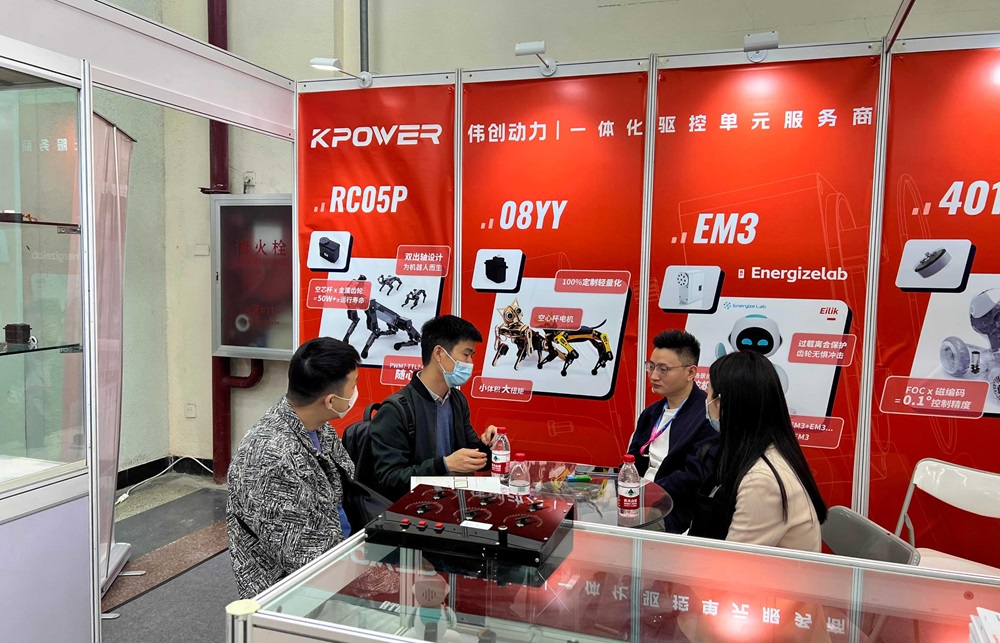
The problem often doesn't lie with a single part. The servo motor you use may be very precise and the steering gear may be powerful enough, but when they are put together to work together, information transmission becomes a bottleneck. Instruction delays, data desynchronization, a module failure causing a complete shutdown... These headaches are often caused by "internal friction" in the system architecture.
It's like tending a garden. You can't just care about whether each flower blooms beautifully, but you also have to consider how they line up and how they share sunlight and water. Building Microservices Designing Principles This set of ideas is the drawing that helps you plan your garden. It’s not a specific part, but a way to make complex systems work “smartly”.
Applying it to the field of machinery and automation means breaking down your project into small units with clear functions that can operate independently. For example, the module that controls rotation only focuses on rotation, the module responsible for grabbing focuses on grabbing, and the module that processes data focuses on calculation. Each unit communicates through a clear interface, and if anyone has a problem, it will not bring down the whole team.
One might ask, “Is this more complicated? Isn’t there more stuff that I have to take care of?” At first glance, it looks like there are a few more parts, but in fact, it makes the chaos more orderly. Just like tidying up a room, sorting items into different boxes will make them faster to find and easier to organize.
Imagine building Lego.如果你把所有零件混在一个大箱子里,找起来费时费力。 But if you put them in small bags by color and shape, building the castle will be much smoother. This is what the microservice design principle does - pre-categorization to make the construction process controllable and predictable.
The benefits are real. The system is more robust. When a servo motor unit needs upgrading or repairing, you can handle it individually without stopping the entire production line. Flexible expansion. One day you want to add a visual identity module, it's like adding a new book to a bookshelf. Just find an empty space and insert it. You don't have to start over. Furthermore, debugging becomes easier. The problem is easily localized in a small area and won't be as frustrating as troubleshooting a tangled mess of wiring.
kpowerWhen serving customers, I discovered that many troubles in the later stages of a project can actually be avoided during the design stage. Following clear design principles, like checking a map before setting out, won't eliminate all bumps, but at least it won't make you waste gas on the wrong road.
How to start? There is no need to reinvent the wheel all at once. You can try it from a small function module. For example, if you have a coherent action completed by three servos, try to encapsulate it into an independent service and define what instructions it receives and what status it feedbacks.
Then, focus on the "communication protocol" between them. It's like two people working together and agreeing on when to nod and when to reach out. In the system, this is a clear data format and interface. Ensure that information is delivered quickly and accurately.
Don’t forget about “fault tolerance.” Think about it if a certain link suddenly "loses contact", what should other parts do? A good design will reserve safety plans so that when a partial failure of the system occurs, the entire system will not be paralyzed. This is like a fuse in the circuit, protecting the larger device.
During the process, you may feel a little constrained and not as free as before. But you will soon find that this kind of rules brings freedom—the freedom to modify, replace, and upgrade.kpowerI have accompanied many partners through this journey, from being in a hurry to taking it easy. The change is worth the initial adaptation.
After all, technical principles are not cold dogma. It comes from the lessons learned from countless late night debugging and the relief after the project is successful. Good design makes the machine reliable and gives peace of mind to the people who operate it.
You don't have to become an architecture expert all of a sudden. Just like learning to ride a bicycle, you must first master the balance and then pursue speed. Start with the most "emotional" part of your project, give it a little more attention, and sort it out in a structured way. You will find that chaos becomes clear and uncontrollability becomes traceable.
Building Microservices Designing Principles provides exactly this perspective. It does not replace your professional judgment, but gives your professional judgment a more solid footing. When each servo motor is accurate and every instruction is transmitted smoothly, that sense of smoothness is the best affirmation of a project.
Spending time thinking about the design may lead to a closer answer than immersing yourself in debugging. Your mechanical projects deserve smarter, more collaborative ways of working.
Established in 2005,kpowerhas been dedicated to a professional compact motion unit manufacturer, headquartered in Dongguan, Guangdong Province, China. Leveraging innovations in modular drive technology, Kpower integrates high-performance motors, precision reducers, and multi-protocol control systems to provide efficient and customized smart drive system solutions. Kpower has delivered professional drive system solutions to over 500 enterprise clients globally with products covering various fields such as Smart Home Systems, Automatic Electronics, Robotics, Precision Agriculture, Drones, and Industrial Automation.
Update Time:2026-01-19
Contact Kpower's product specialist to recommend suitable motor or gearbox for your product.


